
GH15 Ventures’ proposed S$80.7 million acquisition of Pek Chuan Building raises an interesting question about the Lavender Street property’s future.
GH15 Investments, one of the entities behind the purchasing vehicle, is registered to operate hostels and dormitories. Yet Pek Chuan Building is currently a retail-and-office property on land zoned Commercial, with a plot ratio of 2.5.
The former GSM Building at 141 Middle Road offers a useful comparison. Previously shown as Commercial under Master Plan 2019, its latest planning designation is Residential with Commercial at 1st Storey. The property has since become Coliwoo Midtown.
That change gives the Pek Chuan Building transaction a more specific analysis angle: could an accommodation-linked buyer pursue a similar repositioning of an existing commercial property?
No confirmed proposal shows that GH15 intends to follow this route. However, the buyer’s registered activities and the planning history of 141 Middle Road make it a possibility worth examining.
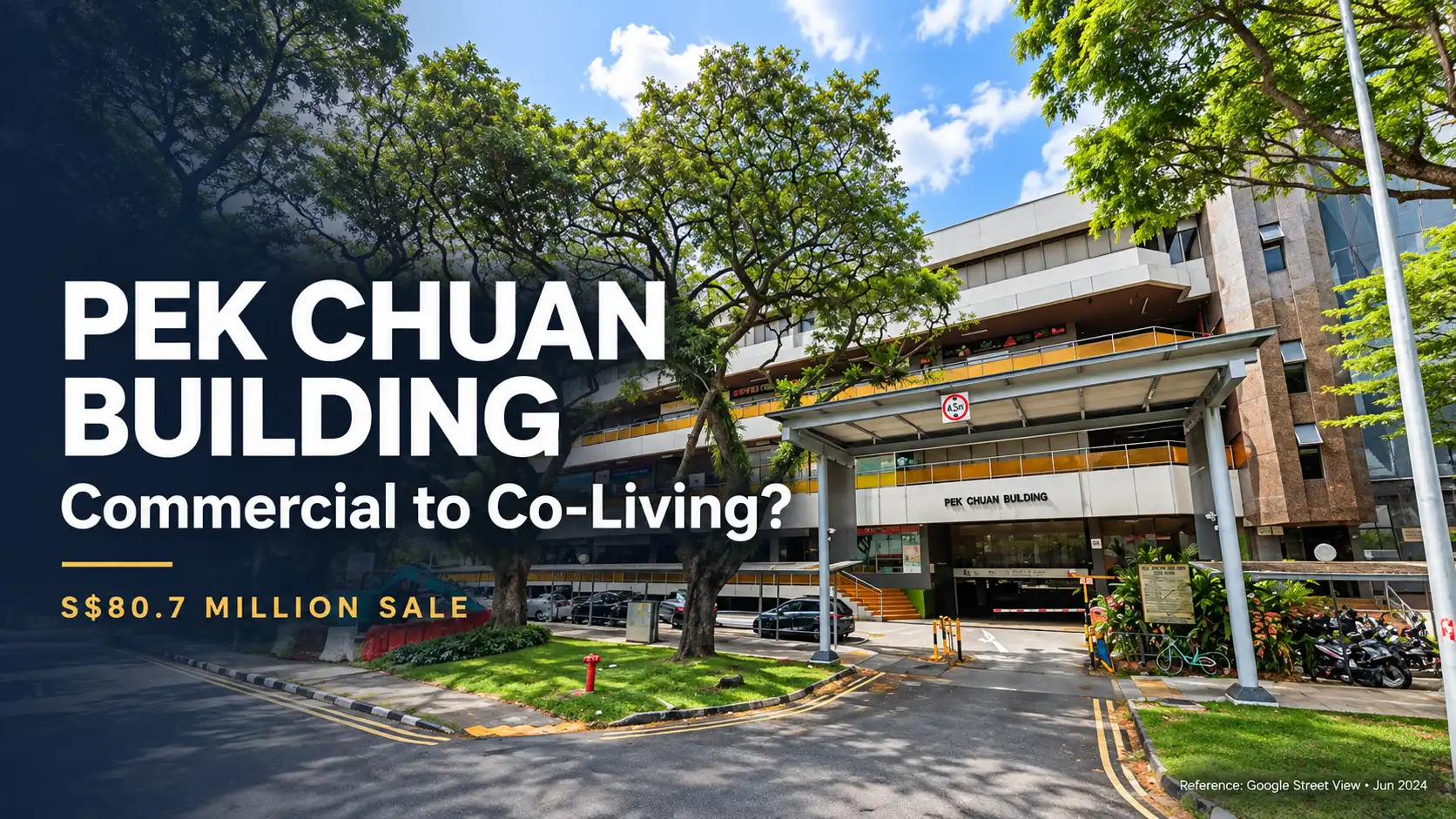
GH15’s business background makes the purchase interesting
According to the Business Times report, GH15 Ventures comprises GH15 Investments and H16 Capital, with H16 Capital wholly owned by Hilltop Capital.
Public company records list GH15 Investments’ primary activity as operating hostels and dormitories for students, workers and other individuals. Its secondary activity covers general contracting, including building construction and major upgrading works. The company was incorporated in August 2025.
These activities could support a strategy of acquiring and adapting older buildings. They do not, however, establish an existing portfolio of operating hostels or confirm what the company intends to do at Pek Chuan Building.
The accommodation category is also broader than backpacker tourism. Students, working adults, and transient visitors have different requirements, and the relevant planning framework depends on the proposed use.
The acquisition could therefore represent an accommodation-related opportunity, a commercial investment, or a combination of commercial ownership and longer-term repositioning.
A commercial building on the edge of two different neighbourhoods
Pek Chuan Building occupies approximately 28,700 sq ft at 116 Lavender Street. Its Commercial zoning and plot ratio of 2.5 sit within a varied urban setting.
Towards Jalan Besar, Hamilton Road and Tyrwhitt Road are smaller commercial plots and an established network of street-level businesses. Towards Kallang Avenue and Kallang Place are larger Business 1 sites. Residential areas and access to Bendemeer and Lavender MRT stations add to the potential customer base.
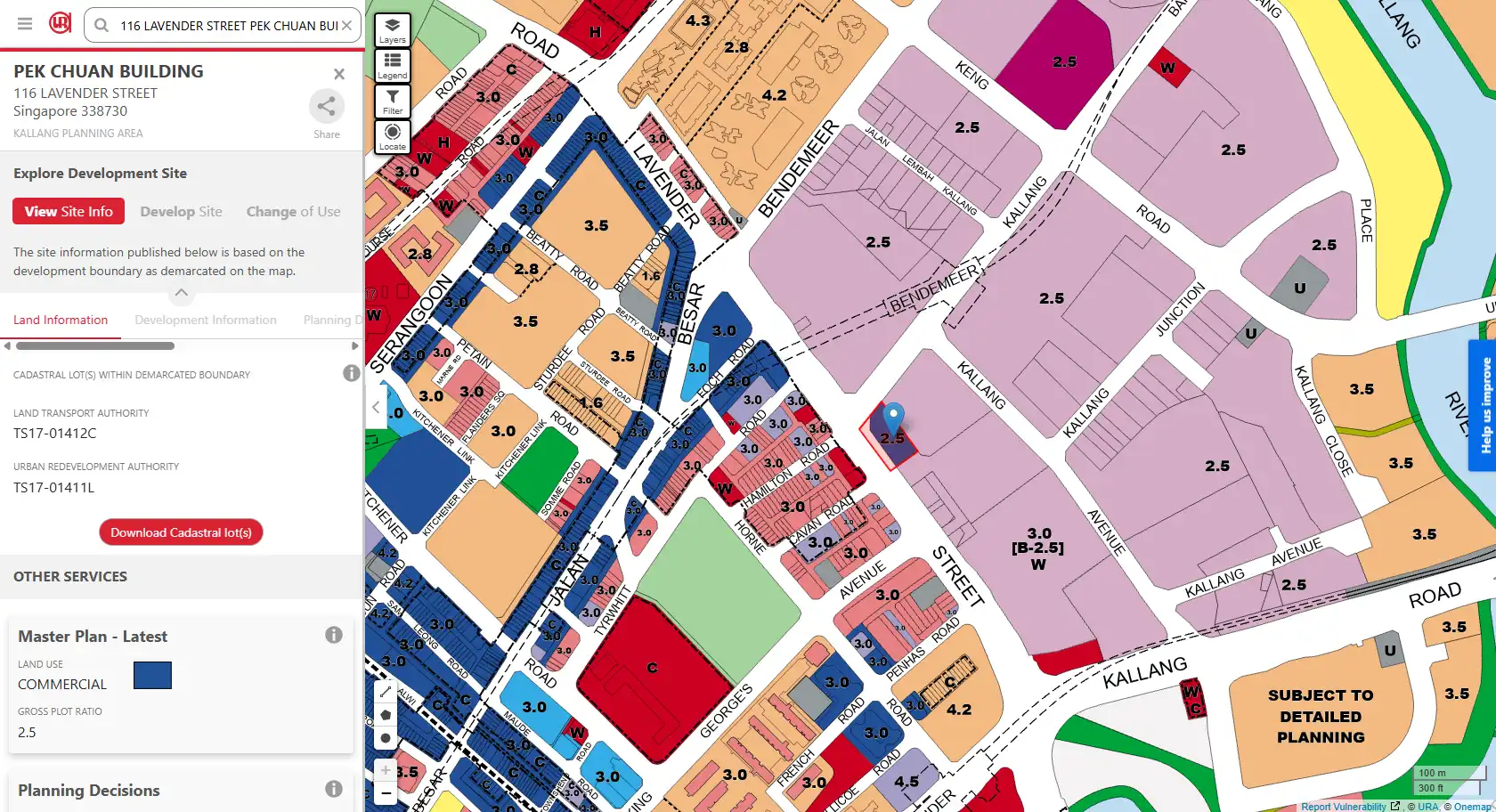
This position supports the building’s existing showroom and business-service functions. It could also be relevant to accommodation users who value access to employment, transport and everyday amenities, subject to an appropriate planning approval.
The hotel and backpacker-hostel boundary needs careful interpretation
Pek Chuan Building lies outside the shaded area displayed under URA SPACE’s Hotels & Backpacker Hostels layer, on the opposite side of Lavender Street.
This overlay is separate from the underlying Master Plan land-use zoning. It should not be interpreted as an exclusive zone within which all accommodation must be located.
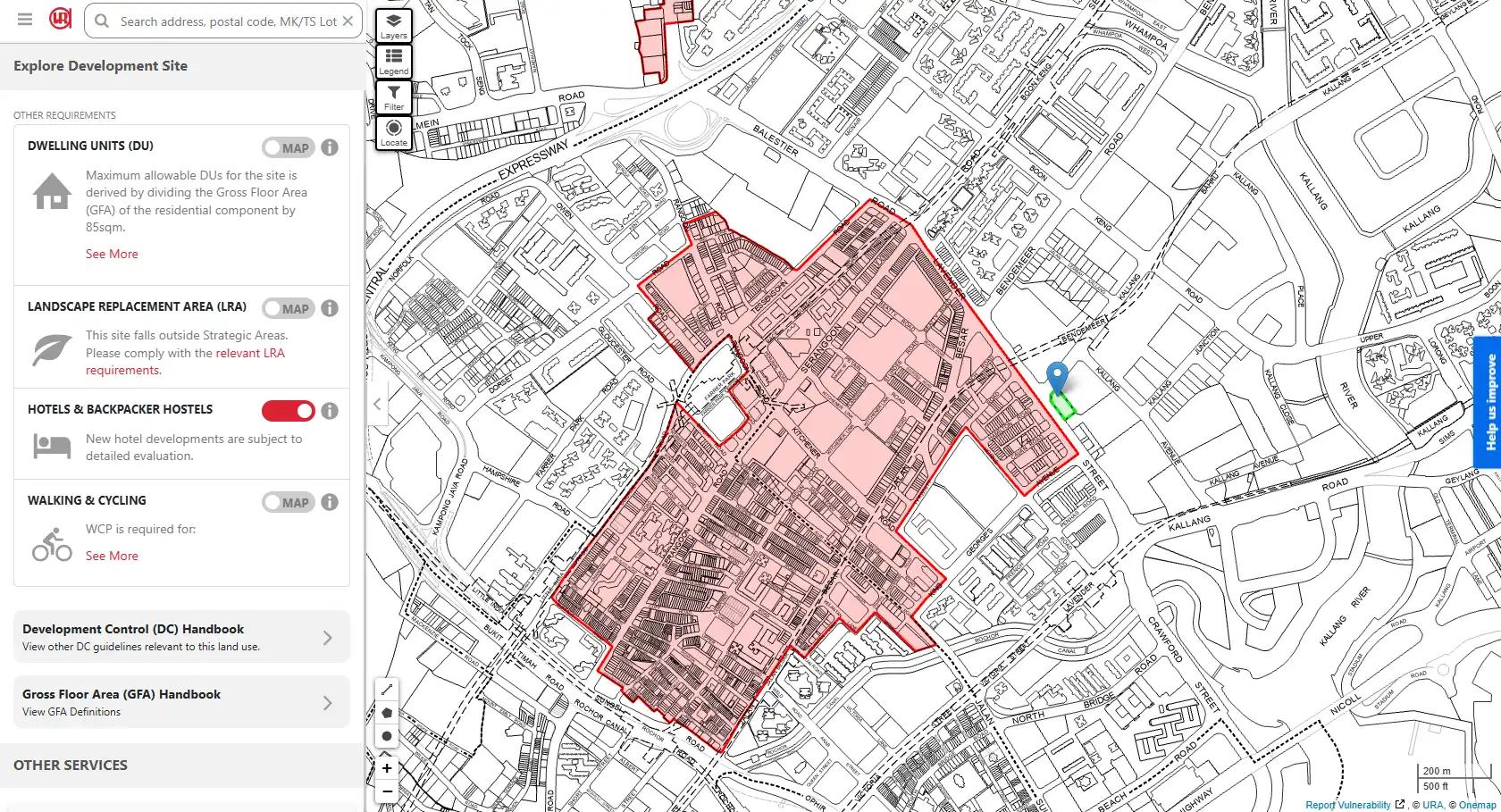
The distinction matters because a hotel, student hostel and serviced apartment are different planning uses. A co-living brand can operate accommodation under different approved uses; the branding alone does not determine the planning category.
The more useful question is therefore what accommodation use could be approved for the particular site, rather than whether the property falls inside a shaded hotel-related area.
What businesses are currently in Pek Chuan Building?
Pek Chuan Building already serves an identifiable group of commercial users. Business websites show a mix of home-improvement showrooms, interior-design firms and office-based services.
| Business | Published location | Business activity |
|---|---|---|
| Starke Living | #01-03 | Bathroom-products showroom |
| Interior Diary | #01-04 | Interior design and renovation |
| Renozone | #01-07 | Interior design and renovation |
| Dynamic Safety | #04-17 | Safety and facility-management services and consultancy |
These businesses publish Pek Chuan Building as a showroom, business location or office on their own websites. The examples illustrate its commercial character rather than a complete tenancy schedule.
The ground-floor businesses form a complementary home-improvement cluster, allowing customers to browse bathroom fittings and explore renovation and interior-design services in one location.
For a new owner, retaining and strengthening that cluster could be a viable option to investigate. Any accommodation-led proposal would need to consider the existing occupiers, lease commitments, conversion costs and whether some commercial frontage could be retained.
GSM Building shows how a commercial property’s use can evolve
The former GSM Building at 141 Middle Road provides a more direct comparison than a conventional hotel acquisition.
Under Master Plan 2019, the site was shown in the blue Commercial designation. It was an existing commercial property before its repositioning into Coliwoo Midtown.
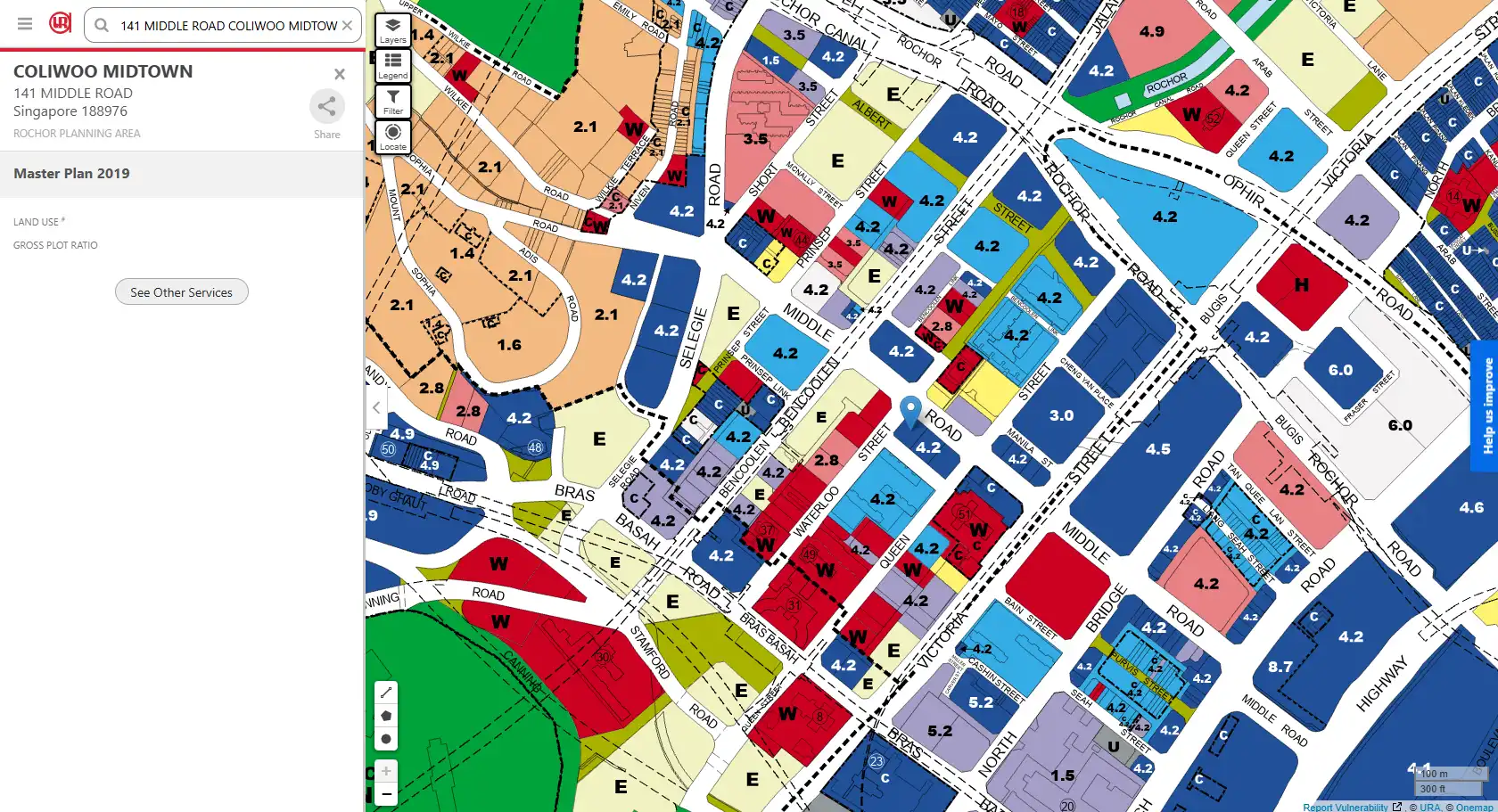
The latest Master Plan 2025 view, incorporating approved amendments, identifies the selected site as Residential with Commercial at 1st Storey. This establishes a different planning basis, with a predominantly residential character and commercial activity at ground level.
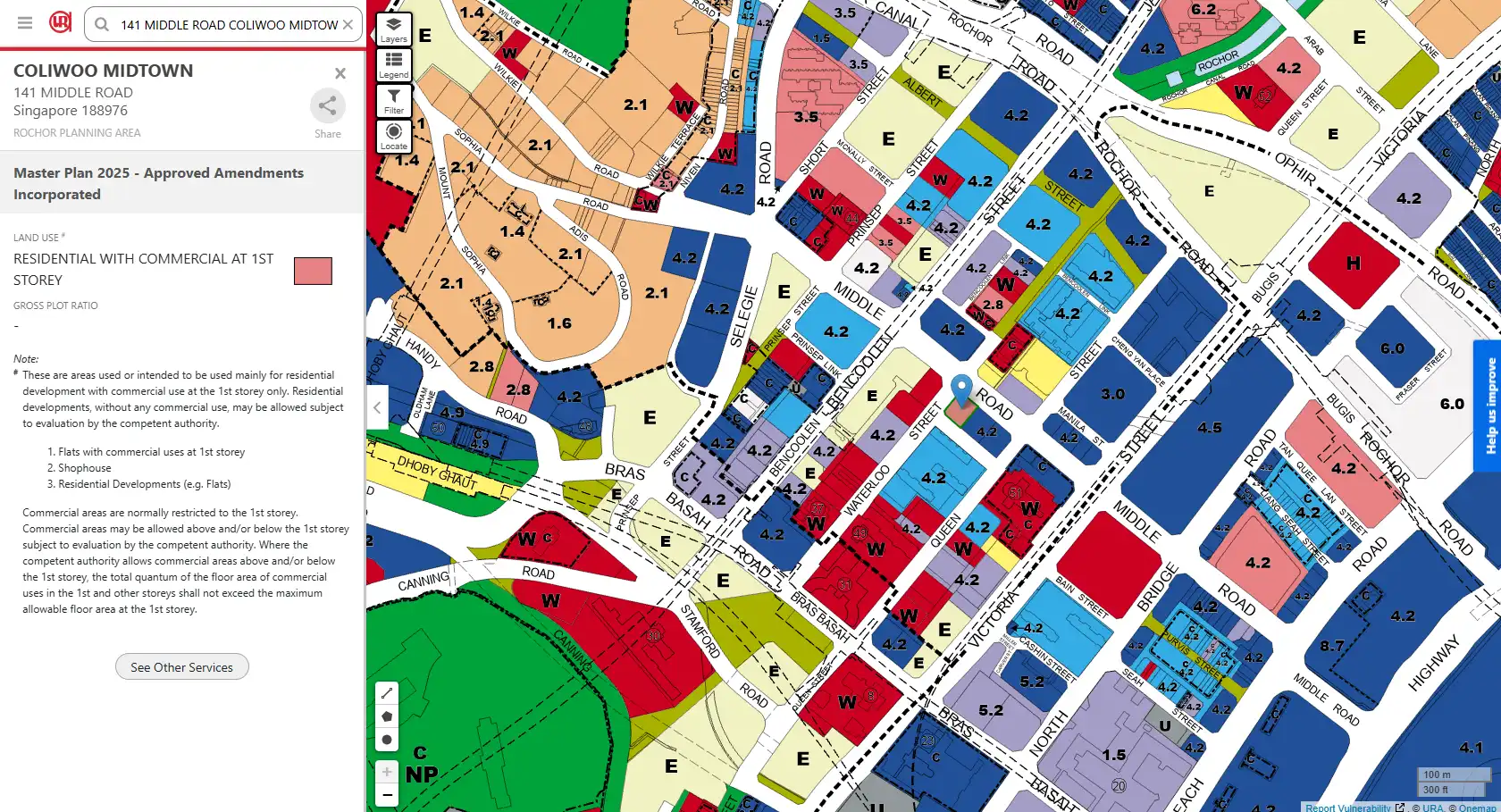
The approval process is also documented. LHN disclosed that it obtained Outline Planning Permission in February 2024 to change the third to sixth levels of GSM Building from commercial use to serviced apartments.
Coliwoo’s subsequent prospectus described 141 Middle Road as comprising co-living serviced-apartment units, with commercial shop units on the first floor. This supports the distinction between its accommodation operation and a conventional hotel or backpacker hostel.
The planning change was therefore part of a specific property-repositioning process. It was not an automatic entitlement arising from the original Commercial zoning.
141 Middle Road also lies outside the shaded hotel-related area
The URA Hotels & Backpacker Hostels layer also places 141 Middle Road outside the nearby shaded area.
That observation strengthens the comparison, but the reason is important: Coliwoo’s documented proposal involved serviced apartments, while the later land-use designation became Residential with Commercial at 1st Storey.
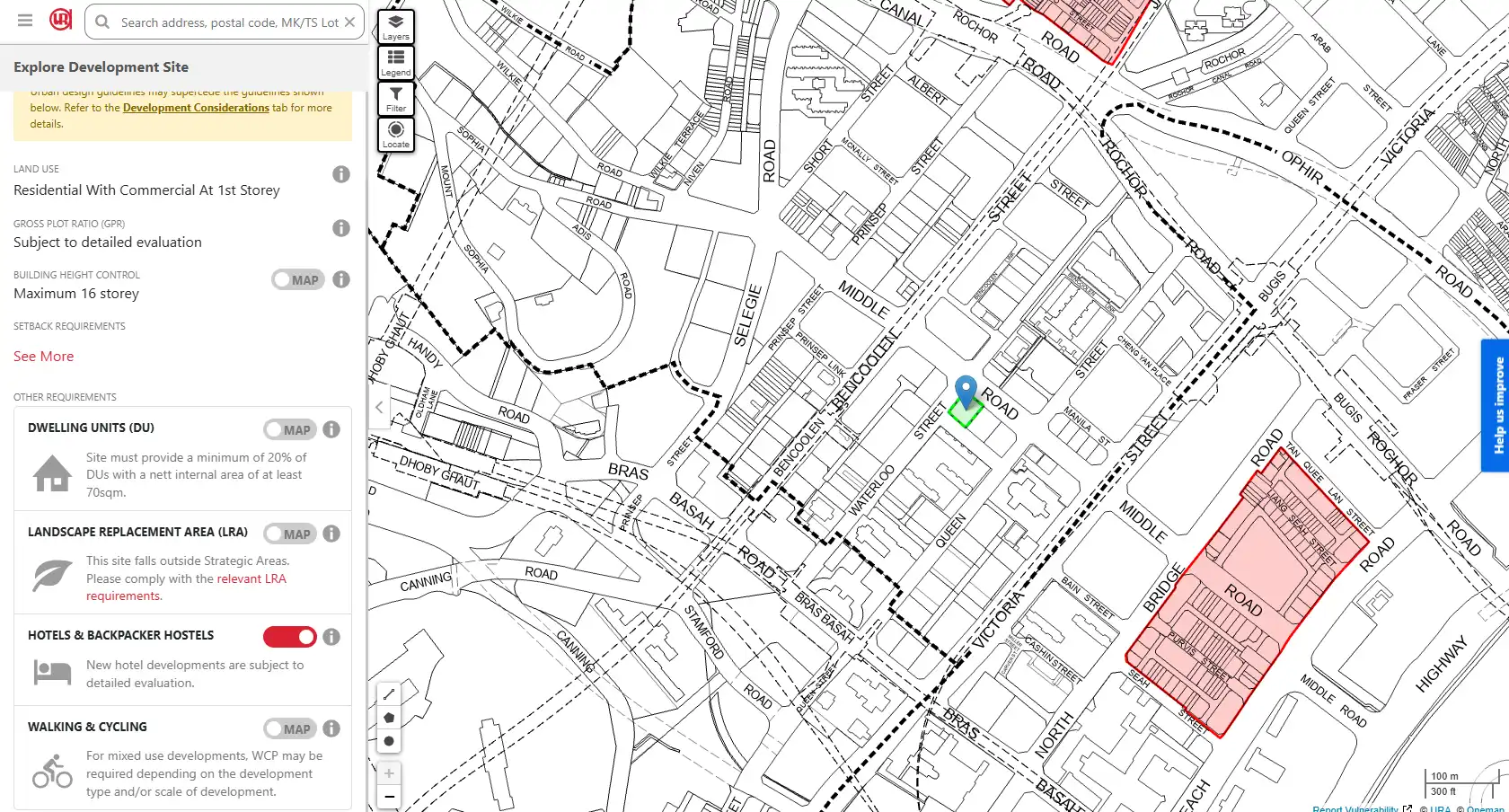
The lesson from GSM Building is that an accommodation proposal can involve a different land-use and approval pathway from a hotel proposal. The hotel-related overlay alone cannot answer whether a commercial building might eventually be repositioned for another form of accommodation.
Could GH15 pursue a similar approach?
GSM Building makes a comparable strategy at Pek Chuan Building worth considering. It shows that an existing commercial property can change use and emerge with accommodation above retained commercial space.
It does not establish that Pek Chuan Building would receive the same approval.
The two sites have different surroundings, building layouts and planning considerations. At Lavender Street, an accommodation proposal would need to address its relationship with nearby employment uses, road activity, access, and the building’s physical suitability.
A scheme retaining commercial space at ground level and introducing an approved accommodation use above could be one concept to investigate. That remains an analytical possibility, rather than an announced GH15 plan.
Whole-building ownership could help coordinate entrances, circulation, services and the allocation of uses. The financial case would still depend on how much usable accommodation could be created, the cost of the works and the income sacrificed during conversion.
The next development to watch is the proposed use
Pek Chuan Building’s S$80.7 million sale is interesting because the buyer’s registered business activities suggest possibilities beyond conventional commercial leasing.
The existing building has a functioning commercial identity, particularly among home-improvement and business-service users. At the same time, GSM Building provides a documented example of commercial space being repositioned as serviced-apartment accommodation, with a different planning designation.
We believe a confirmed planning proposal would be the clearest indication of GH15’s strategy. It would reveal whether the buyer intends to strengthen Pek Chuan Building’s commercial role or pursue a change that brings the property closer to its accommodation-related business activities.
The comparison with 141 Middle Road gives that possibility substance. The outcome at Lavender Street will depend on its own approvals, design and investment economics.
Disclaimer: This article is for general information and commentary only and does not constitute investment, legal or planning advice. References to GH15’s business activities, potential accommodation uses and comparisons with 141 Middle Road do not confirm the buyer’s intentions or any approval for Pek Chuan Building. Any change of use, rezoning or redevelopment would require the relevant authorities’ approval and assessment of site-specific requirements. Planning information, business listings and transaction details may change.
Article contributed by Jerry Wong.

Jerry Wong is a realtor at Propnex Realty, bringing a rich background in interior and lighting design to his work. He loves exploring diverse spaces and observing the transformative power of real estate. Beyond his professional role, Jerry finds his greatest fulfillment in connecting people with the right properties, gaining immense satisfaction from helping clients achieve their dreams.

Let’s Discuss Your Property Plans
Interested in This Property?
Buying, selling or renting? Get a free consultation with realtors with a background in interior and lighting design. We’ll discuss your goals and help you assess your options—from pricing and timelines to layout practicality and space potential.
Share your contact details below, and we will get in touch to understand your needs and suggest the next steps. No pressure. No obligation to proceed.