
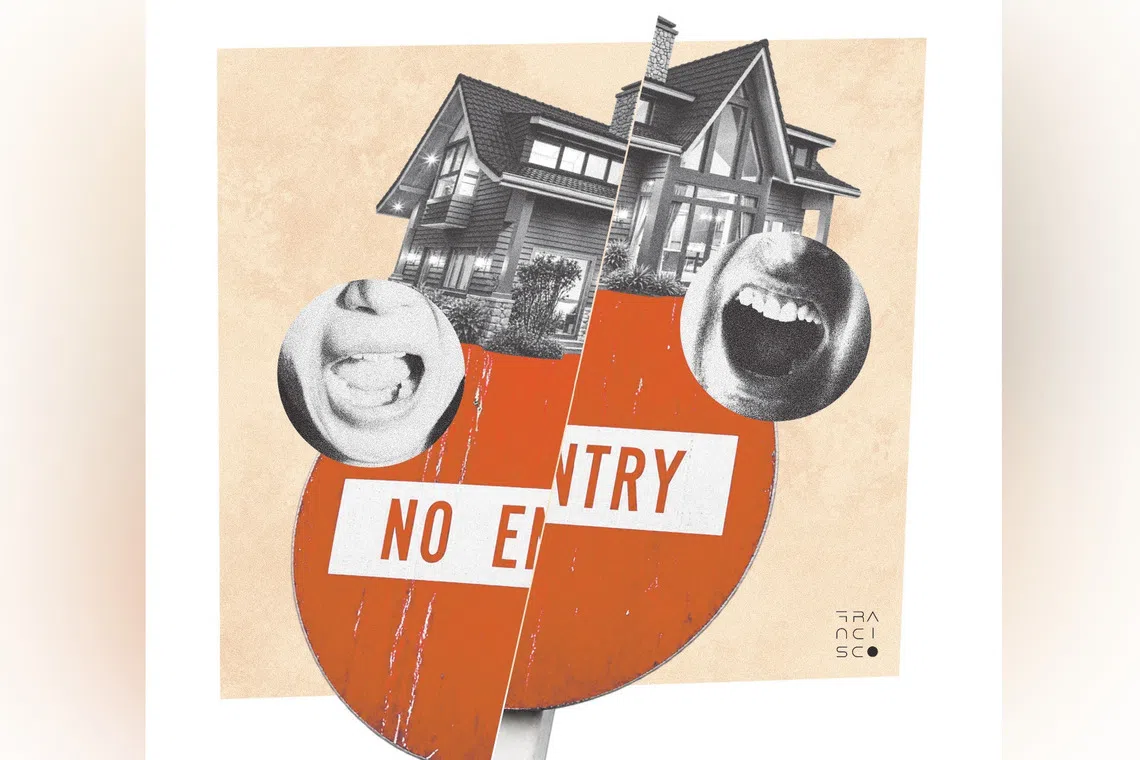
SINGAPORE – A man fought with his sister in the High Court not over the share of the house that they jointly owned, but over his right to live in it.
In this recent unusual family dispute, a man sued his elder sister after she stopped him from living in the $6.5 million house they co-owned.
It was ironic that he was prevented from living in the house he once fully owned, having inherited it from his grandmother, who named him joint owner when she bought it in 1974.
When she died in 1997, he became the sole owner of the house. But in 2009, at the request of his father, he transferred a 50% share of the house to his elder sister without any payment.
The co-ownership of the house was not a problem then because all these years, he and his family had lived in Australia.
The two-storey semi-detached house had five bedrooms.
The dispute over the right to live in the house started in 2017 when the man decided to move back to Singapore to spend more time with his elderly mother, who was living in the house with his sister.
It was then that bad blood started to fester, because the sister refused to move her belongings out of the bedrooms he used before he moved to Australia.
One heated quarrel got so bad that the police were called to the house. But the officers left without taking any action after advising the two to try to solve the dispute amicably.
Things simmered down later when the man decided to rent a condominium unit instead of moving back to the house. The siblings continued to live separately even after their mother died in 2020.
Co-owner cannot be barred from the house
In late 2021, the man told his elder sister that he wished to move back to their house because the lease for his apartment would end that year.
To make his stay more comfortable, he even volunteered to renovate his room and parts of the house at his own cost.
But to his surprise, his sister flatly rejected his request and instead sent him a WhatsApp message with two options – buy over her half share of the house and she would leave, or sell the house and split the proceeds equally.
This took the man by surprise and he then replied: “I have no intention of buying or selling. (Being an) owner of the house, I do have the right to live in it.”
He added that he was not asking her to contribute to the renovation. “If you don’t have time for the renovations, I will do it myself,” he wrote.
But his sister was adamant about not letting him move back into the house and even suggested he ask his employer to resolve his leasing arrangement.
“Based on (your wife’s) and your renovation suggestions, we’ve very different lifestyles and habits. It is obvious to me that we cannot stay together as conflicts will arise,” she added.
The deadlock continued for another two years until August 2023, when the sister went to court for an order to sell the house. Her brother objected to the sale but failed to stop it, as he could not afford to buy out his sister’s half share.
The house was eventually sold for $6.5 million, which was shared by the two owners.
One would have thought that the sale would have ended the feud but it instead sparked two court proceedings because the man sued his sister for preventing him from living in the house and causing him to incur rental charges for about two years.
The High Court upheld his claim and ordered her to compensate him $146,000. She appealed but lost her case again.
Here are two lessons from the case that all property owners should know.
The price for kicking out co-owners
Owners have the right to live in their own homes and they could claim for compensation if they are unfairly evicted.
But this does not mean that they have to be physically thrown out or locked out of their homes. A “constructive ouster” can happen if the owner is prevented from residing at the property as a result of the “wholly unreasonable conduct” of the then occupier.
In this case, High Court Judge Alex Wong found that the sister’s unreasonable conduct amounted to an “ouster” because she prevented her brother from moving back to their house, which had more spare rooms after their mother died.
As both owners had equal rights to live in the house, the judge found that restricting a co-owner’s right of occupation unlawfully amounts to an ouster.
For instance, after the man proposed moving back and carrying out minor renovations at his own expense, his sister explicitly rejected his request with her message that they could not “stay together as conflicts will arise”.
Noting that the man had in the past made requests to move back into the house, the judge found that the sister was wholly unreasonable in making co-living difficult for her brother.
“The (sister) insisted that they cannot stay together, and the (brother) could only move in if (she) was bought out,” the judge said.
As the sister chose not to explain or rebut her brother’s claim, the judge found that the brother had succeeded in his argument that his sister’s conduct amounted to an ouster.
The price of fighting in court
For losing both rounds in the courts, the sister had to foot over $92,000 of her brother’s legal costs.
She probably had to pay similar amounts, if not more, for her own lawyers to fight the cases and this meant that she could be out of pocket to the tune of $200,000 just on legal fees.
Ironically, the legal expenses were higher than the total compensation of $146,000, which meant that she could have saved over $50,000 even if she agreed to pay her brother in full without any discounts.
But by choosing to fight it out in court, she ended up losing some $350,000.
During the trial, their elder brother – who lived in his own home and was not involved in the dispute – was called to give insight into their family’s background and living arrangements.
At the end of his testimony, he said: “You can give and take in life. You don’t give and take, where got harmony? To me, both of them like to fight.”
The judge explicitly cited this statement in his judgment, noting that it was unfortunate the siblings did not adopt their elder brother’s wisdom to compromise.
He said that the court is not always best placed to resolve family disputes because it makes decisions based on narrow issues of law and the facts specific to those issues.
“The court cannot resolve the years’ and sometimes decades’ worth of baggage between family members,” he added.
“Source:[Man sued sister who stopped him from living in house they co-owned] © Singapore Press Holdings Limited. Permission required for reproduction”
Let’s Discuss Your Property Plans
Interested in This Property?
Buying, selling or renting? Get a free consultation with realtors with a background in interior and lighting design. We’ll discuss your goals and help you assess your options—from pricing and timelines to layout practicality and space potential.
Share your contact details below, and we will get in touch to understand your needs and suggest the next steps. No pressure. No obligation to proceed.