
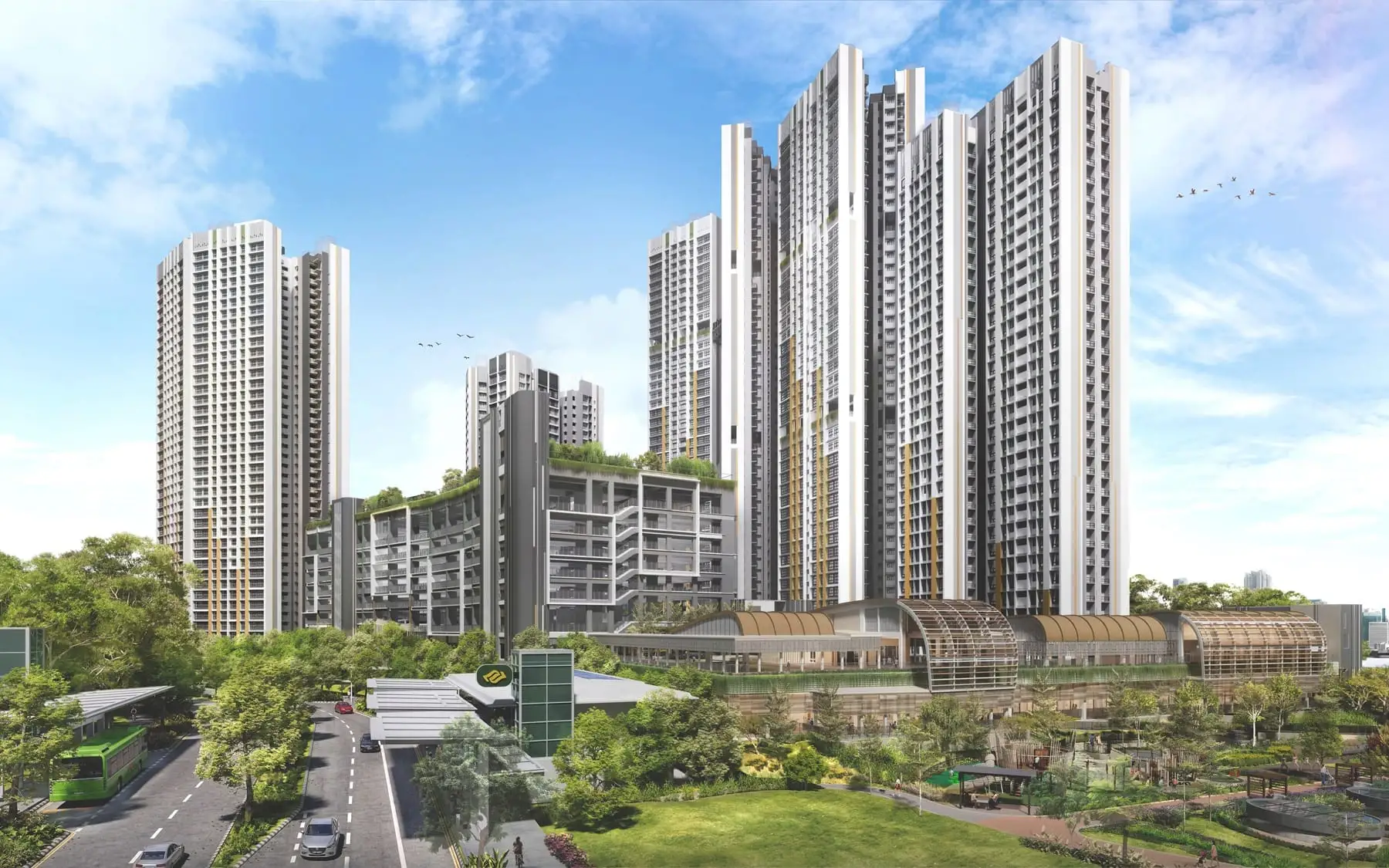
Singapore’s November 2026 Build-to-Order exercise gives more households access to subsidised housing. But for applicants considering Plus and Prime flats, the purchase price is only part of the financial decision.
HDB launched 7,964 flats across seven projects on 4 November, in the first exercise since monthly income ceilings rose to S$16,000 for families and S$8,000 for singles. Applications close at 11.59 pm on 11 November 2026.
The wider eligibility pool could bring stronger competition. At the same time, buyers of the more tightly regulated flats must weigh the location and additional subsidies against a longer occupation commitment and a future subsidy recovery payment.
The useful question is therefore: how well does the home fit the household’s needs, and how much of an eventual sale price would remain available for its next move?
Seven projects, with different commitments
| Project | Town | Classification | Subsidy recovery |
|---|---|---|---|
| Sembawang Anchor | Sembawang | Standard | None under this framework |
| Plantation Dew | Tengah | Standard | None under this framework |
| Chencharu Acres | Yishun | Standard | None under this framework |
| Merpati Meadow | Geylang | Plus | 8% |
| Bayshore Sails | Bedok | Plus | 9% |
| Bayshore Oasis | Bedok | Plus | 9% |
| Toa Payoh Hillside | Toa Payoh | Prime | 11% |
Source: HDB and HDB’s classification guide.
For regular 99-year flats, Standard projects have a five-year Minimum Occupation Period (MOP), while Plus and Prime flats have a 10-year MOP. The MOP starts when owners collect their keys, excluding periods that do not count as occupation. Plus and Prime owners also cannot rent out the whole flat, even after the MOP. These conditions make the household’s likely length of stay central to the choice.
What an 11% recovery means in dollars
Four-room flats at Toa Payoh Hillside without balconies start from S$558,000 before grants. At Merpati Meadow, four-room prices start from S$545,000. These are starting prices, rather than prices for every unit.
Consider a purely hypothetical purchase at S$558,000 followed by a resale at S$1 million after the applicable MOP. Assuming the valuation does not exceed the sale price, an 11% recovery would amount to S$110,000.
That leaves S$890,000 after subsidy recovery, before the outstanding loan, CPF refunds and selling expenses. Subtracting the original S$558,000 purchase price produces S$332,000—a simplified price difference after recovery, not net profit or cash proceeds.
| Hypothetical resale price | 11% recovery | Sale price after recovery | Less S$558,000 purchase price |
|---|---|---|---|
| S$800,000 | S$88,000 | S$712,000 | S$154,000 |
| S$1,000,000 | S$110,000 | S$890,000 | S$332,000 |
| S$1,200,000 | S$132,000 | S$1,068,000 | S$510,000 |
Illustrations are calculations, not forecasts. They assume valuation is no higher than resale price and exclude grants, financing, stamp duties, renovation, maintenance and transaction costs. CPF refunds affect the split between cash and CPF proceeds; they should not automatically be treated as an economic loss.
HDB calculates recovery on the resale price or valuation, whichever is higher. It is not a percentage of the owner’s profit. For example, a S$1 million sale with a S$1.05 million valuation would produce an 11% recovery of S$115,500.
A higher recovery rate does not establish worse value
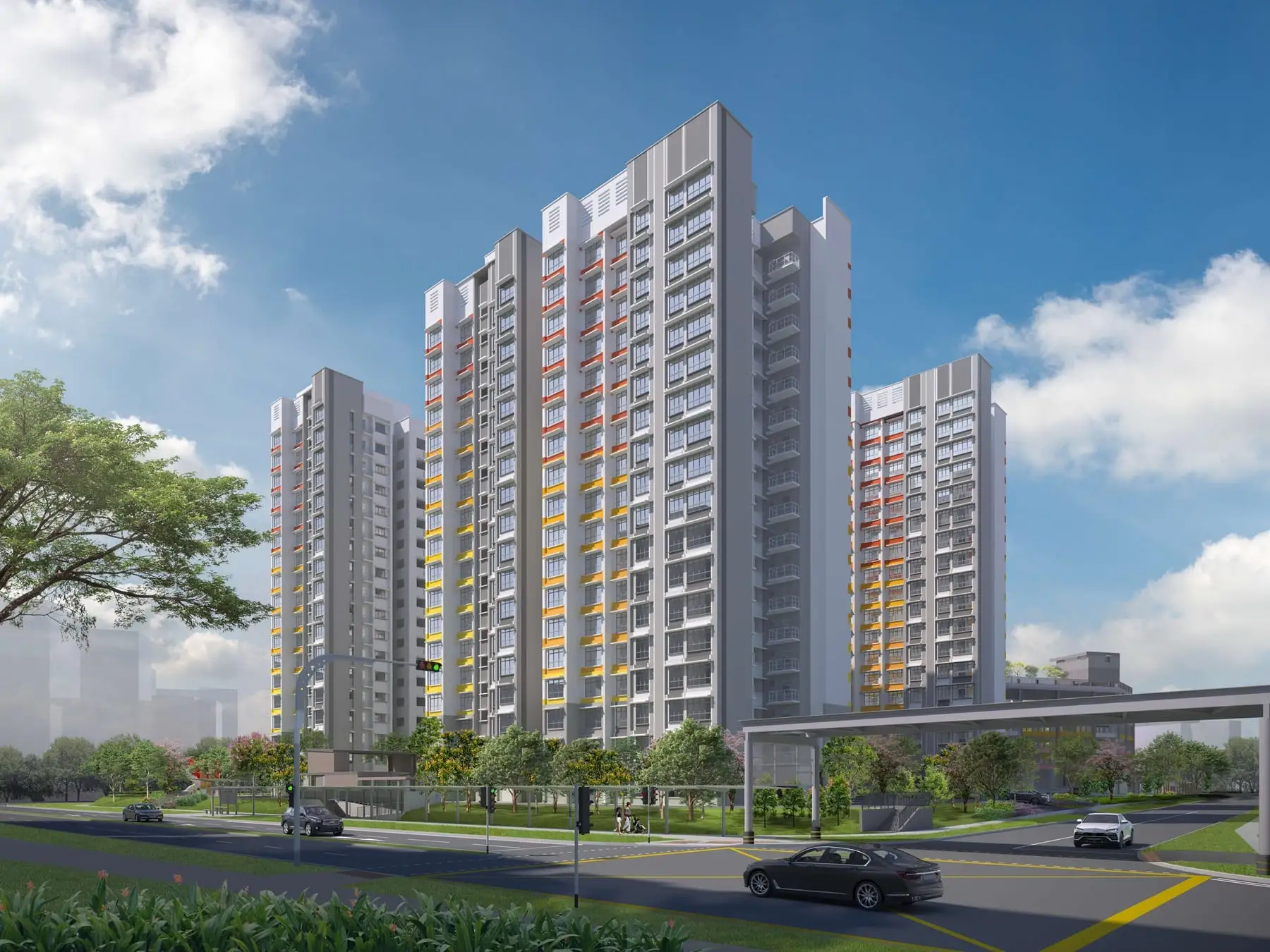
At an identical hypothetical S$1 million recovery base, the payments would be S$80,000 at 8%, S$90,000 at 9% and S$110,000 at 11%. The difference between 8% and 11% is S$30,000.
That comparison isolates the recovery payment. It cannot establish which project is the better purchase. Plus and Prime flats receive additional subsidies, and HDB says recovery rates match those subsidies. Buyers also receive different locations, layouts and everyday conveniences.
A household that saves commuting time and lives close to family for many years may place substantial value on those benefits. Another household expecting to relocate or upgrade sooner may value a shorter occupation commitment more highly.
Future appreciation comparisons should therefore account for the entry price, ownership restrictions and recovery payment together. A headline resale price alone cannot show the financial outcome.
Higher ceilings expand eligibility; final competition remains uncertain
The higher income ceilings widen the potential applicant pool. That creates a plausible route to stronger demand, but eligibility does not automatically translate into an application, and an application does not guarantee a completed purchase.
As at 9 November, applications remain open. The eventual pressure on ballot chances will depend on where households apply, the flat types they choose, and their applicant categories and priority status. CNA reports analysts’ expectations of stronger competition; those expectations should be distinguished from final application results.
For applicants, the useful comparison is the application rate relevant to their own category and preferred flat type. A single overall rate can conceal substantial differences. HDB updates application rates during the exercise, and selection is by ballot rather than application order.
A shorter wait also has financial value
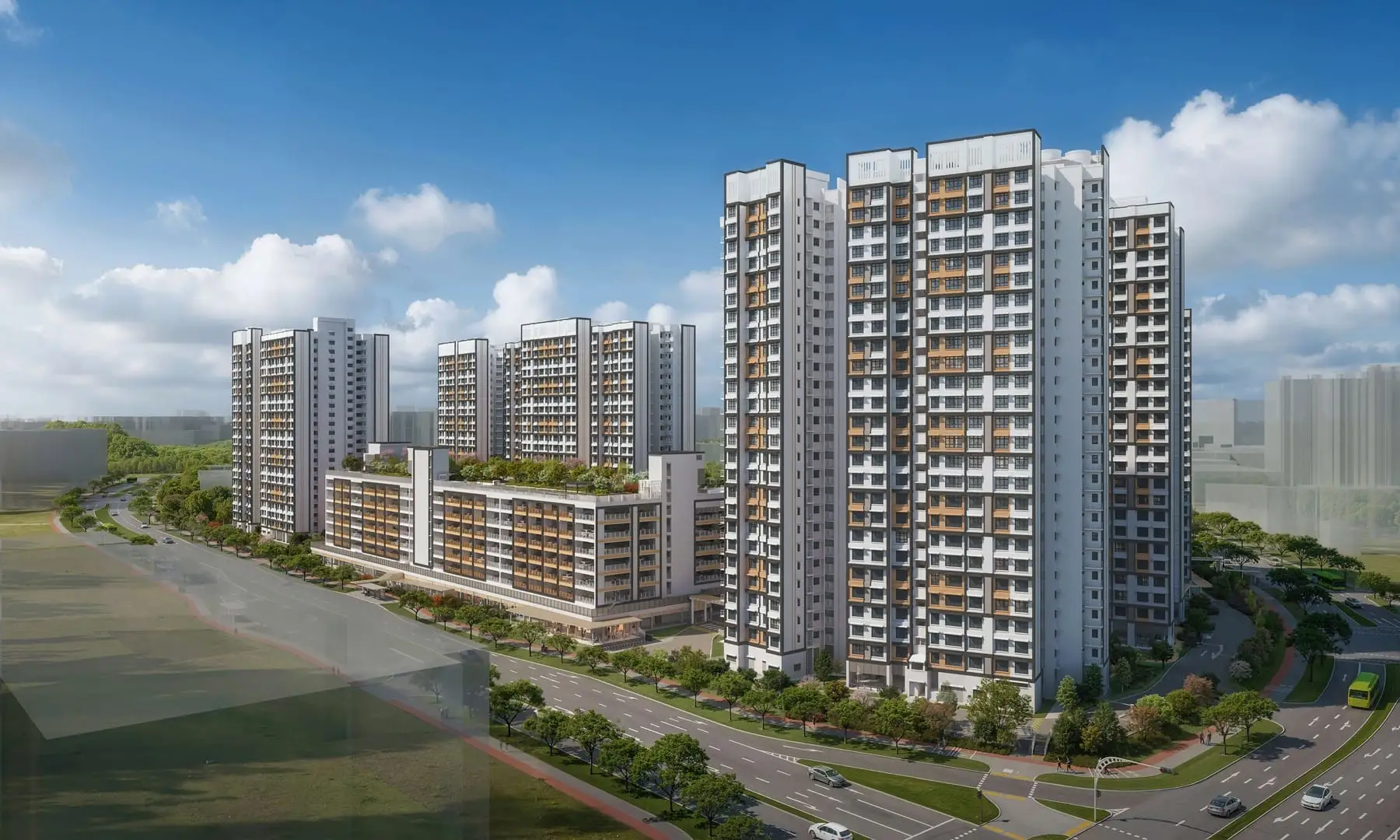
Sembawang Anchor offers 1,310 flats with waiting times below three years; the other six projects have waits below four years. The launch also includes 256 Community Care Apartments at Toa Payoh Hillside, the first offered after the qualifying age fell from 65 to 55.
For a household renting while it waits, time has a measurable cost. For example, avoiding 12 months of rent at S$3,000 a month saves S$36,000 before other cost differences. That does not make it the best project, but it shows why the waiting period deserves a place alongside purchase price and location.
The November exercise gives more households a chance to buy a subsidised home. A sound choice will depend on affordability today, suitability over the occupation period, and the proceeds available when the household eventually moves. For Plus and Prime buyers, putting subsidy recovery into dollar terms makes that last question much clearer.
Disclaimer: This article provides general information and illustrative analysis, not personalised financial or property advice. Hypothetical resale prices are not forecasts. Verify eligibility, project terms, prices and deadlines with HDB. All project images are HDB artist’s impressions; actual completed developments may differ.
Article contributed by Jerry Wong.

Jerry Wong is a realtor at Propnex Realty, bringing a rich background in interior and lighting design to his work. He loves exploring diverse spaces and observing the transformative power of real estate. Beyond his professional role, Jerry finds his greatest fulfillment in connecting people with the right properties, gaining immense satisfaction from helping clients achieve their dreams.
Let’s Discuss Your Property Plans
Interested in This Property?
Buying, selling or renting? Get a free consultation with realtors with a background in interior and lighting design. We’ll discuss your goals and help you assess your options—from pricing and timelines to layout practicality and space potential.
Share your contact details below, and we will get in touch to understand your needs and suggest the next steps. No pressure. No obligation to proceed.