
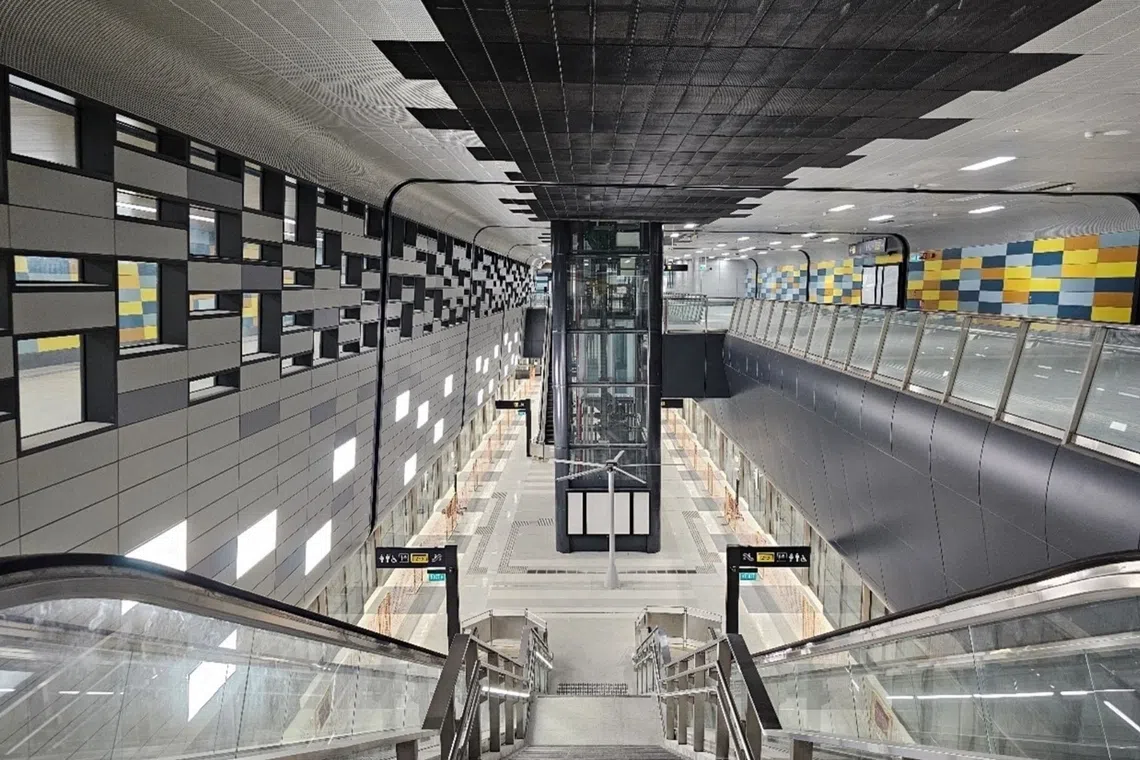
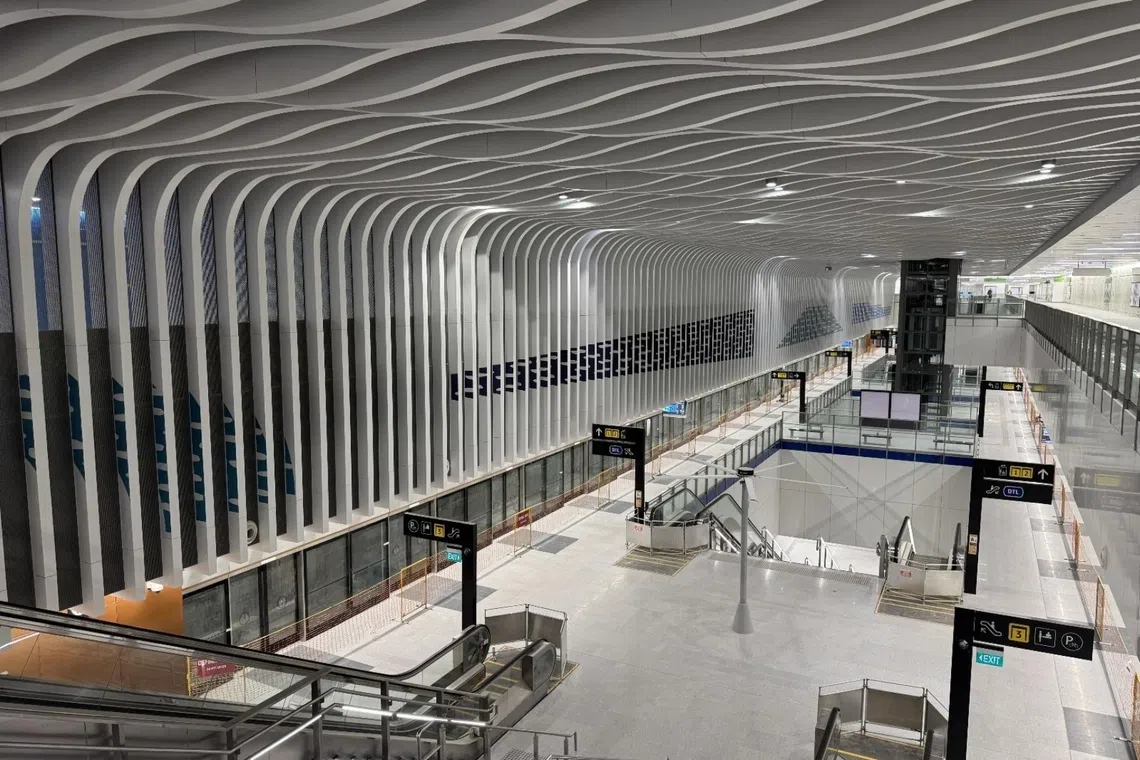
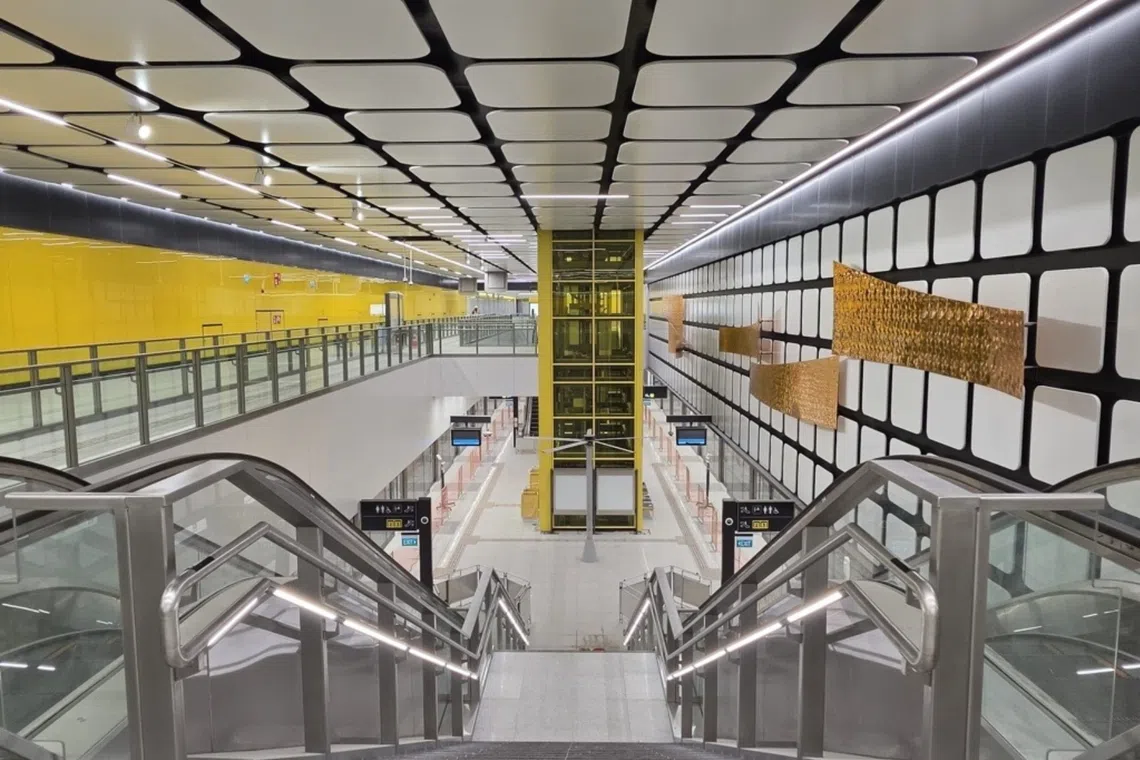
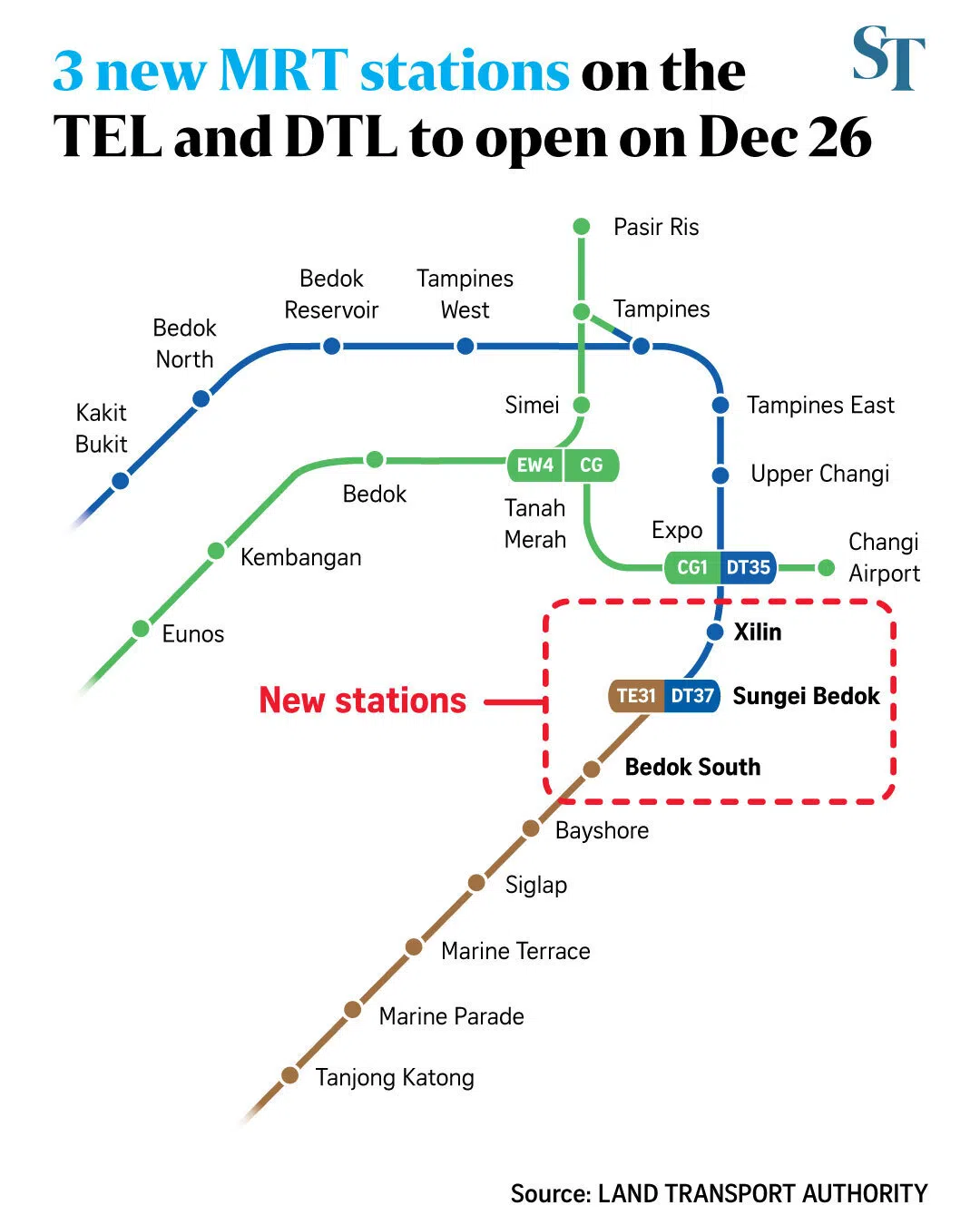
SINGAPORE – The last two stations of the Thomson-East Coast Line (TEL) – comprising Bedok South and Sungei Bedok stations – will begin operations on Dec 26, along with Xilin station on the Downtown Line (DTL).
Sungei Bedok station, which sits on one end of the TEL, will also function as an interchange station that connects to the DTL, said Transport Minister Jeffrey Siow on Nov 4.
He said: “These new stations will stitch together two major train corridors, and give commuters in the east new routes, and faster journeys.
“In fact, residents in the east will be able to take the Thomson-East Coast Line continuously into the city centre, up north to Woodlands, and soon, conveniently across the Straits into Malaysia.”
Commuters will be able to board a train at Woodlands North station towards Bukit Chagar station in Johor when the Johor Bahru-Singapore Rapid Transit System Link opens in February 2027.
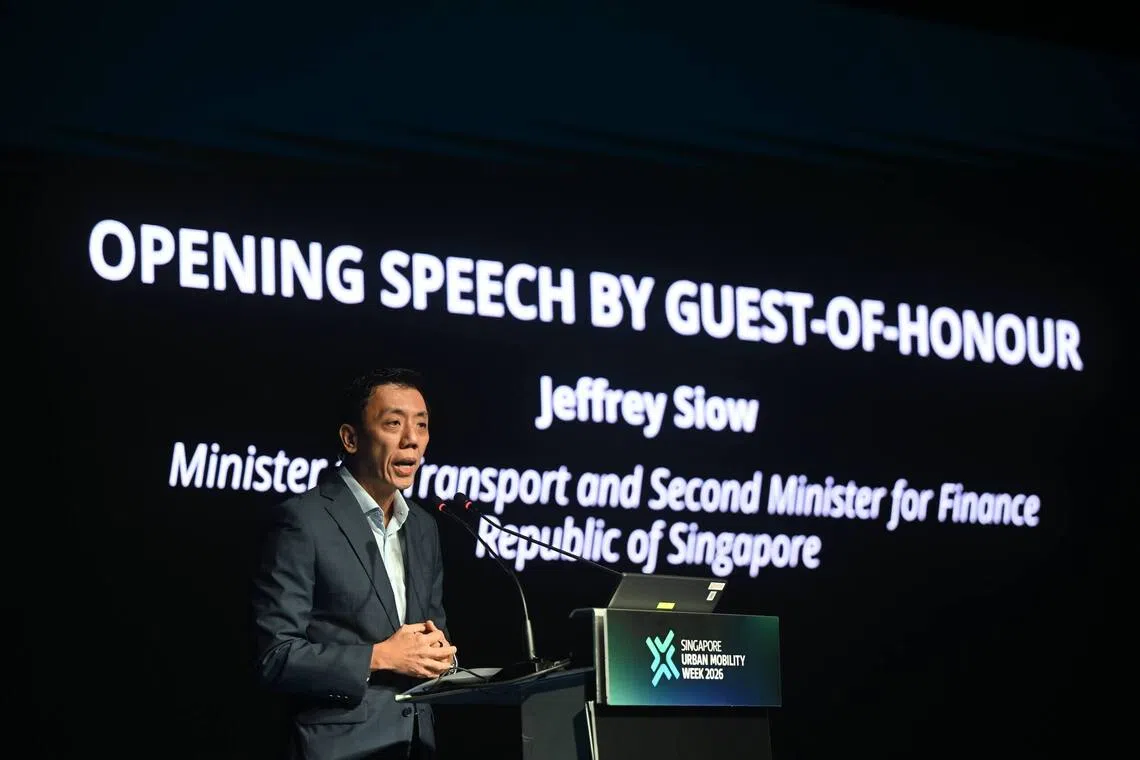
Siow was speaking at the opening of the Singapore Urban Mobility Week, which runs from Nov 4 to 6 at the Suntec Singapore Convention & Exhibition Centre. The three-day event brings together 8,000 policymakers, transport operators and industry leaders from more than 50 countries.
In a statement on Nov 4, the Land Transport Authority (LTA) said the new stations will improve access to employment hubs in the eastern area, such as Changi Business Park and Tampines Regional Centre.
The stations, it added, will allow for faster, more convenient journeys for those living and working along the East Coast corridor.
For instance, travelling from Havelock to Changi Business Park now takes about 70 minutes and involves a bus transfer. When the new stations open, it will take commuters 45 minutes, without needing any bus transfers.
Siow said the MRT network is the “backbone” of Singapore’s land transport system, and the Government’s goal is to ensure that trains remain “the most convenient choice”.
Besides long-term infrastructural development, including the upcoming Jurong Region Line and Cross Island Line, as well as planning for the Seletar and Tengah lines, Siow said it is also important to shape demand.
He cited the reintroduction of the free morning off-peak travel scheme for those who tap in at certain stops along the North East Line, as well as Sengkang-Punggol LRT.
As ticketing is account-based, he added that incentives can possibly be tailored more directly.
Those who are more likely to adjust their travel times will be able to reap the largest benefits, while those who cannot will still benefit from less crowded trains during peak hours, Siow said.
Future transport goals
Besides the MRT system, Siow also touched on plans to electrify the public bus fleet.
By 2030, Singapore aims to have more than 3,000 public buses be electric vehicles, with more in the future, he added.
LTA will roll out in stages 660 new electric buses manufactured by four Chinese companies at the end of 2026, with the latest batch incorporating features gleaned from feedback given by commuters, bus drivers and public transport operators.
Singapore has also been gearing up for the deployment of autonomous vehicles for more than a decade, by setting up Singapore’s first autonomous vehicle test centre in 2015 to study how the technology could work in local conditions, Siow said.
In the last few years, advances in artificial intelligence and sensor technology have enabled autonomous vehicles to be deployed on city streets, and there are now about 25 passenger vehicles plying the roads, he added.
Siow said: “I experienced these rides for myself in Guangzhou and the San Francisco Bay Area.
“Seeing how the vehicles navigated complex urban traffic in real time convinced me that the technology was ready for deployment here in Singapore, and that we needed to move early to prepare for it.”
The autonomous vehicles give commuters more options because they can ferry people to areas where public transport does not reach or for safe late-night trips, he added.
“And even though there is no immediate impact on driver jobs, Singapore is already planning ahead, working closely with our operators and unions to help drivers transition into skilled roles in this new industry,” Siow said.
Studies have shown autonomous vehicles to be safe, but the Government intends to be completely transparent as deployment is expanded, so that commuter confidence in driverless vehicles can grow, he added.
That is why from December, the authorities will publish quarterly reports detailing autonomous vehicle deployments.
Siow said: “These reports will cover the scale of autonomous vehicle operations, riders’ experiences and safety outcomes.
“It will help our public have a clear picture of how our efforts are progressing in Singapore, and to objectively assess their performance based on evidence, rather than perception.”
“Source:[Three new MRT stations to open on Dec 26, paving way for direct link to JB for residents in east ] © Singapore Press Holdings Limited. Permission required for reproduction”
Let’s Discuss Your Property Plans
Interested in This Property?
Buying, selling or renting? Get a free consultation with realtors with a background in interior and lighting design. We’ll discuss your goals and help you assess your options—from pricing and timelines to layout practicality and space potential.
Share your contact details below, and we will get in touch to understand your needs and suggest the next steps. No pressure. No obligation to proceed.