SINGAPORE – Opened to much fanfare in 2011 and a seven-minute walk from Bedok MRT station and interchange, Bedok Point was to be a highlight for residents, with its slew of food and beverage outlets.
But it lasted all of 11 years after the newer and shinier Bedok Mall opened in 2013 right next to the transport hub, and offered more shops and retail options.
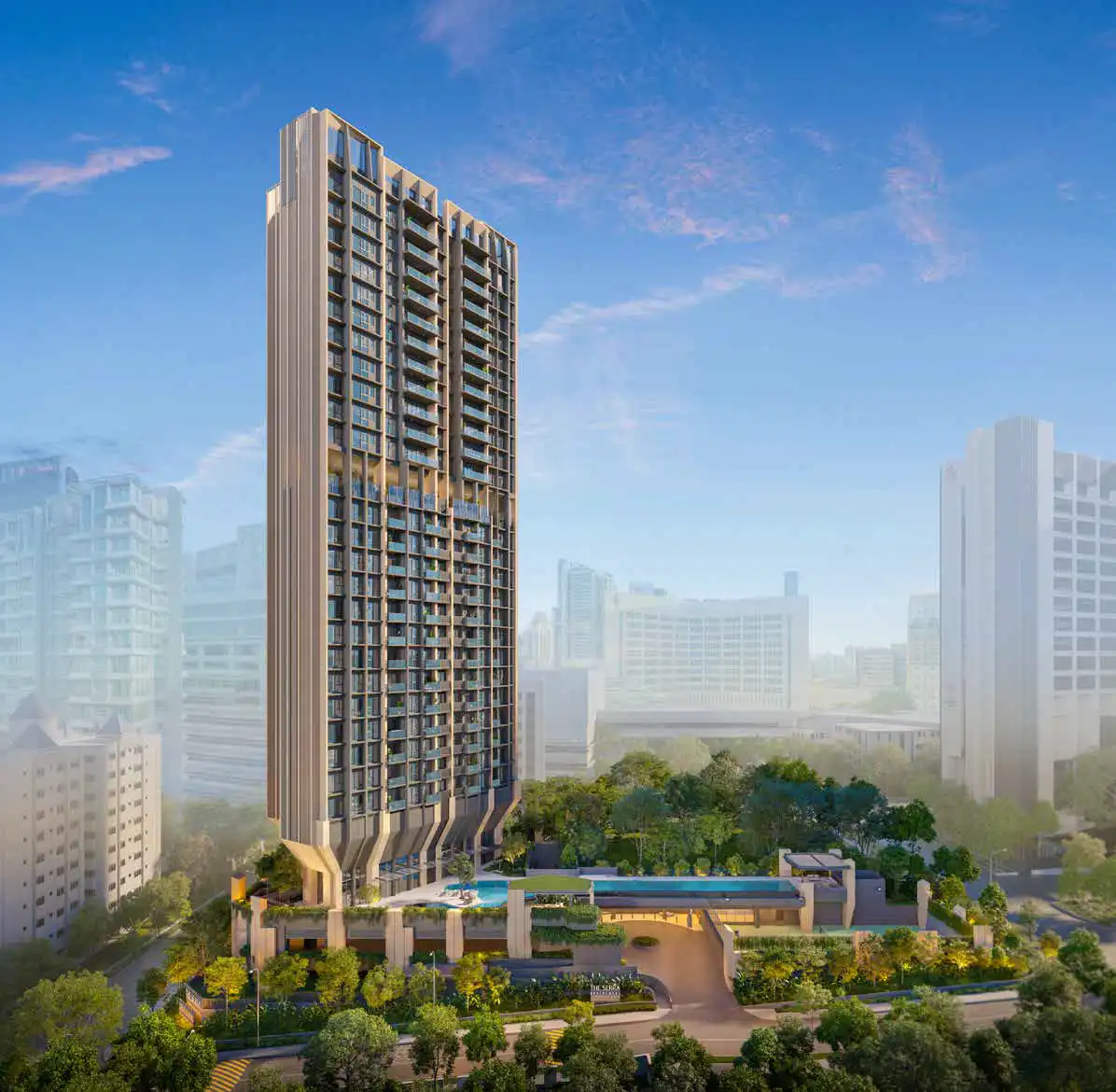
Bedok Point, which has four floors of retail space, will now be torn down to make way for a residential development with commercial units on the ground floor.
Stiff competition from a larger mall, the absence of an anchor tenant, and distance from the MRT station led to the recent closure of Bedok Point, said retail and property experts.
Ms Regina Yeo, adjunct assistant professor from the Department of Marketing at the National University of Singapore’s Business School, said: “Singapore residents are used to convenience. Bedok Point is considered ‘out of the way’ as it is too far to walk, even though it is about a 10-minute walk from the station.”
Bedok Mall, which has three floors of retail space but has more square footage, is linked to Bedok MRT station and the bus interchange.
Aside from location, Ms Yeo said, Bedok Point’s services and products also had to compete with shops and salons around the Bedok town centre.
Bedok Mall could offer more options with 220,000 sq ft of floor area for lease, more than double that of Bedok Point’s 80,985 sq ft.
Operated by CapitaLand, Bedok Mall has anchor tenants such as supermarket FairPrice Finest and electronics retailer Best Denki.
Bedok Point comprised mainly smaller food and beverage outlets and retailers.
“Bedok Mall offered a better tenant mix, including anchor tenants on top of its location advantages.
“The revamp of the nearby hawker centre and bus interchange further distracted shopper traffic away from Bedok Point,” said Mr Samuel Tan, head of the Smart e-Commerce Centre at Temasek Polytechnic’s School of Business.
Ms Yeo added: “Without a strong anchor tenant, there was no compelling reason to visit Bedok Point.”

Bedok Point comprised mainly of smaller food and beverage outlets and retailers. ST PHOTO: ARIFFIN JAMAR
These issues were highlighted last year by real estate investment trust (Reit) Frasers Centrepoint Trust (FCT), which owned Bedok Point.
Shareholders had asked why Bedok Point was sold for $108 million to Frasers Property when it was bought in 2011 for $129 million.
The FCT management team said Bedok Point’s size constraint and the lack of direct connectivity to key transportation nodes limited its ability to be the dominant mall within Bedok town centre.
It added that although attempts were made over the years to proactively lease and reposition the mall, competition had intensified from new competing retail offerings.
Observers said it makes financial sense to tear down Bedok Point rather than refurbish it.
“Given the size limitation of Bedok Point, refurbishment or renovation will not add incremental value to the mall and may not be an economically viable option for the developer,” said Professor Sing Tien Foo.
Prof Sing, who is director of the Institute of Real Estate and Urban Studies at the National University of Singapore, said the proposed redevelopment will maximise the potential of the site.

ERA Realty head of research and consultancy Nicholas Mak said if the Reit found that it could not improve the performance of the mall, the next obvious step would be to sell it and redevelop it.
Mr Mak said: “No point holding on to an asset that is not meeting its mark.”
He added that between 2005 and 2007, office buildings along Shenton Way were torn down to make way for condominiums One Shenton and Lumiere.
“The developers did their sums and found that it was more profitable to tear down a totally functional office building – that was still collecting rent – and build a residential block instead.
“In the case of Bedok Point, they have probably made similar calculations,” said Mr Mak.
The observers said that Bedok’s catchment area is too small to support two shopping malls, adding that clusters work better in regional centres with bigger catchment areas, key transport nodes, and when malls have a larger capacity. Examples include the three malls near Tampines MRT station – Tampines Mall, Tampines 1, and Century Square, and the two malls next to Jurong East MRT Station – Jem and Westgate.
Prof Sing said: “These are regional malls with relatively bigger retail space, usually between 250,000 sq ft and 500,000 sq ft.”
The shopping malls that are located in clusters, for example, Tampines One, Tampines Mall and Century Square, are also conveniently located within a five-minute walk from the MRT station, said Ms Yeo.
Prof Sing said that for suburban malls to succeed, they need positioning and tenant mix strategies that are differentiated from other bigger regional malls.
“Some may have specialty stores, cafes and restaurants that will not be available in other malls, and these stores will draw shoppers to the malls because of the unique experiences and quality food offered,” he added.
Dr Seshan Ramaswami, associate professor of marketing education at the Singapore Management University, said there are some ingredients that can help suburban malls succeed.
They need access by public transport, need to be enhanced by shuttle buses if they are not centrally located, good parking facilities, and daily needs retailers such as a supermarket.
Bedok Point lacked them, said Dr Ramaswami.
Mr Mak said: “Some locations just don’t work for a retail mall. It is not like that saying ‘if you build it, they will come’.
“It doesn’t work that way in real estate. It doesn’t mean that if you just plonk a shopping mall anywhere, shoppers will definitely come.”
“Source: [Bedok Point closure a lesson that malls in suburban clusters need good access and retailers: Experts] © Singapore Press Holdings Limited. Permission required for reproduction”