
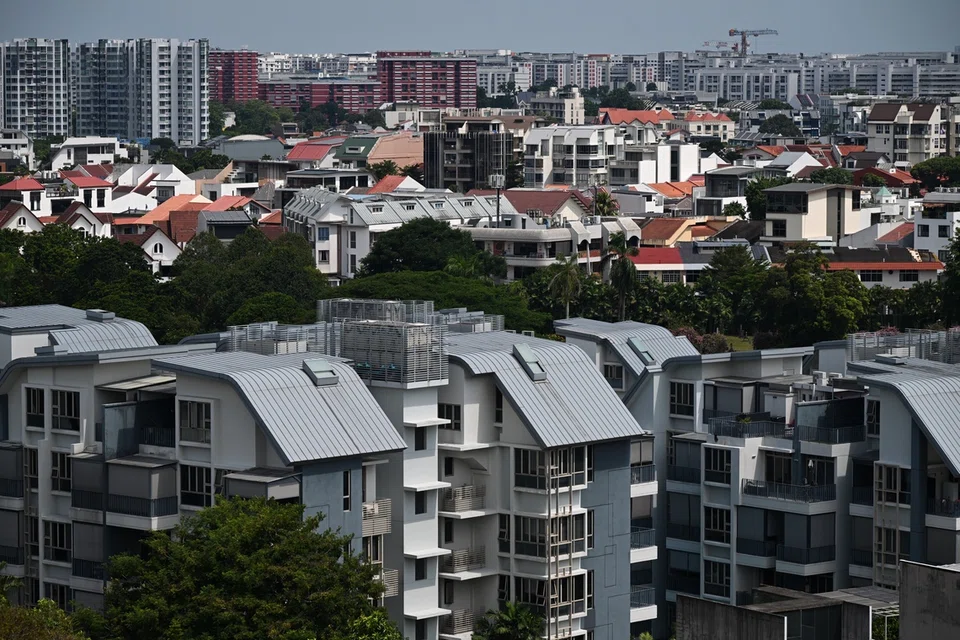
SINGAPORE – Mr Leon Loh, a financial services consultant at Gen Financial Advisory, nearly took up a home equity loan in 2020, at the start of the Covid-19 pandemic.
At that time, he had already paid off the mortgage on his private property.
His bank HSBC offered him a home equity loan at an interest rate of 1.8 per cent, fixed for the first few years.
SINGAPORE – Mr Leon Loh, a financial services consultant at Gen Financial Advisory, nearly took up a home equity loan in 2020, at the start of the Covid-19 pandemic.
At that time, he had already paid off the mortgage on his private property.
His bank HSBC offered him a home equity loan at an interest rate of 1.8 per cent, fixed for the first few years.
They can borrow against this equity by taking a home equity loan.
Executive condominium (EC) owners who have met the minimum occupation period of five years are also eligible for home equity loans, but HDB home owners are not.
While Mr Loh eventually decided not to take up HSBC’s offer on the only home he has, many others have been drawn to such loans.
Data from Credit Bureau Singapore (CBS), provided in response to queries from The Straits Times, showed that the average amount of money owed on a home equity loan taken on a private property rose 15.5 per cent in the second quarter of 2025 from the same period a year ago to $467,401.
This is faster than the 11.7 per cent year-on-year growth in the first quarter of 2025.
CBS data also showed that the average outstanding balances on a home equity loan taken on an EC rose 8.1 per cent in the second quarter of 2025 from the same period a year ago to $157,658, and also at a faster pace of growth than in the first quarter.
A home owner can borrow up to 75 per cent of a property’s value, less any outstanding loan amount on this property, the Central Provident Fund monies used and the accrued interest on these CPF monies.
For example, if a property is worth $2 million, and the home owner has an outstanding mortgage of $500,000 and his CPF monies used and accrued interest add up to another $500,000, the maximum he can get is $500,000 for a home equity loan.
The home equity loan is not subject to the total debt servicing ratio (TDSR) requirement if the total amount borrowed – home equity loan plus any remaining amount owed on this property – is 50 per cent or less of the current market valuation.
In the example given, the outstanding mortgage and home equity loan add up to $1 million, which is 50 per cent of the property’s $2 million valuation, so TDSR does not apply.
Mr David Baey, chief executive of Mortgage Master, noted that inquiries for home equity loans have “increased a lot”.
Before the Covid-19 pandemic, such inquiries made up 15 per cent of his total mortgage advisory business.
The inquiries had dropped to less than 5 per cent of his business during the Covid-19 period, but now, home equity loans make up 20 per cent of Mortgage Master’s monthly business, Mr Baey said.
He added that most of these clients are 45 years old or older and financially stable.
They are business owners who are often cash-strapped because their clients typically pay their bills 90 days later, leaving them without funds in the interim to pay off another bill or to cover the business’ daily running expenses.
The other group of clients are home owners taking out a loan against their property to invest, he said.
Mr Alfred Chia, chief executive of financial advisory firm SingCapital, said a home equity loan can be a smart way to unlock liquidity in a property because these loans often come with relatively lower interest rates compared with business loans or credit card debt.
He added that the repayment term is long. The loan tenure is capped at 30 years, or until the borrower is 65 years old, assuming he borrows up to 75 per cent of the property’s valuation.
Mr Chia cited two instances in which home equity loans had helped his clients.
The first was a business owner who had exhausted all his working capital loan options with the banks, and pledged his landed property for a home equity loan, which he used as working capital for the business.
He saved his business and paid an interest rate on his home equity loan that was lower than the 7 per cent interest rate he would have had to pay on a business loan.
The second was a couple who took a home equity loan on their condominium to help their son with his credit card bills of more than $50,000.
However, there are some instances where the use of a home equity loan might not be so suitable.
Mr Chia said home owners should not tap this loan facility to invest, as it puts their home at risk if the investment fails. He added that investments should be made only with excess money.
Mr Baey said that if home owners do decide to borrow money to invest, they will need to ensure that they can make the monthly loan repayments, noting that interest payments from common investments such as corporate bonds are usually paid out every six months and will not sync in time for the monthly instalments.
There are always risks involved in investments, he said, even if one puts one’s money in a bond that is perceived to be safe.
Mr Baey cited Credit Suisse AT1 bonds, which were written down to zero in March 2023.
Bond holders incurred a loss of US$17.3 billion (S$22.4 billion) in the wake of the debacle.
Mr Loh, the private property owner, is relieved he did not take up the home equity loan to invest in an investment-grade corporate bond, which was originally one of the options he was contemplating.
Interest rates shot up as the US Federal Reserve began its tightening policy in March 2022. Mr Loh would have likely faced a double whammy of a rise in the interest rate of his home equity loan to a rate higher than the corporate bonds, even as bond prices fell.
Mr Chia said home owners should also not take a home equity loan to buy property overseas. This practice is risky because there are exchange rate risks associated with investing in foreign assets.
Changes in exchange rates can affect the value of the property when converted back into Singapore dollars.
“Source:[Home equity loans on the rise in Singapore but experts urge caution over their use for investments] © Singapore Press Holdings Limited. Permission required for reproduction”


Let’s Discuss Your Property Plans
Interested in This Property?
Buying, selling or renting? Get a free consultation with realtors with a background in interior and lighting design. We’ll discuss your goals and help you assess your options—from pricing and timelines to layout practicality and space potential.
Share your contact details below, and we will get in touch to understand your needs and suggest the next steps. No pressure. No obligation to proceed.