

SINGAPORE – Two apartments for the price of one sounds appealing, and condominium developers have been including dual-key units in their new launches for more than a decade.
Dual-key units, where they exist, have remained the province of private housing. But for HDB unit owners willing to think outside the box, there are ways of revamping their homes to functionally incorporate two “mini-apartments” – while keeping within Housing Board regulations.
Ms Dawn Tan of Goodman Interior first worked with a client to convert her four-room Hougang flat into a dual-key unit in 2017.
“The client wanted to rent out one of her rooms, but was very concerned about privacy,” says Ms Tan. “She wanted to have her own comfortable, liveable space that she could return to at the end of the day.”
Careful planning was needed to convert the 1,078 sq ft flat into a studio apartment plus a one-bedroom apartment – each with its own front door and connected by a shared foyer.
The studio apartment for the tenant was newly designed with a kitchenette and bathroom, with the main studio space separated into distinct living and sleeping areas.
This layout would ensure privacy for the tenant while the owner would enjoy her own living and dining area, as well as kitchen and bathroom.


“We hacked away all the internal walls so we could reconfigure the entire layout and create two fully functional sub-units,” says Ms Tan.
The renovation took two to three months and included hacking, new wall construction, tiling, plumbing, electrical, painting and carpentry works throughout the space.
“It cost around $40,000 at the time, but this does not mean that every dual-key conversion will cost the same,” Ms Tan notes.
Costs have obviously risen in the years since. “Costs are also dependent on the type and extent of renovation owners choose to have. For instance, how many walls we need to erect for the divided space, the types of materials, how much carpentry they are looking at and so on,” says Ms Tan.
Just as it would do for any other renovation project, her team applied for and received renovation permits from HDB to remove walls and floor tiles within the unit.
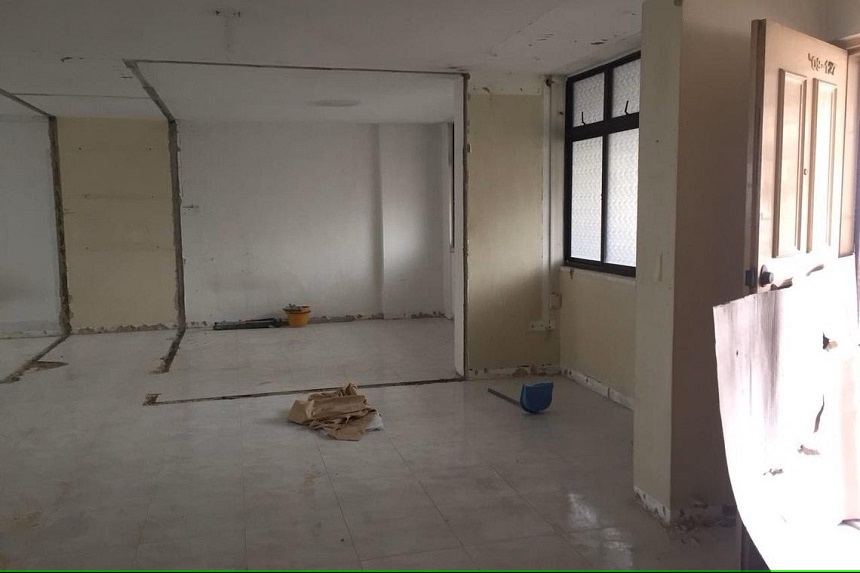
“It is not dissimilar to other home renovations in that sense – all alterations are made within HDB guidelines. More importantly, the owner needs to remember that this is a major renovation that overhauls the function, feel and look of the space,” Ms Tan says.
In 2020, her firm posted a short video clip of its dual-key conversion project on Facebook. It has since received 50 or so queries from HDB home owners curious about implementing such a concept in their homes.
“To be honest, some layouts may not be so suitable or the owner may not be comfortable with the new layout – it would mean having a smaller space for the family,” says Ms Tan.
“A rule of thumb is that it is best if both bathrooms are not located back to back – per HDB regulations, we cannot shift the positions of bathrooms,” she adds.
Also, the main entrance should ideally be situated at the centre of the whole layout. Squarish layouts are generally the easiest to work with.

Since working on the Hougang flat, Goodman Interior has been involved in five other projects to convert HDB units into dual-key homes.
In one of its more straightforward projects, a 1,100 sq ft flat in Serangoon Central, the en-suite master bedroom was already located by the main entrance, and it had enough space to accommodate a new kitchenette.
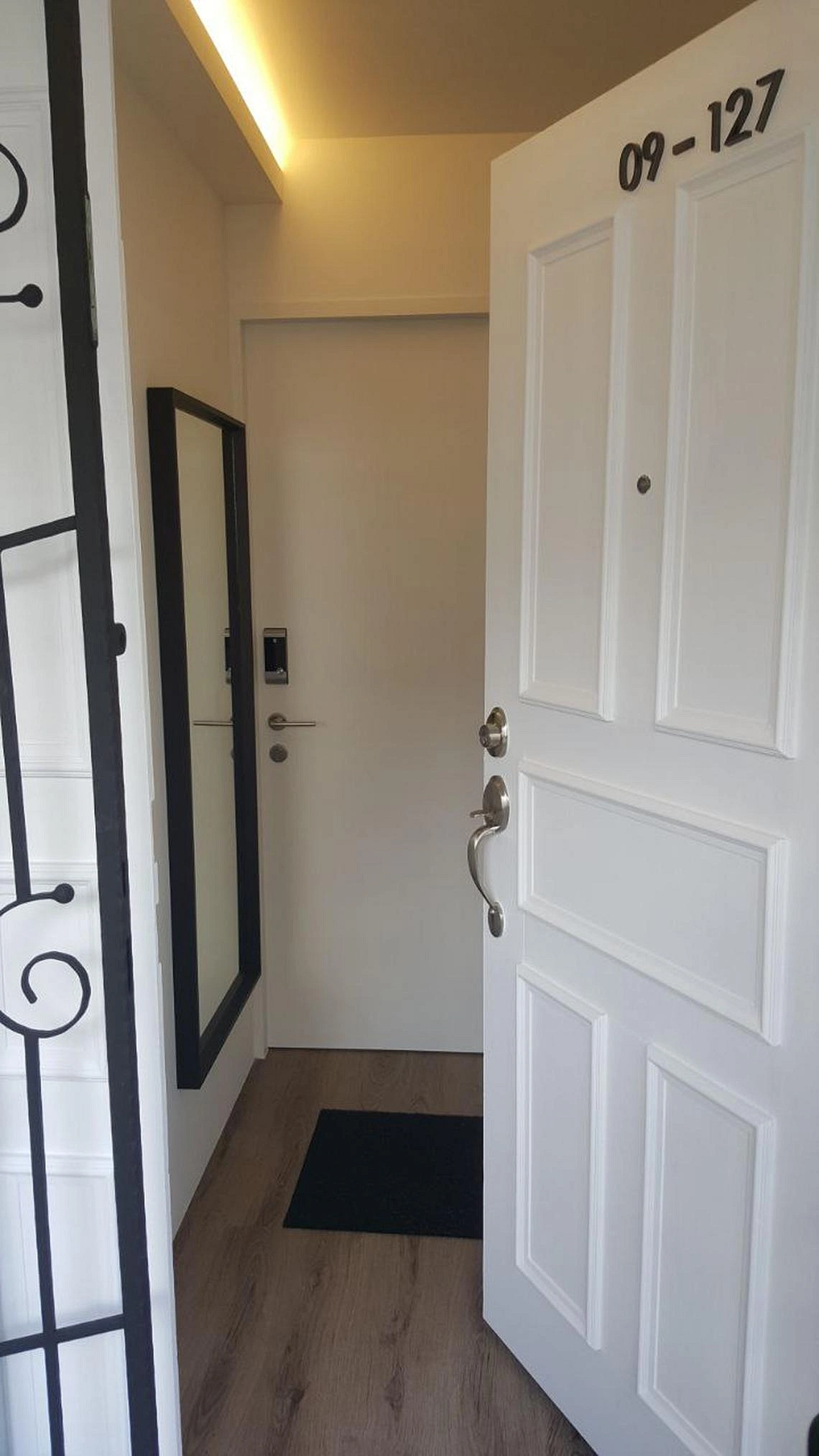
In this scenario, converting the four-roomer into a dual-key unit was relatively simple. A kitchenette was installed in the master bedroom and a foyer was carved out in the entrance hall to give each apartment its own front door.
While the rest of the main unit could have been left as it was, the design team restructured the layout to create a more functional flow through the different areas. The L-shaped living area morphed into a T-shaped kitchen and living area. One bedroom and the storeroom were relocated to take up the leftover living room space.
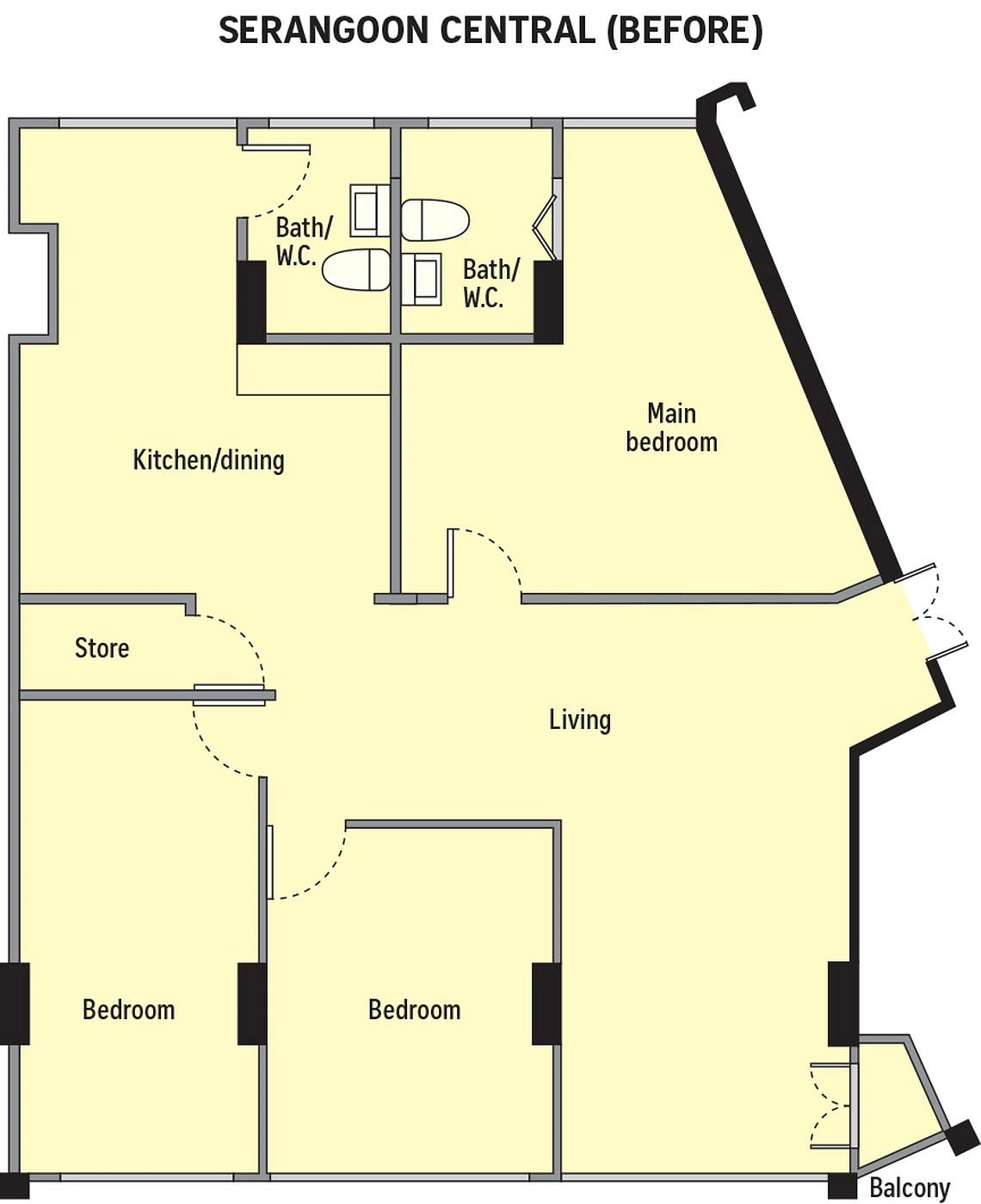
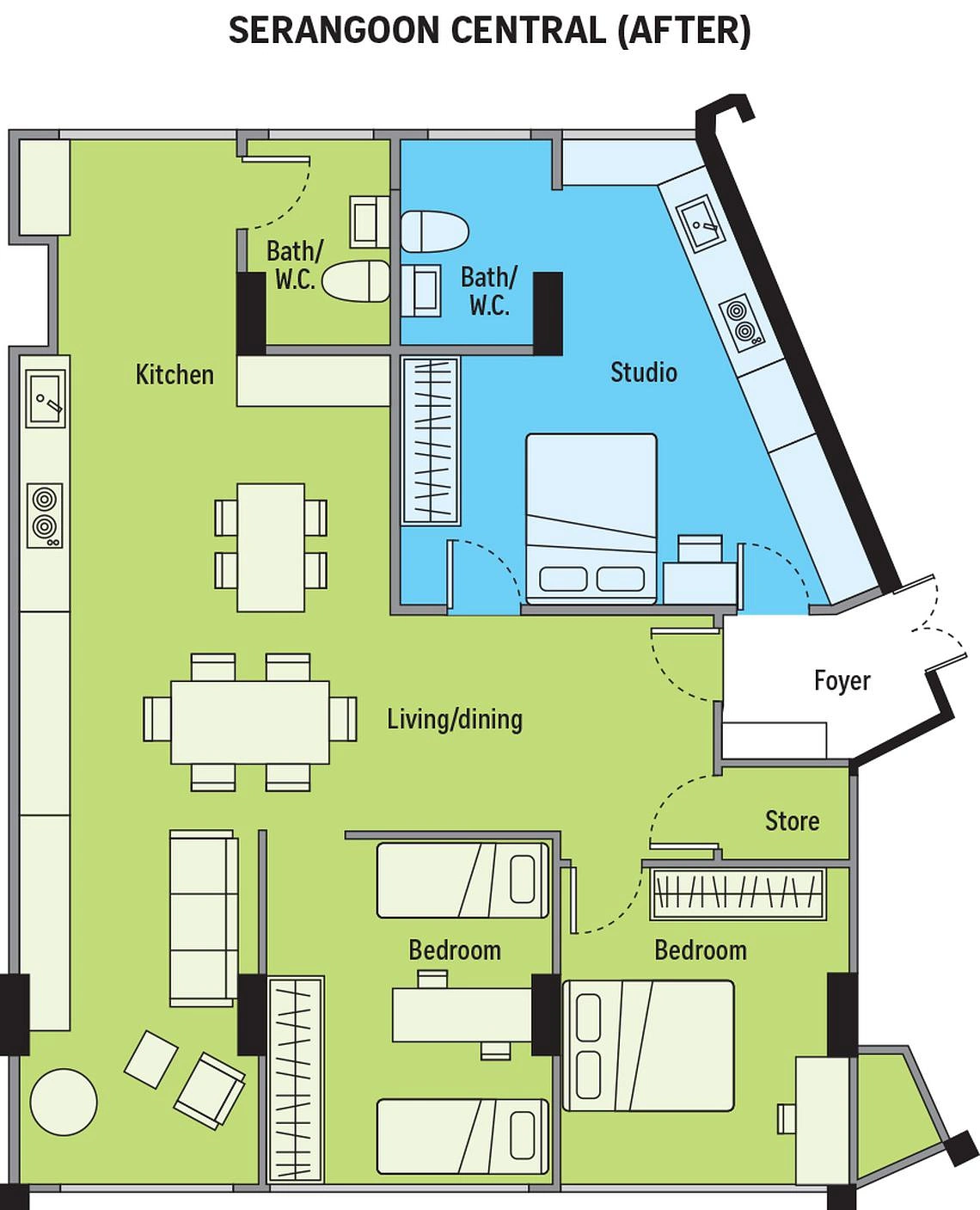
“We used partition boards for the new walls. If the owner wants to reconfigure the space again in the future, the costs for construction or hacking away such partition walls will be less than if the walls were constructed with hollow blocks,” says Ms Tan.
Meanwhile, the original master bedroom door was retained, since the studio apartment was to be inhabited not by a formal tenant, but by the client’s daughter and son-in-law.
“They are family, so there was no issue with letting them have free access to the main unit. The younger couple will be moving out once their own Build-To-Order flat is ready, at which point the client and her husband will move into the studio, and rent out the other ‘apartment’,” says Ms Tan.
For a young couple in Marine Parade, their dual-key HDB conversion provides both privacy from and proximity to their parents. They are near enough to take care of their parents, while retaining their independent lifestyle and personal space.
The redesign and renovation of their five-room HDB flat was undertaken by iPoise Design in late 2022. The design team came up with the dual-key concept to give both generations privacy and convenience.


However, the bathrooms in the original layout were directly adjacent to each other and the kitchen, which meant the resulting “dual key” does not have a simple separation.
Upon entering the Marine Parade unit, you can head straight through the middle of three doors to enter the younger couple’s apartment, which comes complete with kitchen, living room, bedroom and bathroom.
Or, turn right to enter the living room and bedroom of the older couple’s apartment. Turning left will lead you to their kitchen and bathroom.
Mr Eugene Seah, managing director of iPoise, notes: “The second apartment needed to be rearranged in such a way that it had access to another kitchen and toilet while remaining like a home and not just a weird segmented space.”
The two couples also had different design styles and colour preferences that needed to be balanced through the use of textures and materials with subtle similarities. This ensured that even as each ‘apartment’ suited the personal tastes and preferences of its inhabitants, the entire space still had a cohesive vibe when taken as a whole.
Other challenges included “treading the thin line of privacy and intimacy between multi-generational families, while obliging HDB regulations”, he adds.

The final floorplan took some six drafts to finalise, and the total bill for the renovation came up to around $150,000.
Whether flat owners hope to rent out part of their unit or are looking to increase privacy options in an existing space, the decision to undertake a dual-key renovation should not be taken lightly, says Ms Tan.
“Once the renovation is done, it is almost irreversible,” she adds.
Real estate agent Tay Jooann, who uses her TikTok account househuntwithjoo to demystify the house-hunting process, is ambivalent about the long-term realities of these dual-key HDB conversions.
There are benefits for certain types of home owners, such as seniors who are retired and have already paid off a significant part of their housing loan.
But she says: “Co-living companies are already working in the same model for older private properties that have the space to do this.
“As an agent, I get approached by co-living spaces on a daily basis, asking if my landlords are open to the concept of partitioning the unit out for this purpose.”
For home owners who are set on converting their homes into dual-key units, Ms Tay has this piece of advice: “Do not put up any concrete structures, so that the layout can be reinstated in the event of a future sale.
“Look at leaving room for communal spaces, such as the kitchen and yard area, to improve space efficiencies.”
Other experts note that the dual-key concept can be an option for owners who are still under Minimum Occupation Period obligations – the period that they must live in their HDB flat before selling it on the open market – to rent out one room in their flat, while continuing to live there themselves.
“The group of people converting their flats into functional dual-key units are likely younger HDB owners who want to maintain their privacy while earning extra income to supplement their expenses,” says Mr Eugene Lim, key executive officer of real estate agency ERA Singapore.
Nevertheless, he agrees with Ms Tay that co-living spaces may already be filling the gap, at least from the perspective of potential renters. The long-term prospects of dual-key conversions are unclear, he adds.
“Co-living spaces provide renters with the flexibility to move between different housing options that are within the co-living operators’ portfolio,” he points out.
Meanwhile, trying to sell these units in the future will be a challenge, he cautions. “Renovations of this nature appeal to a specific group of buyers. So when it comes to selling the flat later, the group of buyers will be confined to a smaller group too.”
“Source:[One flat, two apartments: How to convert your HDB home into a dual-key unit] © Singapore Press Holdings Limited. Permission required for reproduction”
Let’s Discuss Your Property Plans
Interested in This Property?
Buying, selling or renting? Get a free consultation with realtors with a background in interior and lighting design. We’ll discuss your goals and help you assess your options—from pricing and timelines to layout practicality and space potential.
Share your contact details below, and we will get in touch to understand your needs and suggest the next steps. No pressure. No obligation to proceed.