
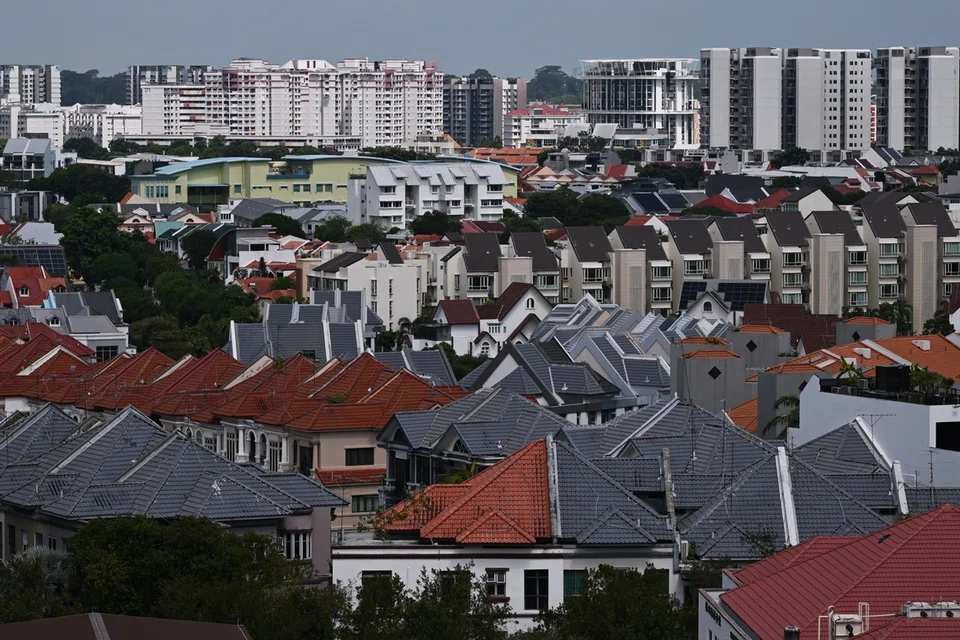
SINGAPORE – Real estate has long been prized as a quiet engine of private wealth – a “safe” store of value, a generational asset, a hedge against inflation. For many households, the family home is their largest asset; for many investors, prime real estate is the bedrock of their portfolio.
But today, that familiar narrative is under strain. Amid geopolitical uncertainty and mortgage rates still nearly twice the level in 2020-2022, direct investment in real estate has held steady, rising another 8 per cent year on year in the first half of 2025, according to Savills. In this time of stretched affordability and rising debt, what’s evident is the bifurcation in the geography of risk – some cities are still riding a rising wave, while others are already bruised by corrections.
The UBS Global Real Estate Bubble Index
Now in its 11th year, the UBS Global Real Estate Bubble Index seeks to gauge housing market excesses (or “bubble risk”) across 21 key financial centres globally. It does so by identifying a sustained decoupling of home prices from fundamentals – such as local incomes and rents – and imbalances in the real economy, including excessive lending and construction activity.
Over the last four quarters, global housing markets have continued to cool on average. But the shape of the story is far from uniform. Across the past five years, Dubai has posted 50 per cent real price gains while Tokyo achieved roughly 35 per cent real growth, as foreign demand surged. In contrast, cities once feted – Hong Kong, Toronto – saw real price declines exceeding 20 per cent. London, likewise, has not escaped double-digit declines, pressured by weak migration, regulatory tightening and elevated rates.
Going forward, housing demand should benefit from lower real financing costs. The US Federal Reserve, for one, is expected to cut rates by another 75 basis points by the first quarter of 2026 to 3.25 per cent to 3.5 per cent. Longer term, the world may also enter periods of financial repression – where interest rates are held artificially low to ease debt burdens – which could tilt the balance again in favour of real assets like housing. Still, the housing market’s predisposition to cycles, regulatory curbs and region-specific demand dynamics mean that Asian hubs face differing prospects ahead.
Singapore holds steady
To start, private home price gains in Singapore have halved to 3 per cent in 2025 from 6 per cent a year ago, while rents rose by 2 per cent. These steady movements reflect the economy’s solid underpinnings: gross domestic product grew by an average 4.8 per cent over the past four quarters; unemployment remained low at 2.1 per cent; and real income grew 4.5 per cent. Consequently, Singapore has maintained its “moderate bubble risk” status in the index.
Much of this stability stems from Singapore’s disciplined policy approach. Successive rounds of additional buyer stamp duties have curbed speculative activities and foreign demand. Non-residents now account for just 1 per cent of total private residential transactions – down from 5 per cent to 9 per cent between 2013 and 2019. This impact is most evident in the prime segment, where prices have significantly lagged the mid- and mass-market sectors.
Looking ahead, transaction volumes could rebound by about 20 per cent in 2025 to nearly 8,000 units as mortgage rates track lower amid a strong new-project pipeline. In total, some 13,000 units are slated for launch – more than 70 per cent above the 10-year average run-rate. This should keep price growth modest and aligned with fundamentals, while the persistence of macroprudential curbs continue to act as a brake on exuberance.
North Asia’s divergence continues
Strikingly, Hong Kong recorded the sharpest decline in bubble risk among all cities surveyed, from 0.74 (moderate) in 2024 to 0.44 (low) in 2025. This marks the first time the city has entered the “low bubble risk” category since the index’s inception in 2015, driven by real home prices collapsing nearly 28 per cent below 2021 levels, while rents largely stagnated.
Yet, the fading bubble risk does not mean an imminent rebound. High inventories and still-cautious buyer sentiment continue to exert pressure. The good news is that sales activity has resumed and the market is stabilising, thanks to expanded mortgage insurance and reduced property stamp duties. We expect Hong Kong’s home prices to marginally soften by 2 per cent to 3 per cent in 2026.
In contrast, Tokyo now sits at the other extreme. It remains firmly in the “high” risk category, ranking second globally only after Miami, even as its bubble score eased slightly to 1.59 (1.67 in 2024). Notably, Tokyo’s elevated index position reflects strong offshore investment demand, amplified by a favourable yen.
But this surge has come at the expense of affordability: Home prices are increasingly detached from local incomes. With the Bank of Japan beginning to normalise policy, rising mortgage rates could further pressure domestic buyers, a domestic hot-button issue. And with Ms Sanae Takaichi’s unexpected election victory signalling a more conservative stance, backlash against foreign property ownership could intensify.
Sydney heating up
Elsewhere in the Asia-Pacific, Sydney remains at the edge of the “moderate” bubble risk zone, even as the median value of a house hit a record high of over A$1.2 million (S$1.01 million). This has been underpinned by ongoing supply constraints alongside improving buyer optimism, as the Reserve Bank of Australia lowered interest rates thrice in 2025.
With annual real wage growth at its strongest in five years, and the Australian government’s “First Home” guarantee scheme kicking off in October, Sydney home prices could rise further by 5 per cent to 7 per cent over the next 12 months.
Conclusion
The UBS Global Real Estate Bubble Index does not (and is not meant to) pinpoint when or where a correction will occur. What it does is map where imbalances persist, where valuations are out of step with local fundamentals, and where tail risk is building.
For investors, the broader takeaway is that housing retains its long-term wealth appeal – but the prudent approach is to distinguish between markets with structural supports (supply constraints, demographic tailwinds, healthy rental growth) and those where exuberance may be crowding out fundamentals. In a world of volatile yields and fickle capital flows, discerning the difference will help shape portfolios for the better.
“Source:[The uneven booms in global housing and what they mean for investors] © Singapore Press Holdings Limited. Permission required for reproduction”



Let’s Discuss Your Property Plans
Interested in This Property?
Buying, selling or renting? Get a free consultation with realtors with a background in interior and lighting design. We’ll discuss your goals and help you assess your options—from pricing and timelines to layout practicality and space potential.
Share your contact details below, and we will get in touch to understand your needs and suggest the next steps. No pressure. No obligation to proceed.