
Landed property owners who list on Airbnb may earn good money but risk breaking the law
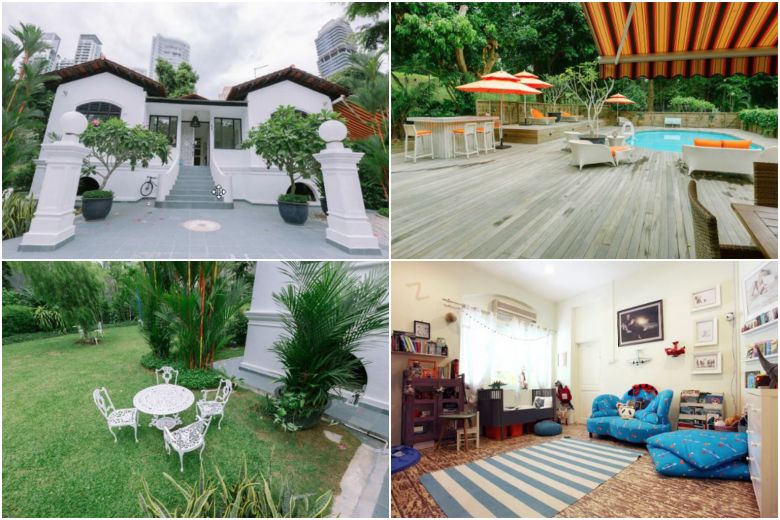
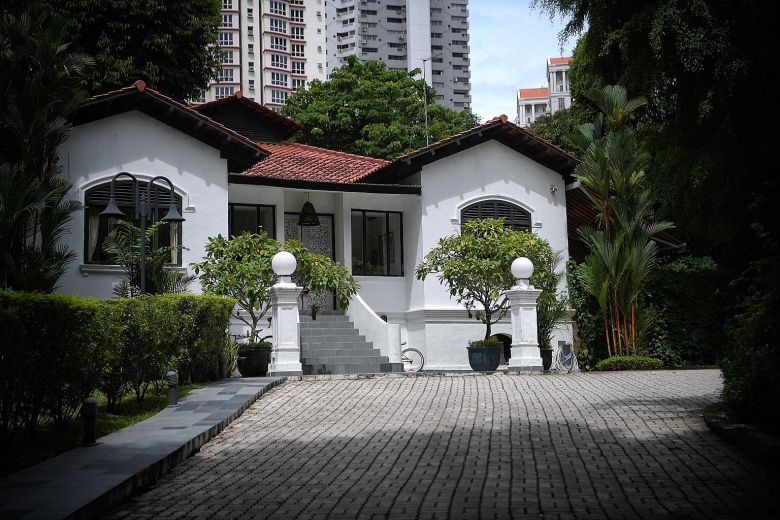
One is a 1920s heritage bungalow in Grange Road, a stone’s throw from Orchard Road. It comes with a sprawling courtyard, playground, garden and pool, complete with a caretaker and a gardener, and parking for up to five cars.
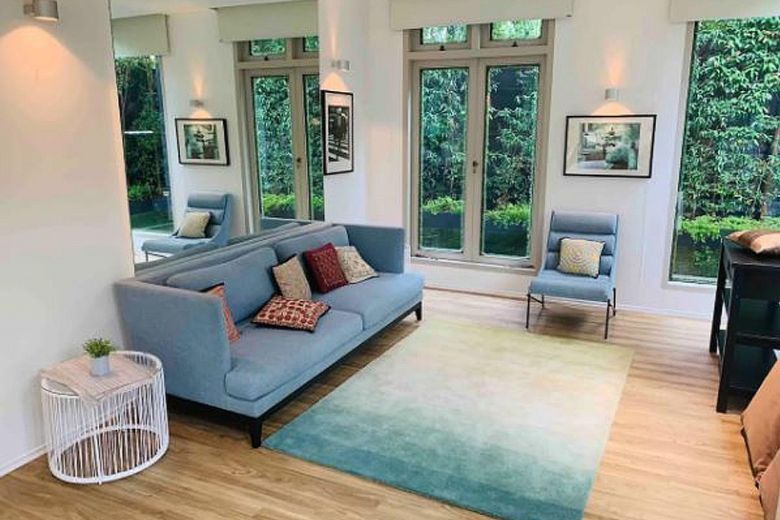
The other is a 5,000 sq ft mansion in Dunearn Road, just a three-minute stroll from the Botanic Gardens, also with a private lap pool and garden.
Both are available on Airbnb for slightly over $1,000 for a night’s stay, excluding cleaning and service fees.
They are among at least 20 landed properties available for rent on the home-sharing platform, out of around 300 listed Singapore homes. One of the more expensive ones is a three-storey semi-detached house near Frankel Avenue going for $2,400 a night. It is advertised as being able to house up to 20 people.
All of the landed property owners who listed their houses on Airbnb and approached by The Sunday Times declined comment. Based on their profiles, they are a mix of Singaporeans and expatriates.
Property consultants were surprised to hear of such listings. They said these owners of luxury houses, which can cost from $15 million to $35 million in today’s market, may be turning to Airbnb short-term leases simply because they fetch money.
“After deducting expenses, they may still pocket $30,000 a month. It’s good money. Sometimes, the landlord may choose to lease it on Airbnb because he can’t rent it out on a longer term,” said property consultant Adeline Yeo.
Senior research manager at Cushman & Wakefield Wong Xian Yang said income from short-term rentals can potentially be higher than those for the long-term rental market, assuming occupancy rates in the short term are good. He added that the target market tends to be tourists and professionals on business trips.
Those who rent these houses have left largely positive reviews on Airbnb. They wrote that they rented these houses because they are spacious, allowing for large families to stay in or for corporate team meetings to be held.
Nick, a visitor from Britain who stayed at the house in Grange Road, wrote: “The house is straight out of an E.M. Forster novel, with an amazing outdoor pool and dining area which is just fabulous to enjoy an evening cocktail.”
But owners of these houses may be running afoul of the law, as rentals of private properties for periods of less than three consecutive months are illegal in Singapore. Under the Planning Act, those who convert the use of a property for short-term accommodation without approval may be fined up to $200,000 and/or jailed for up to 12 months.
In 2016, the Urban Redevelopment Authority (URA) raided a four-storey terraced house in Sembawang after close to 40 residents in the neighbourhood submitted a petition asking for the authorities to take action against the owner.
The house was listed on Airbnb and another home-sharing site, HomeAway.
Between 2014 and 2016, the URA investigated over 1,000 private residential properties, most of which were condominiums, for breaching the minimum stay duration.
In 2017, the minimum rental period for private homes was lowered from six to three months. Last year, the URA investigated 756 cases of unauthorised short-term accommodation in private homes. From January to March this year, it investigated 154 such cases. Most involved condominiums.
Globally, Airbnb homes are popular with some as they may be cheaper and offer a more unique environment compared with hotels.
But some home owners are less keen, especially those living in closely clustered spaces such as HDB flats or condominium apartments. Some say they feel unsafe having strangers going in and out of their blocks, or are upset over the noise they make.
A URA spokesman said: “URA has been stepping up enforcement checks and upon confirmation of an infringement, all offenders will be faced with a fine. When appropriate, we will not hesitate to charge offenders in court.”
So far, it has successfully charged four people, who were each fined between $13,000 and $70,000.
During a recent visit by The Sunday Times to the Botanic Gardens house, its front was obscured by a metal garage door. Its high walls prevented passers-by from looking in. Next door, a middle-aged resident, who declined to be named, said he was aware of the rental activity but is not too bothered by it.
“I see foreigners, mainly tourists, coming in and out. There is not much noise and I don’t think it is unsafe as that house has its own security cameras,” he said.
“Source:[Want to rent a luxury home for $1,000 a night?] © Singapore Press Holdings Limited. Permission required for reproduction”

Let’s Discuss Your Property Plans
Interested in This Property?
Buying, selling or renting? Get a free consultation with realtors with a background in interior and lighting design. We’ll discuss your goals and help you assess your options—from pricing and timelines to layout practicality and space potential.
Share your contact details below, and we will get in touch to understand your needs and suggest the next steps. No pressure. No obligation to proceed.