
Owners must prepare for smaller payouts and tougher choices as the new scheme takes shape.
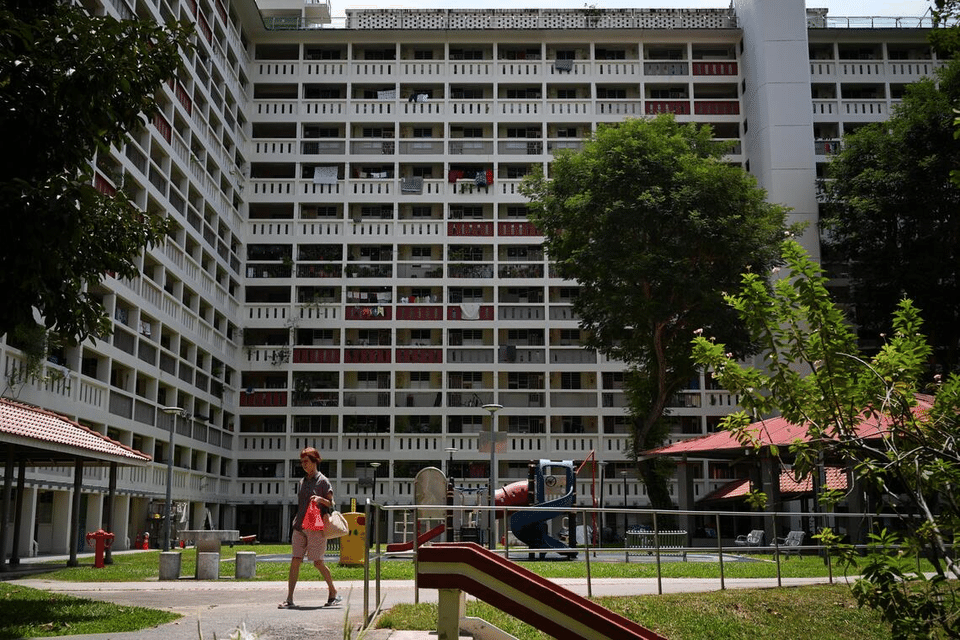
Nearly half of Singapore’s HDB flats are already more than 45 years old. In towns such as Marine Parade, Toa Payoh and Bukit Merah, whole clusters are in the second half of their 99-year leases.
Flat owners, many of whom rely on housing as their main nest egg, face a sobering question: What happens when leases run down and home values start sliding?
To address these concerns, the Government first floated the Voluntary Early Redevelopment Scheme (Vers) in 2018.
More recently, Minister for National Development Chee Hong Tat has pledged to unveil the framework before the end of this Parliament’s term. As details take shape, it is worth asking what Singaporeans can realistically expect.
Wishful thinking that Vers will be like Sers
As a researcher who has studied real estate in Singapore for decades, my advice to HDB flat owners is this: Recognise that Vers is not Sers.
The Selective En Bloc Redevelopment Scheme (Sers), launched in 1995, also involved tearing down ageing flats and redeveloping the land. But that is where the similarity ends.
There is a fundamental difference between the two. Sers was driven by national land intensification goals. It allowed the state to reclaim valuable sites with high redevelopment potential, mostly in city-fringe estates where resale flats now command million-dollar prices.
Vers, by contrast, was conceived as a large-scale programme to give owners of ageing flats in lower-priority neighbourhoods in the redevelopment queue a way to sell their homes back en bloc to HDB in the last decades of their leases. It’s supposed to act as a big backstop against lease decay, subject to certain conditions.
That key distinction affects everything from how the schemes are designed to how owners are compensated.
Sers was compulsory under the Land Acquisition Act, with little room for owner choice. In exchange, residents received compensation based on fair market value, along with an ex-gratia payment and the option to purchase a nearby replacement HDB flat with a fresh lease at a subsidised rate.
Little wonder that some Sers beneficiaries thought they hit the jackpot. In a way, they did.
Lessons learnt from Sers
But as Mr Chee clarified, no more estates will come under Sers. Going forward, Vers will be the only option for older flats reaching the end of their leases.
This makes it essential to apply lessons from Sers. The programme was expensive, and its generous terms cannot be repeated at scale.
It also required heavy involvement from the authorities, who had to match residents to new homes while continuing to build BTO (Build-To-Order) flats to meet fresh demand.
Vers, in contrast, allows the Government to stagger redevelopment and spread limited resources across far more flats.
Sers was also disruptive for residents. Some waited years for new homes, their lives in limbo. Home owners from the 2018 Sers programme in MacPherson Lane have only just collected their keys to their new homes, while residents of the last Sers programme in Ang Mo Kio Avenue 3 are still waiting for their replacement flats at Pine Ville @ AMK, scheduled for completion in 2027.
Many did not want to move in the first place. Giving home owners the choice to opt in to Vers, or stay until the lease ends, is therefore significant.
The point is this: Vers is not “Sers for all” but a more modest, sustainable tool for urban renewal. Fairness across generations must also guide the scheme. Compensation today should not saddle tomorrow’s taxpayers with the bill.
Not a retirement solution
Why then do many people assume Vers will be like Sers? Largely because housing is the biggest asset for most Singaporeans, and many hope government policy will shore up retirement adequacy for older owners.
But that assumption is flawed for three reasons.
First, older flats are not always owned by older households. In a study of about 150,000 resale transactions from 2007 to 2012, my colleagues and I found no link between buyer age and building age. Plenty of younger families also chose older flats.
Second, it is a mistake to think property values always rise. Unlike freehold property, leasehold homes will reach maturity and run down to zero.
Values rise in the first half of a flat’s lifespan, driven by economic growth and land appreciation. But eventually lease decay takes over: prices plateau, then fall. Owners of old flats may struggle to find buyers unless they accept steep discounts.
Vers payouts must reflect this reality. Inflating values would only distort the market, create perverse incentives and worsen fiscal pressures.
Third, seniors already have ways to monetise their homes. The Lease Buyback Scheme allows owners aged 65 and above to sell the tail end of their lease while continuing to live in the flat.
Vers might deliver a modest uplift compared with this, as seen in private collective sales where older condos sold for higher prices once redevelopment was on the table. But expectations should remain tempered.
In short, Vers is a tool to manage housing stock. It cannot and should not be a retirement solution.
Two practical challenges
Two implementation challenges arise from Vers.
The first is scale. Sers promised residents a new flat nearby with a fresh 99-year lease. That will not be possible under Vers. Land in mature estates is scarce, and compensation will be smaller.
Owners who want a new flat should expect to top up with cash or CPF and take on a mortgage.
Younger families may turn to new Build-To-Order projects or resale flats with a slightly longer lease than their existing home.
If designed well, Vers can help stagger redevelopment over time and avoid a sudden cliff when large numbers of flats reach lease expiry.
But the situation is trickier for seniors, who may struggle financially or emotionally with relocation. Many may prefer to age in place, even as their flat leases run down.
For them, programmes targeting ageing HDB flats at the 60- to 70-year mark of their lease like the Home Improvement Programme 2 (HIP) will be crucial.
The second challenge is consent. Should voting be by block or precinct? Should the threshold match HIP’s 75 per cent requirement?
Strike the bar too high, and few projects pass. Set it too low, and minority owners may feel forced out. Legitimacy of the scheme hinges on getting this balance right.
Resetting expectations
It bears repeating that Vers is not Sers. It will not deliver jackpots, guaranteed rehousing or retirement security.
What it can do is provide a structured, orderly way to manage Singapore’s ageing housing stock – one that is also fair to future generations and more sustainable in the long run.
Clarity and transparency will be key: clear rules on eligibility, compensation and voting thresholds are needed to prevent disputes and preserve trust.
And as the framework takes shape, the national conversation must shift. The focus should be less on windfalls and more on trade-offs.
Vers is not a cure-all, but a practical tool to renew estates in a land-scarce city.
“Source:[What Vers really means: Trade-offs, not jackpots] © Singapore Press Holdings Limited. Permission required for reproduction”


Let’s Discuss Your Property Plans
Interested in This Property?
Buying, selling or renting? Get a free consultation with realtors with a background in interior and lighting design. We’ll discuss your goals and help you assess your options—from pricing and timelines to layout practicality and space potential.
Share your contact details below, and we will get in touch to understand your needs and suggest the next steps. No pressure. No obligation to proceed.