
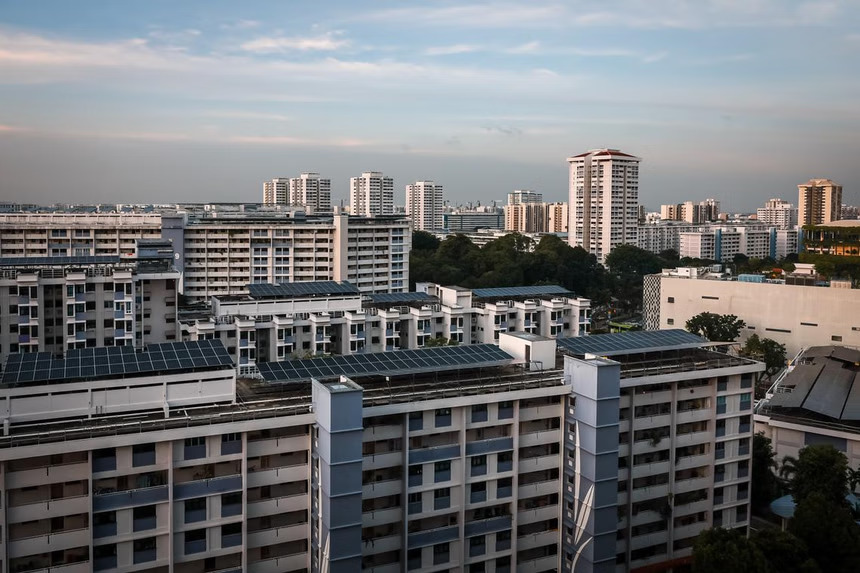
Sales of HDB flats are generally straightforward but some joint owners still opt to go to court just because they cannot see eye to eye with each other.
But taking court action is a bit like rolling the dice: You never know the outcome no matter how confident you are and even if you win, you might still have to pay a high price in terms of legal bills.
Here are three cases involving HDB owners who choose to fight over their properties instead of resolving the disputes amicably.
All or nothing approach
When his marriage failed, the owner of a brand new HDB flat chose to return his prized apartment to the Housing Board rather than let his estranged wife have it.
The man was so determined to deny her a “windfall” by selling the flat in the future that he clashed with her over the property three times, all the way to the appeals court.
Their dispute was unusual because they had not even obtained the keys to or finalised their purchase of the $470,000 flat in Tampines then.
The couple, who had been married for five years and had two children, had paid only about $32,000 from their Central Provident Fund accounts – $16,000 each – for the home by the time they split up in 2021.
The wife wanted the husband to transfer his share of the flat to her but the Family Court and High Court rejected her claim, partly because she did not offer to refund his $16,000 deposit.
She switched tactics at the Appellate Division of the High Court by offering to refund the $16,000 plus accrued interest.
The Appellate Court granted the woman’s appeal in 2023 and made an order for the flat to be transferred to her because the needs of children were important factors when dividing matrimonial assets.
Dispute over sale process
Four siblings ended up having equal shares in two HDB shophouses worth about $5 million in total when their father died without a will.
All was well for about 10 years but subsequent disputes split the siblings into two factions.
Each held a quarter stake in the properties, so no one had the upper hand. Any vote would result in a two-two deadlock. The two factions simply could not get along because both sides insisted on doing things their way.
For instance, even when they all agreed to sell the shophouses, they fought over how this should be done.
A neutral bystander would think that they could have at least agreed that it would be in their interest to sell at the highest possible price, with both sides trying to secure the best offers. Yet the siblings fought over the right to sell all the way to the High Court.
The court ended the bitter fight by ordering the combatants to appoint a lawyer to conduct the valuation and sale of the properties to ensure a process that would be “free from the disputes that have plagued the parties”.
While this required the parties to come together to appoint the solicitor, the judge even hoped that the siblings would at least try to see the bigger picture pertaining to the importance of selling the properties.
When a joint owner refuses to sell
A pair of mother and son were equal owners of a $700,000 flat in Toa Payoh, but the 90-year-old woman had been living elsewhere with her eldest daughter for the past two decades.
So her son, a 69-year-old retiree, lived in the flat and had rented out two bedrooms for a total of $1,500 a month, which he used for his living expenses.
All was well until 2023 when the daughter asked the High Court for an order to sell the flat because her mother, who has dementia, needed money for medical and nursing care as her condition was worsening.
The son objected as it would render him homeless and he would also lose his rental income.
But the High Court granted the sale because it ruled that the son could not keep the flat all to himself, at the expense of his mother, who needed the proceeds for her medical needs.
While the son would need to look for a new home, the court noted that his share of the sale proceeds of $350,000 would allow him to find a suitable new one.
The lesson from these cases is simply this – families should often try to settle their property disputes amicably because both sides often end up with less sales proceeds after paying their own legal costs.
“Source:[When families fight over the sale of HDB flats] © Singapore Press Holdings Limited. Permission required for reproduction”


Let’s Discuss Your Property Plans
Interested in This Property?
Buying, selling or renting? Get a free consultation with realtors with a background in interior and lighting design. We’ll discuss your goals and help you assess your options—from pricing and timelines to layout practicality and space potential.
Share your contact details below, and we will get in touch to understand your needs and suggest the next steps. No pressure. No obligation to proceed.