
Coliwoo’s proposed River Valley transaction raises a question that goes beyond the sale price: why would an accommodation operator sell two properties and then rent them back?
The answer lies in how it wants to grow. Property ownership ties up capital. Running an accommodation business generates revenue from the space. A sale-and-leaseback allows Coliwoo to release capital from the buildings while continuing to operate the rooms.
That can support expansion and reduce borrowings. However, the arrangement also introduces a different obligation: paying rent to the new landlord. Whether it creates lasting value depends on both returns from the released capital and the profitability of the remaining operations.
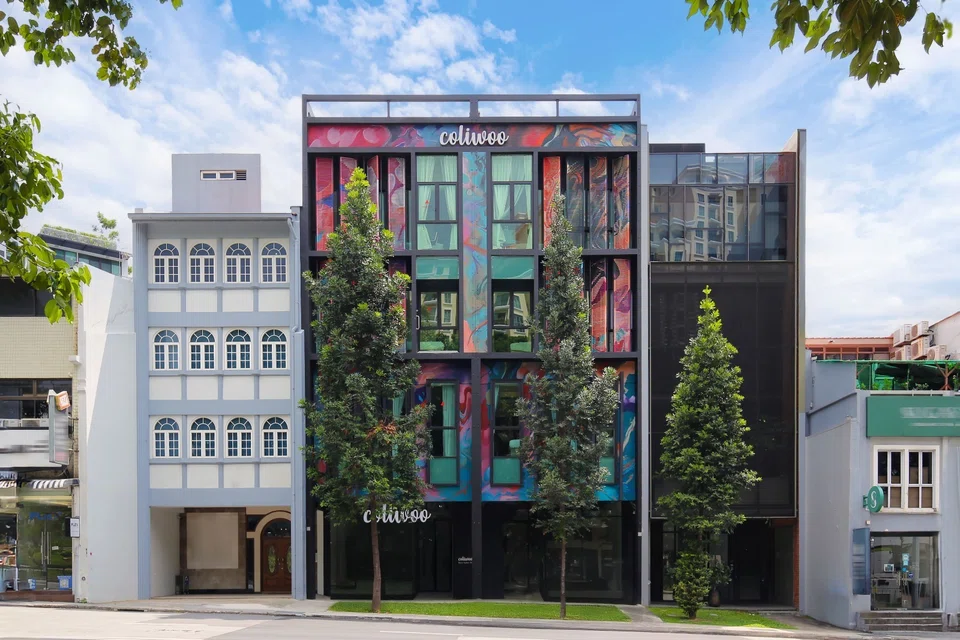
What Coliwoo has agreed to sell
The proposed transaction involves the companies holding 288 and 298 River Valley Road. The buyer is Qing Feng Construction. Once the sale completes, a Coliwoo subsidiary will lease the properties back for three years and continue operating them under the Coliwoo brand.
The two properties contain 50 accommodation keys: 37 at 288 River Valley Road and 13 at 298 River Valley Road. They also include street-level commercial space. The proposal remains subject to completion conditions, including shareholder approval.
There is an important distinction between the price figures. The reported base purchase prices are S$31.5 million for 288 River Valley Road and S$14 million for 298 River Valley Road, totalling S$45.5 million. Separately, the reported aggregate consideration is S$45.8 million, subject to net asset completion adjustments.
The calculations below use S$45.8 million as an illustrative investment denominator. They do not reconstruct the buyer’s final acquisition cost or the completion accounts.
Why sell a property that still generates business?
An operator that owns its buildings has capital committed to both the real estate and the accommodation business.
Keeping the properties means retaining exposure to future property appreciation and control over their long-term use. But that capital remains tied up unless the company borrows against the assets or sells them.
A sale-and-leaseback changes this arrangement. The buyer takes ownership of the property-holding companies, while Coliwoo continues using the premises through a lease.
The strategic attraction is that the rooms can remain in operation even as capital leaves the buildings.
For example, released funds could help finance another property conversion, fit out additional rooms or reduce borrowings. These uses have different potential returns and risks. Debt reduction can lower financing costs; expansion depends on execution, occupancy and operating margins.
Coliwoo has described the proposed disposal as a way to recycle capital into growth opportunities and strengthen its balance sheet. It expects approximately S$18.7 million in net cash proceeds after repaying property-related borrowings, transaction expenses, and other completion adjustments.
That S$18.7 million is the more relevant figure when assessing the cash available for redeployment. The S$45.8 million headline should not be treated as money that the company can spend entirely on expansion. Equally, net proceeds are not a measure of accounting profit.
Keeping the revenue also means taking on rent
Continuing to operate the properties preserves the opportunity to earn accommodation revenue. It does not preserve the previous cost structure.
After the sale, Coliwoo will have lease payments to make. Depending on the agreed terms, it may also retain responsibilities for maintenance, fit-outs and other operating expenses.
The operating test is therefore straightforward: can revenue cover the lease payments and operating costs while leaving an adequate margin?
If accommodation income weakens while rent remains contractually payable, profitability can come under pressure. Conversely, strong operations could allow Coliwoo to retain an attractive business without tying up as much capital in the buildings.
Selling property can reduce a business’s dependence on ownership, but it does not remove its need for reliable cash flow.
What income would support S$45.8 million for the buyer?
The buyer faces a different calculation. Its investment case depends on the income attributable to the acquired properties, the expenses it must bear and their future value.
To illustrate the income requirement, annual net property income can be calculated as:
Investment amount × assumed net property yield
Using S$45.8 million gives the following scenarios:
| Assumed net property yield | Required annual net property income | Monthly equivalent |
|---|---|---|
| 3.0% | S$1,374,000 | S$114,500 |
| 3.5% | S$1,603,000 | S$133,583 |
| 4.0% | S$1,832,000 | S$152,667 |
| 4.5% | S$2,061,000 | S$171,750 |
These are illustrative income thresholds, not disclosed transaction yields or estimates of actual rent. Monthly figures are annual amounts divided by 12 and rounded.
At a 3.5% net yield, the properties would need to generate approximately S$1.60 million a year after landlord-level property expenses. At 4.0%, that requirement rises to approximately S$1.83 million.
For this analysis, net property income means income after expenses borne by the landlord, but before acquisition financing costs and investor income tax. The denominator excludes additional acquisition costs. Including those costs would increase the income needed to achieve the same yield on total investment.
These scenarios do not establish the appropriate yield for this deal.
Gross rent must cover the landlord’s expenses too
Gross rental yield and net property yield are different measures.
If the landlord bears property expenses, gross income must exceed the net income targets above. The actual difference depends on the lease’s allocation of property tax, insurance, repairs and other costs.
For illustration only, assume landlord-level expenses equal 10% of gross property income. Required gross income would then be:
Required net property income ÷ 90%
| Target net property yield | Required annual gross property income | Monthly equivalent |
|---|---|---|
| 3.0% | S$1,526,667 | S$127,222 |
| 3.5% | S$1,781,111 | S$148,426 |
| 4.0% | S$2,035,556 | S$169,630 |
| 4.5% | S$2,290,000 | S$190,833 |
Calculation rounded to the nearest dollar. The 10% expense allowance is an assumption, not a disclosed expense ratio for these properties.
Under that assumption, a 3.5% net yield requires approximately S$1.78 million in annual gross property income.
The materials reviewed do not establish the actual leaseback rent or the complete allocation of landlord expenses. These calculations therefore show what would be required, rather than what the buyer is receiving.
The buyer’s rent is different from Coliwoo’s room revenue
It would be misleading to treat all accommodation revenue as income available to the property owner.
Coliwoo collects revenue from operating the accommodation. It must cover the costs of delivering that service, along with its lease payments. The landlord receives income under the agreed property arrangements.
The properties also contain commercial space, so dividing total income by 50 accommodation keys would not establish a reliable room-rate target.
To assess the buyer’s yield, the relevant evidence is the leaseback rent, any separately attributable commercial income and landlord expenses. To assess Coliwoo’s profitability, the relevant evidence is accommodation revenue, operating costs and lease obligations.
The same buildings support two businesses with different income streams.
Three years of continuity does not settle the long-term outcome
The leaseback gives Coliwoo an agreed operating period after completion. It also gives the buyer an identified tenant, subject to that tenant meeting its obligations.
However, a three-year lease does not define what happens beyond that. Renewal terms, future rent and responsibility for replacement fit-outs can affect the economics when the initial lease ends.
For Coliwoo, a future rent increase could reduce operating margins. For the buyer, non-renewal could mean a period without rent, costs to appoint another operator or investment in the premises.
The lease provides a framework for continuity. Its value still depends on payment reliability, contractual protections and the properties’ usefulness beyond the initial term.
The real test is what the released capital earns
Coliwoo’s proposed sale makes strategic sense if the cash released from the properties can produce sufficient value through debt reduction, expansion or other investments while the River Valley operations remain profitable after rent.
The buyer’s test is whether the contractual income, landlord expenses and longer-term property prospects justify the acquisition cost.
Both sides can benefit: one gains capital to redeploy, while the other gains property ownership and rental income. But the headline price alone cannot demonstrate that outcome.
The most revealing numbers will be the leaseback rent, Coliwoo’s operating margin after rent, and the returns achieved on the approximately S$18.7 million in released cash. Those figures will show whether selling the buildings helps Coliwoo grow a stronger business.
Disclaimer: This article is for general information and discussion only and does not constitute investment, financial, legal or valuation advice. Transaction details reflect information available at the time of writing and remain subject to completion conditions and adjustments. Yield calculations and the assumed 10% landlord-expense allowance are illustrative; they do not represent disclosed leaseback rent, actual expenses or guaranteed returns. Actual outcomes will depend on the final acquisition cost, lease terms, financing, operating performance and market conditions. Readers should independently verify the information and seek appropriate professional advice before making investment decisions.
Article contributed by Jerry Wong.
 Jerry Wong is a realtor at Propnex Realty, bringing a rich background in interior and lighting design to his work. He loves exploring diverse spaces and observing the transformative power of real estate. Beyond his professional role, Jerry finds his greatest fulfillment in connecting people with the right properties, gaining immense satisfaction from helping clients achieve their dreams.

Let’s Discuss Your Property Plans
Interested in This Property?
Buying, selling or renting? Get a free consultation with realtors with a background in interior and lighting design. We’ll discuss your goals and help you assess your options—from pricing and timelines to layout practicality and space potential.
Share your contact details below, and we will get in touch to understand your needs and suggest the next steps. No pressure. No obligation to proceed.