
Dunearn House recorded a solid launch performance on 25 July 2026, with 211 out of 380 units sold. This translates to an overall take-up rate of 55.53%.
While the headline result reflects healthy interest, the unit-by-unit breakdown provides a clearer picture of what buyers were actually looking for. Demand was strongest for practical family-sized homes, particularly the three-bedroom and standard four-bedroom layouts. In contrast, the largest premium residences saw much slower sales despite offering more space.
The launch therefore revealed a highly selective buyer market. Purchasers were prepared to pay for a Bukit Timah address and well-designed layouts, but they remained sensitive to total purchase price and the practical value of additional floor area.

Overall Launch Performance
The project sold 211 of its 380 units during the launch, leaving 169 units available.
| Unit Type | Sold | Total | Take-up |
|---|---|---|---|
| 2 Bedroom | 13 | 40 | 32.5% |
| 2 Bedroom Premium | 43 | 59 | 72.9% |
| 2 Bedroom + Study | 31 | 77 | 40.3% |
| 3 Bedroom | 20 | 20 | 100% |
| 3 Bedroom + Flexi | 19 | 20 | 95% |
| 3 Bedroom + Study | 18 | 20 | 90.0% |
| 3 Bedroom Premium | 23 | 36 | 63.9% |
| 4 Bedroom | 32 | 36 | 88.9% |
| 4 Bedroom Premium | 6 | 36 | 16.7% |
| 4 Bedroom Premium + Study | 5 | 36 | 13.9% |
The strongest-performing categories were the three-bedroom, three-bedroom plus flexi, three-bedroom plus study and standard four-bedroom units. These layouts offered sufficient space for family living while keeping the overall purchase quantum below that of the larger premium configurations.
All 20 standard three-bedroom units were sold on launch day. Demand was similarly robust for the larger variants, with 19 of the 20 three-bedroom plus flexi units and 18 of the 20 three-bedroom plus study units taken up. This left only three units available across the two categories.
In contrast, the four-bedroom premium and four-bedroom premium plus study categories recorded take-up rates of just 16.7% and 13.9% respectively.
The difference in performance suggests that buyers were not simply chasing the largest homes. Instead, demand was concentrated on layouts that delivered the most practical balance of space, functionality and total purchase price.
Three-Bedroom Units Were the Clear Launch-Day Winners
The three-bedroom collection was the strongest-performing segment at Dunearn House.
All 20 standard three-bedroom apartments were sold out on launch day. Demand was similarly strong for the larger variants, with 19 of the 20 three-bedroom plus flexi units and 18 of the 20 three-bedroom plus study units snapped up, leaving only three units available across both categories.

This means that 57 out of 60 units across these three categories were purchased, representing an overall take-up rate of 95%.
The near-complete sell-out indicates that buyers saw these layouts as the project’s most attractive balance between liveability and affordability. The last remaining 3-Bedroom + Flexi unit, measuring 936 sq ft, is priced at $2.899 million. Meanwhile, the remaining 3-Bedroom + Study units, each spanning 969 sq ft, are priced between $2.974 million and $2.998 million, leaving future buyers with only a limited selection of family-sized layouts following the project’s strong launch performance.
The three-bedroom premium homes of 1,001 sq ft were priced from approximately $3.084 million, with higher-floor units reaching about $3.361 million.
For buyers who required a proper family home, these price points may have appeared more reasonable than stretching into the four-bedroom premium collection. The layouts also catered to a broad pool of purchasers, including HDB upgraders, young families, owner-occupiers and investors targeting tenants who require additional bedrooms or work-from-home flexibility.

Buyers Were Willing to Stretch for Standard Four-Bedroom Homes
The standard four-bedroom units also performed exceptionally well, with 32 out of 36 units sold.
These apartments measure approximately 1,184 sq ft and offer a more conventional family layout without reaching the much higher price levels of the premium four-bedroom collection.
The remaining standard four-bedroom units were priced from approximately $3.588 million to $3.880 million, equivalent to around $3,030 to $3,277 per sq ft.
This category appears to have captured buyers who wanted a larger home but remained disciplined about total quantum. For many families, 1,184 sq ft may already provide sufficient space for four bedrooms, communal living, and long-term owner-occupation.
The strong sales rate suggests that buyers were prepared to move beyond the three-bedroom category when the incremental price remained within an acceptable range. However, demand weakened sharply once prices crossed above $4 million.

Four-Bedroom Premium Units Faced Greater Price Resistance
The weakest launch performance came from the four-bedroom premium and four-bedroom premium plus study categories.
Only six out of 36 four-bedroom premium units were sold, representing a take-up rate of 16.7%. The four-bedroom premium plus study collection performed even more slowly, with five out of 36 units sold, equivalent to 13.9%.
The remaining four-bedroom premium units are between 1,302 and 1,313 sq ft. Prices begin from around $4.037 million and rise as the floor level increases.
The four-bedroom premium plus study homes are larger at approximately 1,378 sq ft. Remaining prices generally range from around $4.283 million to over $4.6 million, with per-square-foot prices from approximately $3,108 to over $3,300.
The difference in launch performance between the standard four-bedroom and premium four-bedroom categories is significant. While both provide four bedrooms, the premium layouts require buyers to commit several hundred thousand dollars more for additional space and features.
Many purchasers may have concluded that the standard four-bedroom apartments already met their functional requirements. The additional floor area in the premium layouts therefore became harder to justify, particularly when the total price approached or exceeded $4 million.

Practical Luxury Outperformed Maximum Floor Area
The sales results suggest that Dunearn House buyers were seeking practical luxury rather than maximum size.
The project attracted purchasers who valued a Bukit Timah address, quality facilities and family-friendly layouts. However, buyers remained highly conscious of how much usable value they were receiving for each increase in purchase price.
This explains why the three-bedroom and standard four-bedroom categories were heavily oversubscribed compared with the largest residences. Buyers were willing to pay for enough space, but they were less willing to pay a substantial premium for marginally larger layouts.
This trend is particularly important in the current private residential market. Even affluent buyers are becoming more analytical about total quantum, maintenance obligations and the opportunity cost of committing additional capital to larger homes.
Two-Bedroom Study Units Were the Strongest Compact Layout
Within the smaller-unit segment, the two-bedroom-plus-study category was the clear winner. A total of 43 out of 59 two-bedroom + study apartments were sold, representing a take-up rate of 72.9%. This was substantially higher than the 32.5% achieved by the standard two-bedroom units and the 40.3% recorded by the two-bedroom premium category.
The remaining two-bedroom-plus-study homes range from 657 to 678 sq ft. Prices generally range from $1.9 million to $2.1 million, with per-square-foot prices between $2,935 and $3,170.
The stronger take-up suggests that buyers were willing to pay more for a better-planned two-bedroom layout. A configuration with 2 bathrooms and a study offers more flexibility and also a work-from-home option.
For owner-occupiers, these practical improvements can be more valuable than simply securing the lowest-priced unit in the development.

Standard Two-Bedroom Units Saw More Selective Demand
The standard two-bedroom category achieved a take-up rate of 32.5%, with 13 out of 40 units sold.
The remaining units measure approximately 527 sq ft and start from about $1.475 million. Prices extend to approximately $1.554 million for the visible remaining units, with per-square-foot prices ranging from about $2,799 to $2,949.
These homes provide the lowest entry price into Dunearn House, but their compact size may limit their appeal to owner-occupiers who intend to remain in the development for the longer term.
The buyer pool for this category is likely to consist mainly of investors, singles, couples or purchasers seeking a smaller city-fringe residence. These buyers are generally less urgency-driven than families competing for limited three- and four-bedroom homes.
As a result, the slower launch-day performance does not necessarily indicate weak long-term demand. It may instead reflect the more price-sensitive and investment-oriented profile of buyers in this segment.

The Two-Bedroom Premium Units Faced an Awkward Price Position
The two-bedroom premium category recorded 31 sales out of 77 units, translating to a take-up rate of 40.3%. The remaining two-bedroom premium units measure 614 sq ft, with prices ranging from approximately $1.829 million to $1.973 million.
The relatively moderate take-up may partly reflect a pricing challenge. As the purchase quantum approaches $2 million, buyers are likely to compare these units directly with the larger two-bedroom-plus-study layouts. For purchasers planning to occupy the property over the longer term, paying slightly more for an additional study may offer better value, particularly given the extra flexibility it provides as a home office, nursery or storage room.
The two-bedroom premium layouts therefore occupied a somewhat difficult middle ground. While these units offered more space than the compact two-bedroom layouts, the price premium was significant. At the same time, the gap to the more versatile two-bedroom + study units was relatively small, encouraging many buyers to upgrade instead.
The Site Plan Also Highlight that Buyers Considered Orientation Carefully
The sold-unit chart, when overlaid with the site plan, indicates that buyers were not selecting units based on price alone. Dunearn House is arranged across five residential blocks, with the lower-rise Luxury Collection positioned around the main internal facilities and the taller Pinnacle Collection located toward the northern end of the site.
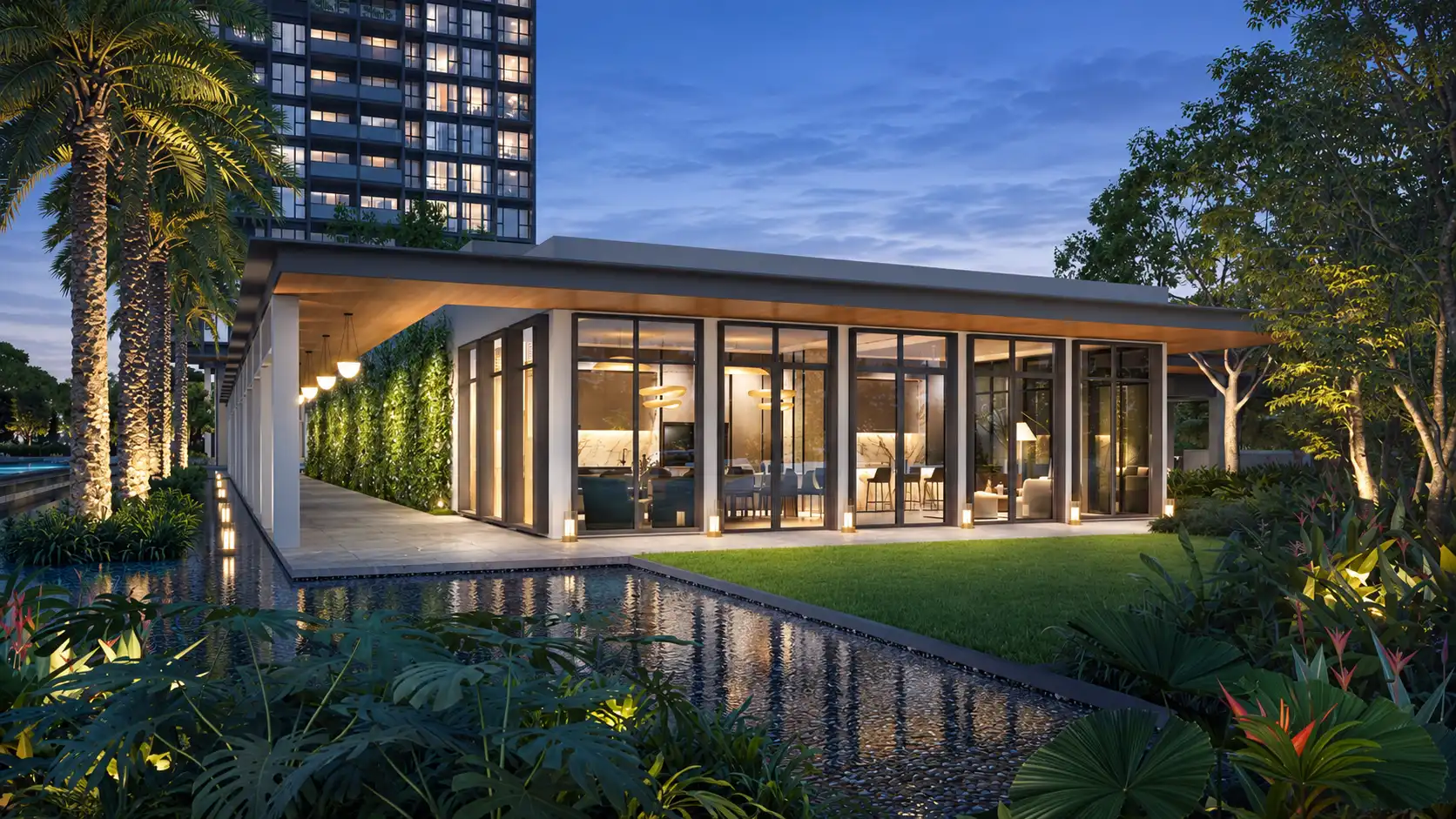
The development includes a 50-metre lap pool, a wellness pool, a tennis court, family areas, landscaped gardens, and multiple pavilion spaces. Units overlooking these internal facilities may benefit from a more attractive residential outlook than those facing the perimeter roads or future development areas.
The sales distribution suggests that buyers placed a premium on selected internal-facing stacks, particularly where the layout and quantum were also attractive.
However, the sales charts also show that demand was broad-based for the most popular unit types. In the three-bedroom and standard four-bedroom categories, buyers purchased across multiple stacks and floor levels rather than concentrating only on a small number of preferred units.
This indicates that unit type and total price were more influential than orientation alone.

Lower and Mid-Floor Units Were Not Necessarily Avoided
The sold-unit distribution also shows meaningful demand across lower and mid-floor apartments. In many launches, buyers initially focus on higher floors for better views, greater privacy, and reduced exposure to surrounding activity. At Dunearn House, however, the strong take-up of family-sized units appears to have outweighed the usual preference for height.
Buyers may have prioritised securing their preferred layout before considering floor level. This is especially likely in the three-bedroom categories, where nearly the entire supply was sold.
Lower-floor units can also provide a lower entry price while retaining the same internal layout. In a landscaped development such as Dunearn House, selected lower floors may still enjoy pleasant greenery or pool views.
The launch performance therefore suggests that purchasers were willing to compromise on floor level when the unit type and overall price were compelling.
The Pinnacle Collection Had Two Very Different Outcomes
The Pinnacle Collection contains the larger four-bedroom, four-bedroom premium and four-bedroom premium plus study homes. Within this collection, the standard four-bedroom units sold extremely well, while the two premium categories saw limited demand.
This created a clear divide within the same part of the development. Buyers were interested in the exclusivity and larger layouts of the Pinnacle Collection, but only when the total price remained in the mid-$3 million range.
Once prices moved above $4 million, purchasing decisions became more selective. This reinforces the conclusion that the weak performance of the largest units was driven more by quantum than by location within the project.
Remaining Inventory Is Concentrated in the Largest Homes
After launch day, the remaining inventory is heavily concentrated in the four-bedroom premium and four-bedroom premium plus study categories.
Together, these two categories account for 61 of the 169 unsold units. There are also 46 remaining two-bedroom-plus-study homes, 27 standard two-bedroom units, and 16 two-bedroom premium units.
By comparison, only four standard four-bedroom homes remain, while the three-bedroom collection is almost fully sold.
This inventory profile will shape the project’s subsequent sales performance. The developer will need to attract a smaller, wealthier buyer pool for the largest homes, while the remaining compact units may gradually appeal to investors and owner-occupiers who did not purchase during the initial launch.
What the Launch Reveals About Buyer Priorities
The Dunearn House launch provides several useful insights into current buyer behaviour.
First, family-sized homes remain highly sought after when the layout is efficient, and the price remains within a recognisable market range. The complete sell-out of the standard three-bedroom and three-bedroom plus flexi units demonstrates strong demand for homes that can support long-term occupation.
Second, buyers are willing to pay a premium for better functionality. This is reflected in the strong performance of the two-bedroom + study category compared with the smaller standard two-bedroom layouts.
Third, there is a clear upper limit to how much additional space buyers are prepared to pay for. The sharp drop in take-up between the standard four-bedroom and premium four-bedroom categories suggests that extra floor area alone is insufficient to justify a substantial increase in total quantum.
Finally, purchasers appear to have prioritised unit type over floor level. The sold-unit chart shows broad demand across multiple floors for the most attractive layouts.
Is 55.53% a Strong Launch Result?
Selling 211 units in a single launch represents a respectable result, particularly for a luxury development with a significant number of apartments priced above $4 million.
The overall percentage should also be interpreted in the context of the project’s unit mix. Dunearn House contains 72 premium four-bedroom and four-bedroom-plus-study units, which naturally target a much narrower pool of buyers.
Excluding these two categories, the project sold 200 out of 308 units across the remaining layouts. This represents a take-up rate of approximately 64.9%.
The result therefore looks stronger when the high-quantum premium residences are separated from the mainstream family and compact-unit segments.
The launch successfully cleared nearly all three-bedroom homes and most standard four-bedroom apartments. These are likely to be among the project’s most broadly marketable units, and their strong take-up provides a solid foundation for subsequent sales.
Outlook for the Remaining Units
The remaining two-bedroom and two-bedroom premium apartments may continue to attract buyers seeking luxury properties near Bukit Timah, Newton, and established schools.
The premium four-bedroom residences may require more time. Their buyer pool is smaller, and purchasers at this price level are likely to compare Dunearn House with other luxury developments, larger resale apartments and landed homes.
Future sales may depend on the availability of comparable new launches, broader market confidence and whether buyers begin to view the remaining premium units as scarce after the more affordable family layouts are fully taken up.
The remaining standard four-bedroom and three-bedroom units are likely to receive the most immediate attention because supply is already extremely limited.
Conclusion
Dunearn House achieved a healthy launch-day performance, selling 211 out of 380 units, or 55.53% of the development.
The detailed sales pattern shows that buyers were not simply chasing the smallest or cheapest homes. Instead, they focused on layouts that provided genuine family functionality while keeping the total purchase price within a reasonable range.
The three-bedroom collection emerged as the strongest segment, with 57 out of 60 units sold. Standard four-bedroom apartments also performed exceptionally well, while the two-bedroom premium layouts clearly outpaced the other compact-unit categories.
The slower sales of the four-bedroom premium and four-bedroom premium plus study residences demonstrate that even buyers in the luxury market remain price-conscious. Additional space was attractive, but only when the increase in total quantum could be justified.
Overall, Dunearn House’s launch reflects a market that remains willing to pay for a brand-new home with a Bukit Timah address and efficient layouts. However, buyers are increasingly selective, and practical value appears to be more important than size or prestige alone.
Disclaimer: This analysis is based on publicly available launch-day information, developer-released unit availability, pricing data, floor plans and site plans available as of 25 July 2026. Sales figures and remaining inventory reflect the information available at the time of writing and may change as additional units are sold, reserved, bounced out or released.
The observations, interpretations and opinions expressed in this article are solely those of the author and are intended for general informational and educational purposes. Any discussion of buyer preferences, demand patterns, pricing trends or reasons behind purchasing decisions represents analytical commentary based on the available data and should not be interpreted as definitive evidence of individual buyer motivations.
Prices quoted are indicative launch prices for available units at the time of analysis and are subject to change without prior notice.
Article contributed by Jerry Wong.
 Jerry Wong is a realtor at Propnex Realty, bringing a rich background in interior and lighting design to his work. He loves exploring diverse spaces and observing the transformative power of real estate. Beyond his professional role, Jerry finds his greatest fulfillment in connecting people with the right properties, gaining immense satisfaction from helping clients achieve their dreams.


Let’s Discuss Your Property Plans
Interested in This Property?
Buying, selling or renting? Get a free consultation with realtors with a background in interior and lighting design. We’ll discuss your goals and help you assess your options—from pricing and timelines to layout practicality and space potential.
Share your contact details below, and we will get in touch to understand your needs and suggest the next steps. No pressure. No obligation to proceed.