
For years, cinemas gave shoppers a reason to head to a shopping mall’s upper floors. A movie outing could include dinner beforehand, shopping while waiting for the screening, or a drink afterwards. The cinema’s commercial value extended to nearby businesses.
Causeway Point’s next chapter raises an interesting question: could a community reading destination play a similar role, while becoming part of visitors’ everyday routines?
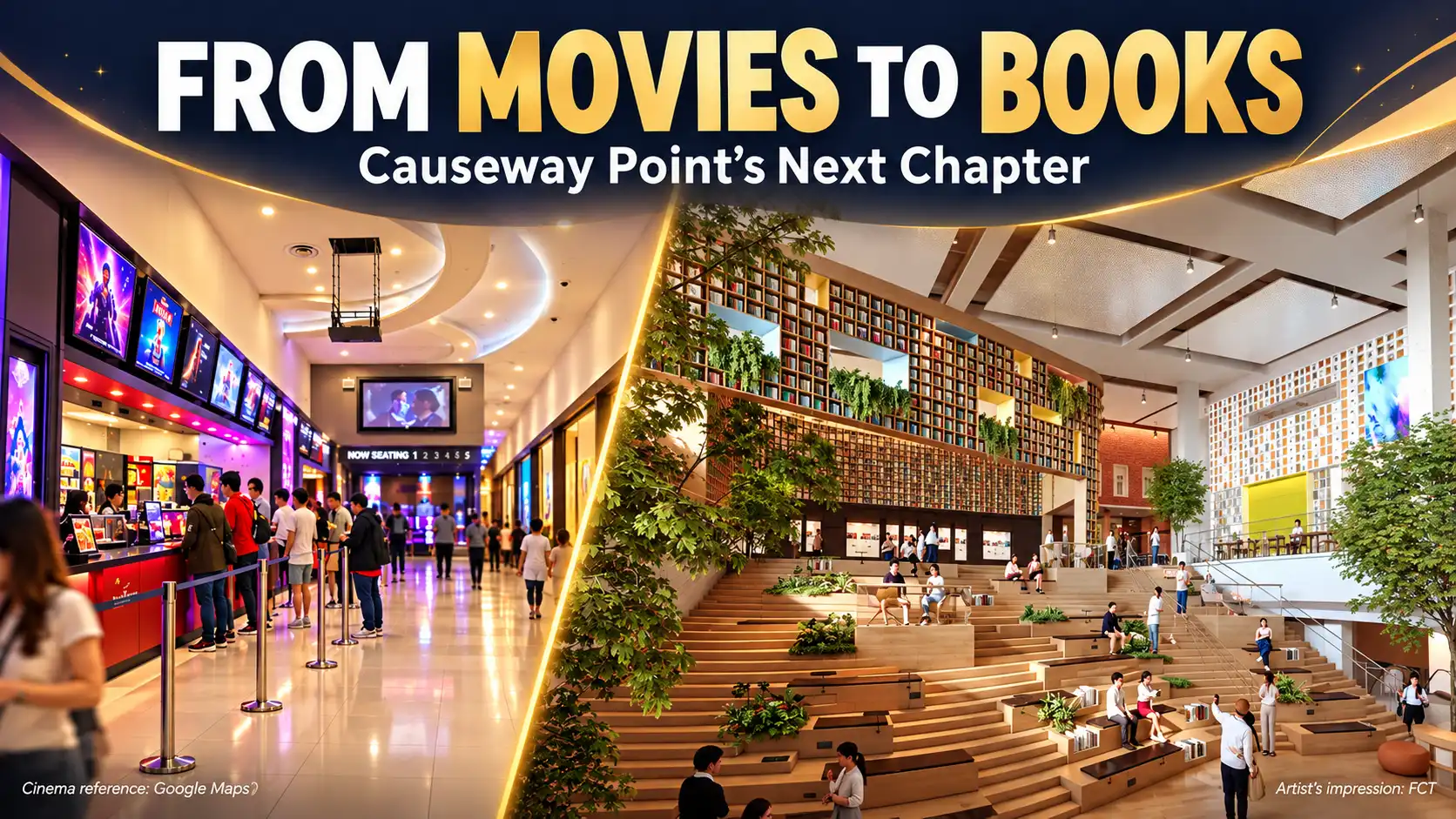
A Reading Hub Takes Over the Former Cinema
Frasers Centrepoint Trust (FCT) plans to convert the mall’s former cinema premises into a 32,000 sq ft reading hub called The HomePage @ Causeway Point. Expected to open in 2028, the facility will occupy parts of the sixth and seventh floors previously used by Cathay Cineplexes.
According to The Business Times’ October 22 report, the reading hub forms part of a wider asset enhancement initiative scheduled to begin in the second quarter of 2027 and finish by the end of 2029.
The change offers a useful lens for examining how a suburban mall chooses its anchors—and what makes an anchor valuable.
From Movie Outings to Regular Family Visits
A cinema attracts visitors around screening times and film releases. A reading hub could encourage a different pattern: parents bringing children after school, residents spending an afternoon reading, or families returning regularly for activities.
The planned facility will include a substantial collection of previously owned books, Singapore literature, a showcase for local authors, a children’s play area and an indoor theatre. These features suggest a destination with several reasons to visit, extending beyond browsing books.
For the mall, the opportunity lies in becoming part of a recurring routine. A family that visits regularly may also buy groceries, have lunch or stop at another shop during the same trip.
The commercial potential comes from those additional visits and purchases across the mall. Whether that potential translates into stronger tenant sales will depend on how visitors actually use the space.
Giving Shoppers a Reason to Head Upstairs
The upper-floor location also matters. Large destination uses can give visitors a reason to travel beyond the most accessible retail levels. The former cinema served that purpose, and the reading hub could retain a similar ability to draw people upstairs.
However, the journey through the building will be important. Convenient escalators, clear signs and complementary shops along the route could help connect a reading-hub visit with the wider mall. If visitors travel directly to the facility and leave immediately afterwards, the benefit to other tenants may be limited.
More Visitors Must Translate Into Business for Tenants
Longer visits alone do not measure success. Someone could spend several hours reading without making a purchase. A shorter visit that includes a meal and grocery shopping might contribute more to tenant sales.
For FCT, useful measures would include repeat visitation, spending at surrounding businesses and the performance of shops along the routes serving the hub. The aim should be to understand how the new destination contributes to the mall as a whole.
A successful community facility may attract substantial interest. Its commercial contribution will depend on how effectively that activity connects with the mall’s retail and dining offerings.
How the Reading Hub Fits Into the Wider Revamp
The proposed operating arrangement adds another dimension. The reading hub is being developed under URA’s Community/Sports Facilities Scheme, with NLB paying a service charge to cover operating costs.
FCT has indicated that incorporating the community facility also creates opportunities to improve commercial space allocation and position higher-yielding trades in more attractive locations.
This means the reading hub should be assessed alongside the broader reconfiguration. Following the revamp, Causeway Point is expected to have more than 425,000 sq ft of net lettable area, up from around 420,000 sq ft, and nearly 250 stores, up from about 230.
Those figures point towards a wider exercise in reorganising space and refreshing the tenant mix. The reading hub is one component of that strategy.
The Financial Outcome Remains to Be Seen
There are still important unknowns. Capital expenditure, expected returns and the financial impact have yet to be finalised. The announcement provides a direction of travel, but insufficient information to conclude that the conversion will increase profitability.
Cathay’s departure should not be treated as proof that cinemas can no longer work as mall anchors. Its exit followed wider financial difficulties affecting the operator. Different entertainment and community uses can succeed in different locations.
The key question is whether the proposed mix makes effective use of Causeway Point’s space and meets visitors’ needs.
A Mall Anchor Built Around Everyday Use
What makes Causeway Point’s plan interesting is the possibility of building an anchor around frequent, everyday use. A reading destination could give residents another reason to return, bring generations together and support purchases elsewhere in the mall.
The test will be whether those community visits translate into sustained activity for the surrounding businesses. If they do, Causeway Point could demonstrate how books, family activities and thoughtfully arranged retail space can work together to strengthen a suburban shopping destination.
Disclaimer: This article is provided for general information and commentary and does not constitute investment, financial or property advice. Details of Causeway Point’s proposed revamp, including the reading hub, tenant mix, floor areas and completion dates, are based on information available at the time of writing and may change. Views on visitor behaviour, tenant sales and commercial performance are the author’s analysis and do not represent forecasts or guaranteed outcomes. Images are illustrative, and artist’s impressions may differ from the completed development. Readers should refer to official announcements from FCT and the relevant agencies for the latest information.
Article contributed by Jerry Wong.

Jerry Wong is a realtor at Propnex Realty, bringing a rich background in interior and lighting design to his work. He loves exploring diverse spaces and observing the transformative power of real estate. Beyond his professional role, Jerry finds his greatest fulfillment in connecting people with the right properties, gaining immense satisfaction from helping clients achieve their dreams.


Let’s Discuss Your Property Plans
Interested in This Property?
Buying, selling or renting? Get a free consultation with realtors with a background in interior and lighting design. We’ll discuss your goals and help you assess your options—from pricing and timelines to layout practicality and space potential.
Share your contact details below, and we will get in touch to understand your needs and suggest the next steps. No pressure. No obligation to proceed.