
Lock-in period could offer more certainty than floating rate loans
More home buyers are looking to fixed rate loans, say banks, as home prices surge.
This is despite floating rate loans being quoted about 20 basis points cheaper than fixed rate loans.
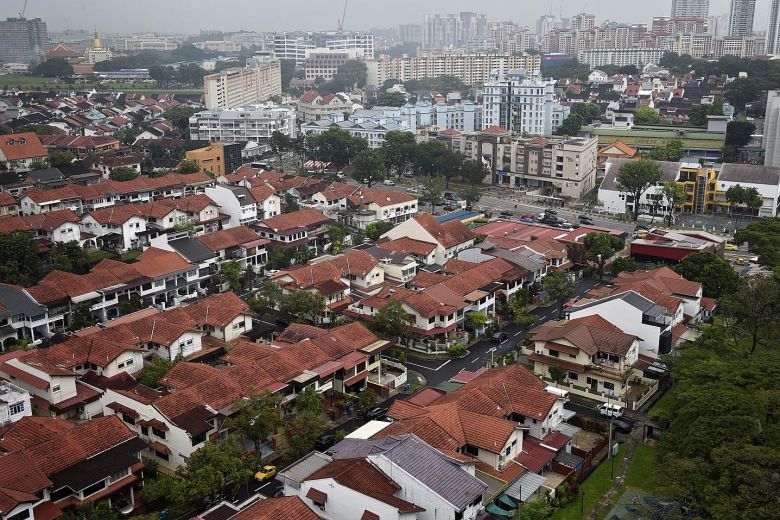
The Urban Redevelopment Authority’s overall private home price index surged 3.1 per cent in the first quarter of this year over the preceding quarter, based on a flash estimate released last Monday. This marks the steepest quarter-on-quarter hike since Q2 2010, when the index climbed 5.3 per cent. The index is now up 4.6 per cent from a year ago.
“With the expectation of further interest rate increases in the US, we are seeing more customers opting for fixed rate packages,” said United Overseas Bank head of secured loans Singapore Lim Beng Hua.
“Fixed rate loans offer more certainty as they lock in a rate for the first few years. These loans are suitable for owner occupiers and those with a longer investment time horizon as partial repayments (during the fixed rate period) are generally restricted and come with a penalty,” said Mr Lim.
For new home loan applications, UOB’s current two-year fixed rate is 1.85 per cent and the three-year fixed rate is 1.95 per cent.
In the first quarter of 2018, the take-up for fixed rate home loans is growing around 10 per cent faster than floating rate home loans, Mr Lim said. “Customers are more inclined towards two-year fixed rate packages,” he added.
DBS Bank is also seeing the same trend, with the 2-year fixed rate option being more popular.
Still the interest in the longer three-year fixed package is increasing and to help borrowers concerned about the lock-in period, the nation’s largest home loan provider has tweaked the offering to offer more flexibility.
DBS Bank executive director of secured lending Tok Geok Peng said : “We are seeing higher demand for fixed rate packages, of which the two-year fixed rate package is more popular. At the same time, we are also seeing increasing interest in our three-year fixed rate package which we enhanced at the end of January.”
This new concept offers a fixed rate of 1.85 per cent in the first two years and 1.88 per cent in the third year. “Some of our customers have told us their concerns with a three-year lock-in period and prefer a shorter lock-in requirement,” said Ms Tok.
“This new concept gives customers the flexibility to switch out of fixed rate in the third year. If interest rate has risen after the second year, they are protected and could continue with 1.88 per cent in the third year. If rates have dropped, they have the option to switch to a lower rate package. ”
The reason floating rate loans continue to outsell fixed rate loans is their lower cost.
For instance DBS charges 1.65 per cent for its floating rate loan.
Its calculations show that at 1.65 per cent, the monthly instalment based on a $1 million loan over 25 years is $4,070; at 1.85 per cent, the instalment is $4,166. The interest amounts paid in one year for 1.65 per cent and 1.85 per cent are $14,905 and $16,719 respectively.
Singapore interest rates have been rising in line with global rates. The US Federal Reserve raised its short-term interest rates last month and is expected to do two or three more hikes later this year. The three-month Sibor or the Singapore interbank offered rate which is the benchmark used to price home loans here is around its January high of 1.5 per cent.
UOB head of markets strategy Heng Koon How expects the three-month Sibor to trade higher and maintains his year-end target of 1.85 per cent.
“The increase of the three-month Sibor is in line with the rise in the three-month US London Interbank Offered Rate, which just traded above 2.3 per cent. This follows the US Federal Reserve’s simultaneous balance sheet reduction and gradual rate increases,” he said.
He anticipates two more rate increases by the Fed in the second half of the year, which will lift the Fed fund rates from 1.75 per cent to 2.25 per cent.
“Source:[Home buyers turning to fixed rate loans] © Singapore Press Holdings Limited. Permission required for reproduction”


Let’s Discuss Your Property Plans
Interested in This Property?
Buying, selling or renting? Get a free consultation with realtors with a background in interior and lighting design. We’ll discuss your goals and help you assess your options—from pricing and timelines to layout practicality and space potential.
Share your contact details below, and we will get in touch to understand your needs and suggest the next steps. No pressure. No obligation to proceed.