
Introduction: Leasehold vs Freehold Value Over Time
Imagine purchasing a home that you can own for only 99 years — after which the land reverts to the state. In Singapore, this is the reality for many 99-year leasehold properties, whose values gradually decline as their leases shorten. In contrast, freehold and 999-year leasehold properties (which are practically equivalent to freehold) retain their appeal without the time constraint.
In this second instalment of our series, we examine how lease decay influences property prices over the years by comparing three well-known condominiums in the Ulu Pandan area: Pine Grove (99-year leasehold), Pandan Valley (freehold), and Ridgewood (999-year leasehold). These developments were selected for their similar unit configurations, expansive land sizes, and close proximity — making them ideal for analysing how tenure alone impacts long-term price performance.

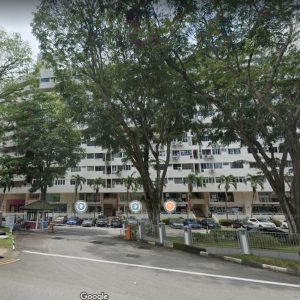
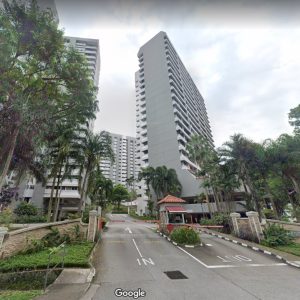
Pine Grove – our main case study – is a former HUDC estate in District 21, privatised in 1996, with a 99-year lease starting November 1984. It comprises 660 units spread across a sprawling ~893,000 sq ft site.
Pandan Valley (District 21) is a freehold condo completed in 1979, with 605 residential units on an expansive ~865,000 sq ft site.
Ridgewood (District 10, Directly Opposite Pandan Valley) is a 999-year leasehold condo completed in 1981 – effectively as good as freehold – with 464 units on about 672,000 sq ft of land. Although situated within District 10, its proximity and placement within the same Land Betterment Charge (LBC) sector 110 as both Pine Grove and Pandan Valley make this a fair and meaningful comparison for analysing lease tenure effects.
All three are large, mature developments built in the late 1970s to early 1980s, offering a valuable comparison of how a diminishing lease might impact property values over the long run.
Price Trends (2007–2025): Leasehold vs Freehold Performance
Over the 18 years from 2007 to 2025, property prices in Singapore generally rose, but Pine Grove’s 99-year leasehold status appears to have dampened its long-term price growth. Let’s compare how each of the three developments performed:

As the figure shows, Pine Grove’s prices appreciated significantly in the mid-2000s but began to stagnate around 2013, even as the broader market continued to trend up in later years. From 2007 to 2025, Pine Grove’s average price increased roughly 65% (from ~$636 to ~$1052 psf). In contrast, Pandan Valley’s freehold units rose by about 90% (from ~$826 to ~$1,577 psf) over the same timeframe. In other words, the freehold condo not only started at a higher price, but also saw a larger relative jump in value. Notably, Pandan Valley’s price trend kept an upward momentum through the 2010s and 2020s, whereas Pine Grove’s prices flatlined in the mid-2010s and only saw modest upticks thereafter. This divergence after 2020 suggests that Pine Grove’s ageing lease was curbing its price growth – a phenomenon we’ll delve into shortly.
What about Ridgewood, the 999-year leasehold? Being virtually freehold, one would expect it to behave more like Pandan Valley. Indeed, Ridgewood saw strong appreciation, though starting from a different baseline:

Ridgewood’s prices rose by about 69% from 2007 to 2025, slightly more than Pine Grove’s ~65% gain. In absolute terms, Ridgewood had a much higher starting and ending psf (reflecting its District 10 location and near-freehold status). Importantly, Ridgewood did not exhibit the pronounced mid-life stagnation that Pine Grove did – its values, like Pandan Valley’s, were able to ride the general market uptrend better. Pandan Valley actually outperformed both, with the highest overall gain of ~90%. This could be due to various factors (freehold status, perhaps en bloc potential, or other demand drivers). Still, the key observation is that the fully freehold and effectively freehold properties had more robust long-term appreciation, whereas the 99-year leasehold’s growth tapered off early.
In summary, by 2025, Pine Grove’s units were selling at a steep discount per square foot compared to similar units in the freehold/999-year projects. Pine Grove’s price stagnation in the 2010s, despite a generally rising market, is a classic sign of lease decay effects kicking in.
The Lease Decay Effect (Why Pine Grove Stagnated)
Why did Pine Grove’s prices stall out after around 2020? The condo didn’t suddenly become less attractive – it’s still in a good location and offers spacious units. The answer lies in lease decay: the gradual loss of property value as the remaining lease gets shorter.
In the first 20-30 years of a leasehold property’s life, its value often grows in line with the market and can even beat its freehold equivalents. However, beyond roughly 40 years old (with around 60 years of lease remaining on a 99-year lease), appreciation tends to slow or stagnate. Pine Grove was completed in 1984. By 2020, it was ~36 years old, and indeed, we see its price growth flatten from that point onward. Buyers and investors become more cautious with older leasehold properties, knowing that as the clock ticks, the pool of future buyers will shrink (especially once the remaining lease falls under a few decades). This anticipation of depreciation can cap the price even before the steep decline sets in.
Bala’s Curve is a commonly cited model that illustrates this leasehold depreciation. It’s derived from the Singapore Land Authority’s leasehold value table and shows that a 99-year leasehold’s value is nearly on par with freehold at the beginning, but declines non-linearly over time. For example, Bala’s Curve suggests that at the start of a fresh 99-year lease, the property is worth about 96% of an equivalent freehold. By the time 60 years of lease remain, it’s worth roughly 80% of a freehold’s value, and with 30 years left, only about 60%. The drop in value accelerates as the lease runs down, much like how a car’s value plummets faster in later years. In practical terms, once a condo’s remaining lease falls below a certain threshold (often around 60 years), its market appeal and price growth are significantly constrained. Pine Grove is now approaching that zone (in 2025, it has about 58 years left on the lease), and the stagnation in resale prices is a real manifestation of Bala’s Curve in action.

Another factor is financing and buyer eligibility. As leasehold properties age, financing becomes tougher – banks start to shorten loan tenures or refuse loans if the lease is too short, and usage of CPF funds (Singapore’s pension savings) may be restricted for properties that won’t last the youngest buyer to age 95. Many banks prefer leaseholds to have at least 60–70 years remaining to grant full loans. If a property has, say, 55 years left, a buyer might only qualify for a fraction of the usual loan amount or have to pay a larger down payment. This naturally shrinks the pool of potential buyers as the lease ages, dampening demand and prices. In Pine Grove’s case, while it’s not yet old by absolute terms (still ~40 years into a 99-year lease), savvy buyers by the mid-2010s recognised that its remaining lease was under 70 years and ticking away. The looming need for a costly lease top-up or the prospect of future decline put the brakes on how much people were willing to pay, even as nearby freeholds kept climbing in value.
In contrast, freehold and 999-year leasehold properties don’t face this expiration issue, so their values can fully capitalise on general market growth (assuming other factors like location and condition are comparable). Pandan Valley and Ridgewood continued to appreciate in the 2010s when Pine Grove did not, mainly because buyers knew those properties had essentially perpetual tenure. Pine Grove’s relative underperformance is a textbook illustration of lease decay. After a certain point, a diminishing lease can turn a once-appreciating asset into a stagnating one, despite overall market inflation.
It’s worth noting that Pine Grove’s owners have attempted collective sales (en bloc) multiple times – a common strategy for ageing leasehold estates to unlock value before the lease runs too low. (Pine Grove was one of the first HUDC estates privatised, and it has attempted an en bloc sale at least five times since 2007.) The en bloc route essentially bets that a developer will pay to top-up the lease to 99 years and redevelop the site. But until such a sale succeeds, individual resale values remain capped by the realities of the current lease.
Implications for Buyers and Investors
Lease decay has real financial impacts. The case of Pine Grove versus its freehold peers highlights several key takeaways for property buyers and investors:
• Limited Long-Term Upside: A 99-year leasehold property may offer decent appreciation in its first few decades (often at a lower entry price than freehold), but don’t expect values to keep rising indefinitely. Once the property ages past ~30-40 years, its capital gains potential diminishes sharply – and eventually values can start dropping as the remaining lease gets very short. In contrast, a comparable freehold can keep or increase its value much more readily over time.
• Financing and Buyer Pool Shrink: As a leasehold approaches around 60 years remaining, financing options tighten, and many buyers shy away. Banks often reduce the loan quantum or tenure for older leaseholds, and CPF usage might be curtailed. This means if you’re trying to sell such a property, you’ll face a smaller pool of eligible buyers (mostly those who can pay more cash or accept shorter loans). Demand can dry up quickly, putting downward pressure on price.
• Plan Your Horizon: If you’re considering purchasing an older leasehold (e.g. one that has ~40–60 years left), think about your time horizon. It might be fine for owner-occupiers who plan to enjoy the home for years and aren’t relying on significant resale gains. In fact, older leaseholds can be more affordable for the space and location you get. But if you intend to resell for profit or upgrade after a decade or two, be aware that the clock is working against you. You may even have to sell at a lower price later if the lease decay effect outweighs general market appreciation.
• En Bloc as an Exit (Uncertain): The theoretical upside in an ageing leasehold is the chance of a collective sale. A successful en bloc can let owners cash out at a decent price (with the developer paying to renew the lease). However, en bloc sales are never guaranteed – they depend on market conditions and developer interest. Pine Grove’s repeated en bloc attempts show that while owners are keen to monetise the land’s value, finding a buyer at the right price is challenging. Don’t buy a property solely based on an en bloc; consider it a bonus if it happens, but not a promise.
• Legacy and Rental Considerations: Unlike freeholds, leasehold properties cannot be held forever – eventually they revert to the state. If your goal is to hand down property to the next generation, an old leasehold won’t serve that purpose well. On the other hand, if you’re looking at rental yield and the price is right, a leasehold can provide good rental returns during its usable years (leasehold condos often yield similarly to freeholds in the same area). Just remember that as the lease runs down, significant upgrades or investments into the property (renovations, etc.) may not pay off in the long run.
Friendly advice: Always check a property’s remaining lease and factor it into your decision. A great location or large unit at a bargain price might be a leasehold near its mid-life, which is fine as long as you go in with eyes open about future appreciation (or lack thereof). Conversely, paying a premium for freehold means you’re buying an asset with no expiry date – something that tends to hold its value better over many decades. There’s no one-size-fits-all answer, but understanding lease decay is crucial to making an informed choice.
Conclusion
Lease decay is often described as a “ticking time bomb” in Singapore’s property market — and the comparison between Pine Grove, Pandan Valley, and Ridgewood clearly shows why. Pine Grove, the oldest 99-year leasehold in the area, saw its value appreciate in its early decades but eventually plateaued long before reaching the halfway mark of its lease. In contrast, its freehold and 999-year counterparts continued to achieve new price peaks.
This pattern echoes what we observed earlier at International Plaza, another leasehold development where values stagnated once the property crossed the 40-year threshold. The takeaway for both homebuyers and investors is unmistakable: lease tenure matters. A shorter remaining lease can gradually erode a property’s long-term value, even when the broader market remains strong.
That said, leasehold properties aren’t necessarily poor investments — they often offer more attainable entry prices and a path to homeownership. However, buyers should carefully balance these upfront savings against the inevitable decline in value as the lease continues to run down.
In essence, when purchasing property, think not just about location and amenities, but also about the lease timeline. If you do go for an older leasehold, have a game plan (whether it’s enjoying the home without expecting profit, or aiming for an en bloc). And if you prize enduring value and legacy, a freehold might be worth the extra expense. By being aware of lease decay, you can choose the option that best aligns with your financial goals and time horizon. After all, in property as in life, time can be either your friend or your foe – it all depends on how much of it you have left on the lease.
Article contributed by Jerry Wong.

Jerry Wong is a realtor at Propnex Realty, bringing a rich background in interior and lighting design to his work. He loves exploring diverse spaces and observing the transformative power of real estate. Beyond his professional role, Jerry finds his greatest fulfillment in connecting people with the right properties, gaining immense satisfaction from helping clients achieve their dreams.
Properties Highlighted In This Article


Let’s Discuss Your Property Plans
Interested in This Property?
Buying, selling or renting? Get a free consultation with realtors with a background in interior and lighting design. We’ll discuss your goals and help you assess your options—from pricing and timelines to layout practicality and space potential.
Share your contact details below, and we will get in touch to understand your needs and suggest the next steps. No pressure. No obligation to proceed.