
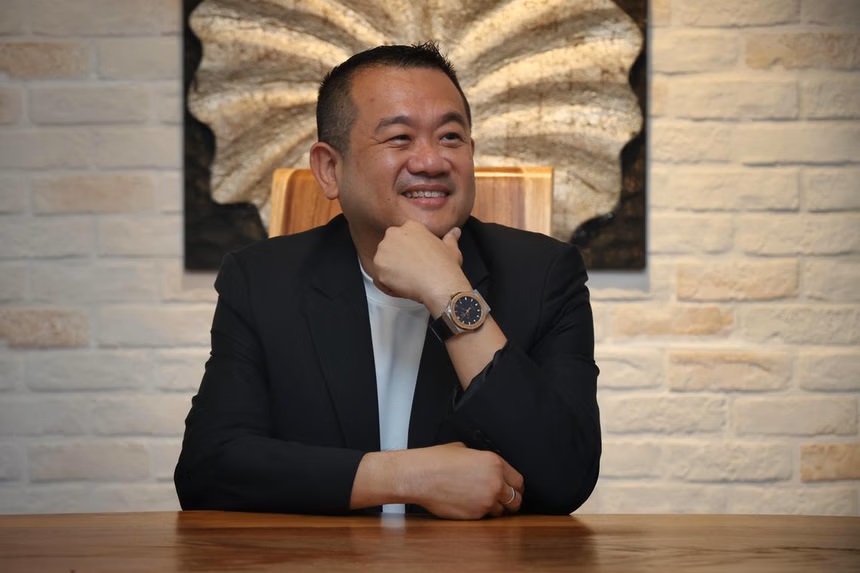
SINGAPORE – Retired banker Andy Lim realised the importance of retirement planning when the 2009 financial crisis hit, and he saw colleagues and friends lose their pension and retirement funds from their bank equities.
It dawned on him how fragile job security was. “You may have a well-paying job now, but this can come and go quickly,” said Mr Lim.
His realisation about such precariousness kicked off his investment journey, and he became a big believer in the financial independence, retire early (Fire) movement, which involves financial practices that combine intense budgeting, saving and investing to support retirement before the ages of 65 to 70.
Mr Lim focused on investing in property and living below his means, giving up on luxuries like branded cars so he could maintain a high saving rate – he drove a Toyota in his earlier working years, unlike some of his friends who had fancy cars.
Thanks to his financial sense and prudence, Mr Lim, who was an executive director at an American bank, is now retired at the age of 51. With over half of his investment portfolio devoted to property, he is able to derive passive income from the rents, helping him secure an early retirement.
Mr Lim, who graduated with a bachelor’s degree in accountancy from Nanyang Technological University in 1997, now lives in a private condominium in Hillview with his wife and two sons, aged 20 and 10.
Q: What is in your personal portfolio?
I have 60 per cent in properties, 15 per cent in fixed income, 15 per cent in equities and 10 per cent in cash.
My banking job before I retired had compliance restrictions, so the only equities I held were my bank stocks. In the last year, since government bond yields have spiked, I’ve added government bonds and Treasury bills to my portfolio.
I’m sufficiently covered for hospitalisation and life term. I have also bought a universal life policy for legacy planning purposes.
In the 2009 financial crisis, I bought my first investment property in the River Valley area. I had read about how many successful businessmen started with real estate and seen how successful my rich uncle was in the property market. I have now built up a portfolio consisting of multiple properties in Singapore.
I’m a strong advocate for health insurance – my advice is not to sacrifice your insurance, even if you are stretched financially. I had a minor heart attack back in 2022 and thanks to my health insurance, I did not have to pay out of pocket for the bills, which amounted to $25,000.
Q: What has been your best and worst investments so far?
My worst investment was when I went into Bitcoin during the Covid-19 crisis and bought at the price level of $19,000. My custodian was Hodlnaut, which went into liquidation after FTX went burst. Even with Bitcoin trading at above $90,000 now, I don’t think I will get any money back, as all investors are unable to withdraw the Bitcoin from Hodlnaut.
My best investments so far are all my investment properties that I bought in the past 15 years before the anti-speculation measures were announced. Despite the huge positive mark-to-market for these properties, I have no intention to sell any (of them) and will treat these as my retirement and legacy plan.
After suffering the heart attack in 2022, I started to think very hard about my priorities in life. It took me about 1½ years to convince myself to walk away from my job and to be comfortable with the fact that my family can survive on our current passive income from this portfolio without a major downgrade in our lifestyle.
Q: Could you describe your lifestyle?
Although my parents were illiterate, they worked hard their entire lives to bring up six children – I am the youngest child. Throughout most of my growing-up years, we lived in a kampung near the Woodlands area. We were really poor, and our life was simple but happy.
In the early 1980s, my parents invested in a property construction company with an uncle, and with the property boom back then, they made some money and life began to improve.
I had a simple life growing up, feeling content in my own small world, until my uncle started taking me along with his children on outings. He had a Mercedes S-class in the 1980s, and we’d visit places like Jurong Country Club on Sundays.
It was during these trips that I started to realise there might be more opportunities beyond what I knew. I began to understand that education and a career in finance could be a way to create a better future for myself.
I then put in a lot of effort and discipline to study hard – I mostly selected my schools and subjects myself, as there was no one to advise me at home. Eventually, I went to NTU and became the first graduate in my family.
Some challenges I’ve faced on this journey to build up my retirement real estate portfolio include the pressure of staying on top of the outstanding mortgages and being in a job where there is a real possibility of being let go if you don’t meet the sales target.
To pay the mortgages, I was working harder than others and sacrificing weekends to work. Also, I had to withstand the pressure of not being drawn in to pursue the latest fad, to wine and dine, and drive fancy cars, when friends around me were doing so.
For about 10 years, most of my salary and bonuses were channelled to paying off the mortgages. As soon as one mortgage was paid off, I would start planning to buy the next property.
I now drive a Mercedes S-class, which was my childhood dream car.
My wife and I actively pursued our careers in the last 20 years or so, and I felt it was time for me to step down and focus on the family.
While my wife is still working, my focus will be on our two children and being there for them with active parenting, especially for our 10-year-old son.
My parents are in their late 80s. I would like to spend more time with them as well, so that I can live with no regrets.
As I get more used to the routine of retirement life, I am finding ways to give back to society and (do) volunteer work. Currently, I’m an active volunteer with the charity Food from the Heart, where we collect unsold bread and deliver it to the needy.
I also strongly advocate financial literacy to my children. While we would like to leave behind a substantial legacy for our children, it is more important that they are taught how to fish for themselves.
During our weekly Saturday family dinners, my wife and I would discuss the economy and topics related to financial markets with our children. This has got them, especially our older son, interested in finance.
Lastly, I have plans to use my SkillsFuture credits to go back to school, perhaps to study social media and enrol in culinary school. If I had not become a banker, my dream was actually to be a chef.
“Source:[Me & My Money: Retiring at 51 through property investments] © Singapore Press Holdings Limited. Permission required for reproduction”

Let’s Discuss Your Property Plans
Interested in This Property?
Buying, selling or renting? Get a free consultation with realtors with a background in interior and lighting design. We’ll discuss your goals and help you assess your options—from pricing and timelines to layout practicality and space potential.
Share your contact details below, and we will get in touch to understand your needs and suggest the next steps. No pressure. No obligation to proceed.