

SINGAPORE – Developers of shorter-lease commercial sites are likely to enjoy lower upfront land costs under a planned roll-out of these sites to provide more decentralised options for businesses and workers.
Commercial sites on 15- to 30-year leases are also feasible for some businesses as they can increase or reduce their footprint on a reasonable budget in response to rapidly changing trends, said Ms Catherine He, Colliers’ head of research for Singapore.
“From a planning perspective, such leases facilitate shorter redevelopment cycles to allow for intensification,” she said.
More sites for commercial and office uses on shorter leases of 15 to 30 years will be introduced in the near term, under the Urban Redevelopment Authority (URA)’s latest long-term plan to allow Singapore to refresh its land uses in shorter cycles and to support businesses adapt their operations to changing economic trends.
This concept is not new.
In 2007, URA began selling sites on shorter leases for transitional office use to address a short-term shortage in supply. These sites came with a lease of 15 years and were in areas including Scotts Road, Mountbatten Road, and Tampines.
Ms Tricia Song, CBRE’s head of research for South-east Asia, noted that these sites could be “attractive to single large occupiers who are able to commit for a similar duration and undertake the development”.
“These occupiers could tie up with developers to build a build-to-suit facility and lease back under a long-term contract,” she said.
Shorter-lease sites may be offered in white sites located in Marina Downtown core areas and along the Greater Southern Waterfront corridor. They will likely be introduced outside the Central Business District to support decentralisation efforts to major commercial nodes such as Jurong Lake district, Woodlands regional centre, Tampines regional centre, and Changi Business Park.
But analysts are divided over whether such sites will be seen as attractive investments as real estate is typically held as a long-term asset.
“A shorter lease would imply a lower value for the asset as rents will have to be amortised over a shorter period. It may also be harder to sell because the subsequent owner will have to contend with an even shorter lease,” Ms He said.
But she noted that investors may be receptive “if they have a specific use for the site, or a tenant willing to commit for the entire duration of the lease, or are certain of lease renewal when the lease term is up”.
“Real estate players will need to adjust their strategies to plan for more flexibility with a shorter investment horizon,” said Professor Sing Tien Foo, director of the Institute of Real Estate and Urban Studies at the National University of Singapore.
“Investors may need to focus on cash flow to generate investment yields, rather than capital gains,” he added.
Another concern was that developers will also have less time to recoup their development costs and therefore may not be incentivised to build a quality building, Ms He added.
But Prof Sing pointed out that developers may still channel savings from land costs to building better buildings, as they don’t want to compromise the quality of space and the type of tenants they want to attract.
“Investors can invest more in building structure and technology to increase their rents,” he said.
Mr Wong Xian Yang, head of research, Singapore, at Cushman & Wakefield, believes that the authorities “may be open to renewing leases on a case-by-case basis, if redevelopment plans are in line with long-term land needs”.
Meanwhile, the introduction of shorter-lease sites in the suburbs is likely to put pressure on office rents there, but such sites, if introduced in the city centre, are not likely to affect CBD Grade A office rents.
“Occupiers in the CBD value the prestige and convenience of a CBD address over potential cost savings from lower rents,” Ms He said.
New sites are also expected to be released gradually to avoid a supply glut. And if shorter-lease sites become prevalent, that will likely make longer-tenured land more valuable as these are seen to be more scarce, Mr Wong said.
To support more vibrant industrial developments, the URA is also looking at sites for business-white zones – such as the Kolam Ayer and Yishun industrial estates – to accommodate co-working spaces, retail, and food & beverage spaces.
Business-white sites are industrial sites that allow a greater flexibility of use.
This means that they can potentially include more office or retail units, compared with existing B1 sites, which are for light, clean industries only; and B2 sites, which allow only light, clean and general industries.
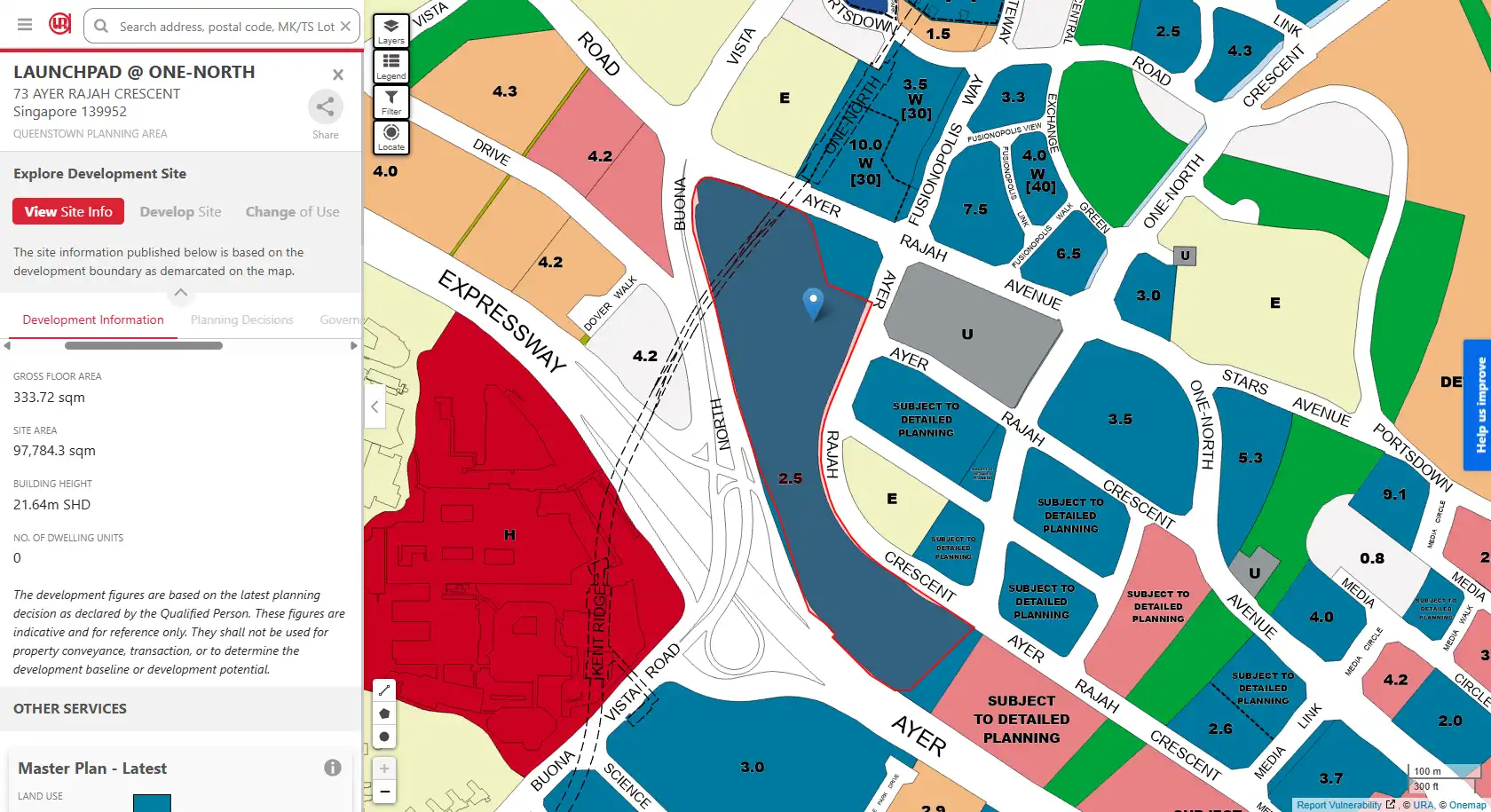
“By blurring the line on different uses, more space can be created to support entrepreneurs in the new sharing economy. A case in point is the Grab building in one-north,” Prof Sing said.
Mr Wong said these zones will address “the changing needs of industrialists that may require less manufacturing space and more office spaces for R&D and product design”.
“Source: [Developers of shorter-lease commercial sites may enjoy lower upfront land costs] © Singapore Press Holdings Limited. Permission required for reproduction”

Let’s Discuss Your Property Plans
Interested in This Property?
Buying, selling or renting? Get a free consultation with realtors with a background in interior and lighting design. We’ll discuss your goals and help you assess your options—from pricing and timelines to layout practicality and space potential.
Share your contact details below, and we will get in touch to understand your needs and suggest the next steps. No pressure. No obligation to proceed.