
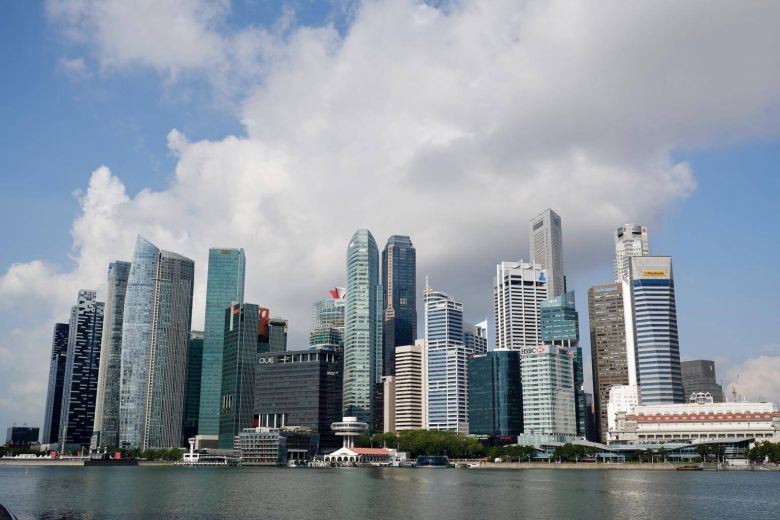
The office rental index compiled by the Urban Redevelopment Authority (URA) declined by 0.6 per cent in the first quarter of this year after rising for six consecutive quarters, the first quarterly drop since the second quarter of 2017.
This was mainly driven by the fall in the rental index in the fringe area, which showed a 1.2 per cent decline over the preceding quarter.
The rental index also weakened in the central area, a 0.4 per cent decline over the preceding quarter, recording the first drop after rising for six consecutive quarters.
The office price index, on the other hand, inched up faster than the quarter before. This is not surprising as interest in the sector has grown, brightening prospects of the sector.
This index showed a strong growth of 3 per cent quarter on quarter, the strongest quarterly growth since the third quarter of 2011.
The divergent performance of the office price and rental indexes could be a sign that tenants are showing some resistance to higher rents in view of the uncertainties in the business outlook.
As such, a flight-to-value strategy was adopted and leases in cheaper locations, particularly outside the core Central Business District (CBD), were inked instead.
The limited supply in the core and Grade-A office buildings in the CBD also incentivised tenants to look farther afield into the decentralised locations and/or less premium-grade office buildings. Some tenants might also be exploring more flexible options in the form of a co-working membership.
Despite the weakening in the office sector, demand continues to outstrip supply, as 19,000 sq m (204,514 sq ft) of space was taken up during the quarter, in tandem with the removal of 6,000 sq m from the market.
This improved the vacancy rate from 12.1 per cent in the fourth quarter of last year to 11.8 per cent in the first three months of this year.
Office leasing demand continues to be supported by tech and co-working, with WeWork reportedly taking up MYP Centre and Chevron House, totalling 160,000 sq ft.
Upcoming supply includes Woods Square and two CBD locations – at 9 Penang Road and Funan – but these have been taken up substantially. All of 9 Penang Road has been leased by UBS and Funan is almost fully leased by a string of government agencies.
Decentralisation activity may accelerate in the coming quarters as a result, lending support to the rental performance in the fringe and suburban locations.
The key medium-term risk remains as the Singapore economy has slowed down markedly since the final quarter of 2018. The impact has been felt most keenly in the manufacturing sector, although the service sector is still holding up well.
Nevertheless, rental growth this year can be sustained due to the limited supply and healthy pre-leasing activities in the market.
“Source:[First quarterly drop in office rental index since 2017] © Singapore Press Holdings Limited. Permission required for reproduction”

Let’s Discuss Your Property Plans
Interested in This Property?
Buying, selling or renting? Get a free consultation with realtors with a background in interior and lighting design. We’ll discuss your goals and help you assess your options—from pricing and timelines to layout practicality and space potential.
Share your contact details below, and we will get in touch to understand your needs and suggest the next steps. No pressure. No obligation to proceed.