Tender Facts and Planning Context
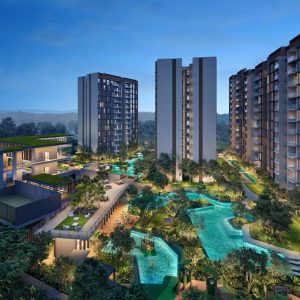
HDB launched the Miltonia Close Executive Condominium site on 23 December 2025 and awarded it to Hoi Hup Realty Pte Ltd for S$340.85 million on 21 April 2026. The parcel is a 99-year site with a site area of 15,451.2 sq m and a maximum permissible GFA of 43,264 sq m. HDB’s official estimated yield is about 430 units, while Hoi Hup has said it expects to build about 450 units in blocks of roughly 18 to 20 storeys. That distinction matters because the same land cheque must be spread across however many homes the final scheme delivers.
| Proposed Development | Executive Condominium housing development |
| Location | Miltonia Close |
| Site Area | 15,451.2 sqm |
| Maximum GFA | 43,264 sqm |
| Maximum Building Height | 90m Singapore Height Datum (SHD) |
| Estimated No. of Housing Units | 430* |
| Lease Term | 99 years |
| Project Completion Period | 60 months from the date of acceptance of tender |
*Actual number of housing units proposed by developer may vary. Source: HDB
The bid was not a runaway overpayment, but it was clearly the most bullish assessment of the site. The tender drew three bids, and Hoi Hup’s offer of S$732 psf ppr was 9.2% above the second-placed bid from the Hong Leong-TID joint venture. Analysts had broadly expected something around S$650 to S$750/760 psf ppr, so Hoi Hup bid toward the upper end of the expected band rather than outside it.

The Miltonia Close parcel sits within a 2.8 plot-ratio zone along the Lower Seletar edge of Yishun. With current residential plots ranging from about 1.4 to 2.8 in plot ratio, this site is positioned as a medium-density, waterfront-fringe EC rather than a high-intensity, MRT-integrated project. This distinction is important for pricing. Miltonia’s value proposition is likely to be anchored more on quietness, greenery, reservoir-side living, and long-term precinct transformation than on immediate transport convenience.
The key trade-off is accessibility. The site is around 2 km from Khatib MRT, and its immediate amenity base is thinner than what buyers would find near stronger suburban transport nodes. However, it offers a quieter residential setting beside Lower Seletar Reservoir, with potential scenic views and a longer-term transformation narrative linked to the future redevelopment of Orchid Country Club after its lease expires in 2030. The Ministry of Law has stated that Orchid Country Club’s lease ends on 31 December 2030, and that the land has been earmarked for residential use under the Draft Master Plan 2025.
For now, the site benefits from adjoining greenery and a relatively open setting. That said, buyers should not assume that all current green or unblocked views will be permanent. Once more detailed planning for the former Orchid Country Club land is released, the surrounding urban context could change materially.

Land-rate math and what it implies for launch pricing
The core land math is straightforward. Dividing the winning bid by the permitted GFA gives an implied land rate of S$731.9 psf ppr, which rounds to the widely reported S$732 psf ppr. Using the same official inputs, the plot ratio comes out to roughly 2.8. On a pure land basis, that translates to about S$792,674 per home if one uses HDB’s 430-unit estimate, or about S$757,444 per home if Hoi Hup ultimately builds around 450 units.
Post-tender market commentary has generally put Miltonia’s future launch pricing around the high-S$1,700s psf to low-S$1,800s psf. EdgeProp quoted one analyst as saying S$1,700 to S$1,800 psf is reasonable, while PropNex’s Kelvin Fong said average selling prices could be above S$1,800 psf based on the land rate and local supply conditions.
A very useful real-world cross-check is Rivelle Tampines, because it is the clearest recent example of a high-demand, old-rule EC. Rivelle’s land was bought at S$768 psf ppr, and the project was then sold at around S$1,893 psf average and S$1,937 psf median. Miltonia’s land rate of S$732 psf ppr is only about 4.7% lower than Rivelle’s. If Miltonia were monetised at the same land-to-launch pricing multiple, that would mechanically point to about S$1,804 psf using Rivelle’s average, or about S$1,846 psf using Rivelle’s median. That is a helpful benchmark, but not a straight answer, because Miltonia is materially less connected than Rivelle.
Our own analysis, based on the land cost, Rivelle’s observed monetisation, and Miltonia’s weaker locational fundamentals, is that S$1,750 to S$1,820 psf is the most credible opening zone, with S$1,830 to S$1,850 psf still feasible if broader OCR pricing remains firm and Hoi Hup successfully leans into the project’s reservoir-edge positioning. We would treat anything materially above that as possible only if market sentiment remains very strong by launch. This is an inference from the observed market data, not an official price guide.
Using that inferred range, the buyer quantum would look roughly like this for illustrative EC-sized homes. These are not Miltonia’s actual future layouts, which are not yet released; they are only pricing illustrations. The calculations below are arithmetic from the psf ranges above.
| Illustrative average launch price | 900 sq ft home | 1,050 sq ft home |
| S$1,750 psf | S$1.575 million | S$1.838 million |
| S$1,800 psf | S$1.620 million | S$1.890 million |
| S$1,850 psf | S$1.665 million | S$1.943 million |
Why Miltonia Keeps The Old-rule EC Advantages
The most important policy point is that the cut-off is based on the tender closing date, not the eventual public sales launch date. On 8 May 2026, MND announced three major EC changes: the MOP was doubled to 10 years, full privatisation was pushed to 15 years, the first-timer allocation was raised from 70% to 90% with the priority period extended from one month to two years, and the Deferred Payment Scheme was removed. These changes apply only to EC GLS sites with tender closing dates on or after 8 May 2026.
Miltonia does not fall under that new framework. Its tender closed on 14 April 2026, which means it remains under the pre-8 May 2026 EC rules. That is the operative reason the site is grandfathered, and it is more accurate than saying only that the plot “was launched before” the policy date.
This grandfathering is commercially significant. For Miltonia, the old-rule package means a 5-year MOP, full privatisation after 10 years, 70% first-timer reservation during the first month, a relatively wider path for second-timers, and continued availability of DPS. The deferred payment scheme previously allowed buyers to pay 20% upfront and defer the remaining 80% until TOP, usually at a 2% to 3% premium over the unit purchase price.
In other words, Miltonia is no longer just another Yishun EC site. After 8 May 2026, it became part of a shrinking pool of grandfathered, old-rule ECs, which is exactly why analysts now expect these unaffected upcoming projects to draw stronger interest than their land fundamentals alone might otherwise justify.
What Rivelle Tampines Proves About Buyer Behaviour
Rivelle Tampines is the current proof point for what happens when an old-rule EC hits the market with strong upgrader appeal. The 572-unit project sold 529 units, or 92.5%, over its launch weekend at an average of S$1,893 psf, and was then fully sold within a month. During the second-timer balloting on 25 April 2026, the remaining 58 units were taken up by 11.15am.
The speed of take-up was not driven solely by first-timers. Rivelle drew 1,424 applicants, equivalent to a 2.5x subscription rate, and all of its 30% second-timer allocation was fully taken up by 2.15pm on launch day. This is precisely the buyer group that the new May 2026 regime now constrains much more sharply.
Financing flexibility was also central. EdgeProp reported that about 71.5% of Rivelle buyers opted for DPS at launch, while Huttons later said that about 87.9% of buyers overall used DPS. Even allowing for different measurement points, the message is the same: a very large share of buyers valued the ability to defer heavy mortgage servicing while waiting for TOP. That matters for HDB upgraders who still own and finance their existing flat.
But Rivelle also had stronger locational support than Miltonia. It sits directly opposite Tampines West MRT and next to the future Pinery Mall, giving it an unusual transport-and-amenity profile for an EC. So Rivelle tells us something powerful about the strength of old-rule demand, but it does not mean Miltonia can simply copy Rivelle’s final psf and expect the same speed of absorption.
How The May 2026 Rule Change Should Affect Miltonia Demand
The rule change should lift Miltonia’s demand profile more than its pricing ceiling. Near-term interest is likely to strengthen, especially among second-timers, because Miltonia Close is part of a shrinking group of upcoming EC projects that remain outside the new framework. These include Senja Close, Sembawang Road, Miltonia Close, and the two Woodlands Drive 17 projects. Collectively, they represent some of the last opportunities for buyers to purchase a new EC under the previous rules, with a shorter MOP, broader second-timer access, and the availability of the Deferred Payment Scheme.
For Miltonia specifically, the local upgrader base is meaningful. ERA says that in Yishun alone, around 5,700 three-room and larger flats are set to exit MOP between 2022 and 2027, creating a sizeable pool of HDB upgraders. ERA also notes that North Gaia, the last EC launch in Yishun, was fully sold in 2025, suggesting that unmet local demand could spill over into the next Yishun EC launch.
There is also a broader precinct story. Miltonia is close to Lower Seletar, sits beside the Orchid Country Club belt, which has now been earmarked for future residential use after 2030, and forms part of a northern EC pipeline that is still relatively shallow at the neighbourhood level, even though it is building up at the regional level. Those long-dated transformation factors do not usually create day-one launch queues on their own, but they do help buyers justify paying up for a home they intend to keep.
The main restraint is still location. Miltonia is a more secluded Yishun EC, about 2 km from Khatib MRT, with fewer immediate amenities than Rivelle Tampines. That means the project should enjoy a scarcity premium because it is an old rule, but not an unlimited one. Rivelle-like frenzy needs Rivelle-like connectivity, and Miltonia simply does not have that.
Our base-case view is therefore this. If Hoi Hup launches Miltonia around S$1,750 to S$1,820 psf, take-up should be healthy because the project combines grandfathered old-rule mechanics, meaningful second-timer appeal, DPS flexibility, and a genuine northern upgrader pool. If pricing stretches into roughly S$1,830 to S$1,850 psf, demand should still be solid, but selection becomes more important, and absorption may be less explosive than Rivelle’s. If it pushes clearly above that, buyers are being asked to pay Tampines-style money for a more niche Yishun location, and the market is likely to turn more selective. That is our inference from the policy shift, Rivelle’s behaviour, and Miltonia’s site characteristics.
Article contributed by Jerry Wong.

Jerry Wong is a realtor at Propnex Realty, bringing a rich background in interior and lighting design to his work. He loves exploring diverse spaces and observing the transformative power of real estate. Beyond his professional role, Jerry finds his greatest fulfillment in connecting people with the right properties, gaining immense satisfaction from helping clients achieve their dreams.