Sembawang Road EC: A Rare Low-Density, Old-Rule Launch with Pricing Room Below Recent Premium Benchmarks
Oriental Pacific Development Pte. Ltd. secured the Sembawang Road executive condominium site with a winning bid of S$197.777 million. Based on the site’s maximum gross floor area of approximately 26,556 sqm, this works out to about S$7,446 per sqm ppr, or roughly S$692 psf ppr.
This land rate is notably below the peak EC land prices seen in the recent cycle and sits closer to the lower end of recent EC benchmarks. From a land-cost perspective, the project should have room to launch below premium ECs such as Rivelle Tampines. However, that does not mean the project will be cheap in absolute terms. The broader EC market has already reset to a much higher pricing base compared with just a few years ago.

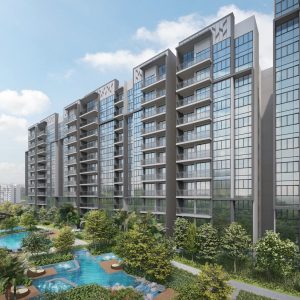
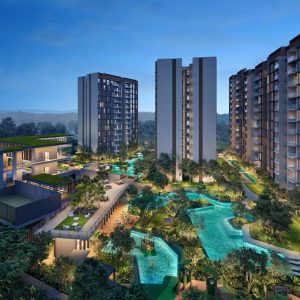
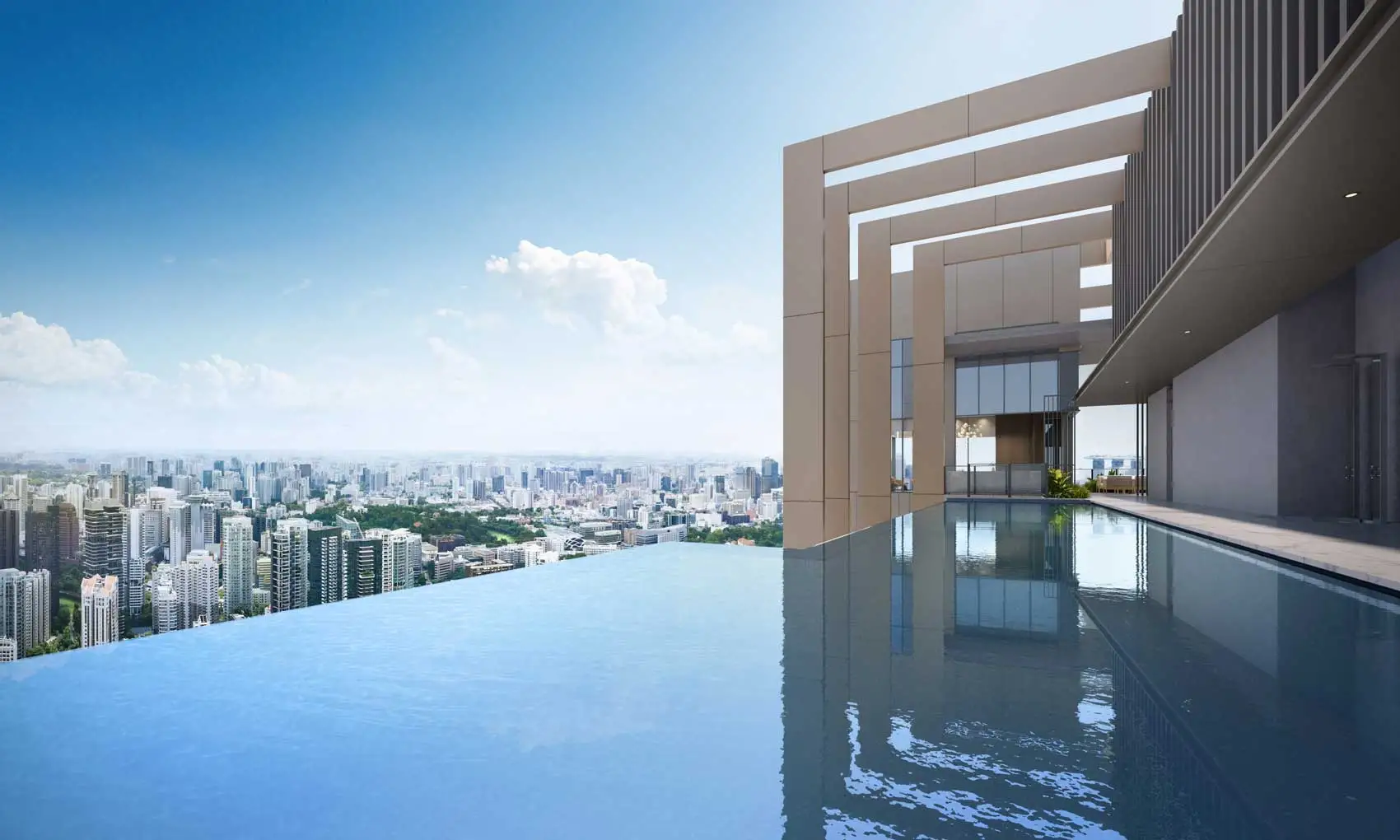
The more important point is that Sembawang Road combines a relatively moderate land cost with an unusually low 1.4 plot ratio, making it one of the lowest-density EC sites released in recent years. That gives the project a potentially stronger lifestyle angle: fewer units, more breathing room, and a more boutique positioning compared with the denser EC launches typically seen in the market.
A reasonable market-based launch estimate for Sembawang Road is therefore around the mid-S$1,600s to mid-S$1,700s psf, with the most defensible central band around the high-S$1,600s to low-S$1,700s psf. The reason is straightforward: recent ECs with land costs around the low-S$700 psf ppr range launched around S$1,654 psf at Novo Place and S$1,759 psf at Otto Place, while the higher-land-cost Rivelle Tampines launched at S$1,893 psf. Sembawang Road’s lower land cost argues for a launch below Rivelle, but its grandfathered old-rule status may still support a pricing premium versus a simple land-cost model.

Tender Facts and Land Economics
The official HDB tender result shows that the Sembawang Road EC site was launched on 29 May 2025, awarded on 26 September 2025, attracted 4 bidders, and was sold to Oriental Pacific Development Pte. Ltd. for S$197,777,000. HDB’s technical conditions for the plot state a site area of about 18,968 sqm, a gross plot ratio of 1.4, a maximum GFA of 26,556 sqm, and a height envelope of 40–45m Singapore Height Datum. The tender also indicates the parcel can yield around 265 homes, making it a relatively boutique EC by current standards.
That gives the site an unusually distinctive economic profile. At roughly S$692 psf ppr, its land rate is lower than several recent EC plots sold by HDB, including Woodlands Drive 17 at about S$782 psf ppr, Senja Close at about S$771 psf ppr, Tampines Street 95 (Rivelle Tampines) at about S$768 psf ppr, Plantation Close (Otto Place/Novo Place) at about S$701–703 psf ppr, and well above the much older Sembawang examples such as Provence Residence and Parc Canberra, which were transacted at about S$566 psf ppr and S$558 psf ppr, respectively. On a simple per-unit basis, dividing the land bill by the estimated 265 homes implies an average land outlay of roughly S$746,000 per unit before construction, financing, fees, marketing, and profit.
The technical conditions also explain why this is not a typical high-density EC plot. HDB requires the development to respond sensitively to the landed housing area north of the site, to avoid a wall-like effect and excessive overlooking, while also requiring seamless connection to the Sungei Simpang Kanan Park Connector along the southern edge and good pedestrian links to nearby bus stops and Canberra MRT. In other words, the planning brief itself points toward a more context-sensitive, less intensively packed product.
Why The Low Plot Ratio Matters
The standout number here is the 1.4 plot ratio. In the official HDB list of sold EC sites, many entries fall in the 2.1 to 3.5 range. Even nearby northern EC precedents were denser: Provence Residence sat on a 2.3 site, Parc Canberra on 2.5, and the just-mentioned Woodlands Drive 17 EC site is 1.7. Meanwhile, HDB’s upcoming Sembawang Drive EC site is listed at a much denser plot ratio of 3.5. This places Sembawang Road at the extreme low-density end of the modern EC spectrum.
That low plot ratio matters in two ways. First, it supports a different product identity: more open spacing, fewer units, less congestion, and potentially a stronger appeal to buyers who want an EC that feels less like a mass-market condominium and more like a quieter family enclave. Second, it creates scarcity. With only about 265 units, this project will not have the same sheer stock volume as newer, denser EC launches. If the unit mix is well curated, a low-density format can help absorption because there are simply fewer homes to clear.
But low density is not automatically equivalent to low price. Plot ratio already feeds into the psf ppr calculation; the market has effectively paid for the lower density through the lower permissible GFA. So the real implication is not “cheap,” but rather “more exclusive and less mass-market.” For Sembawang Road, that matters because exclusivity and grandfathered old-rule EC conditions now reinforce each other.

Translating land cost into likely launch pricing
The easiest way to translate a land cost into an expected launch price is to use recent EC comparables with known land rates and actual launch pricing. The most useful recent examples are these: Novo Place had a land cost of roughly S$703 psf ppr and launched around S$1,654 psf; Otto Place came in at about S$701 psf ppr and launched around S$1,759 psf; Rivelle Tampines had a much higher land cost at about S$768 psf ppr and launched around S$1,893 psf. Sembawang Road’s land rate of about S$692 psf ppr is below all three.
If Sembawang Road were priced purely on a recent low-S$700 psf ppr EC template, a launch in roughly the S$1,630 to S$1,700 psf zone would be quite defensible. But we would not stop there, because the market no longer values ECs based solely on land costs. The policy change announced on 8 May 2026 makes grandfathered, pre-change ECs more valuable to certain buyer profiles, especially second-timers and households that value the Deferred Payment Scheme. That policy advantage can justify pricing at the upper end of a normal land-cost translation. On balance, our base case is about S$1,650 to S$1,750 psf, with a central estimate around S$1,680 to S$1,730 psf if launched into a steady market. That is an inference from the official land numbers and recent EC launch outcomes, not a published developer guide price.
There is also a practical ceiling. CNA’s reporting on the EC policy shift noted that EC buyers remain constrained by a S$16,000 monthly household income ceiling and a 30% mortgage servicing ratio, which analysts said should limit how far EC prices can run. The same report also noted that the median psf of new ECs from January to April 2026 was S$1,843, up sharply from historical levels. That suggests Sembawang Road can be priced firmly, but a Rivelle-like price level would still require stronger locational or demand support than Sembawang is likely to command.
What Rivelle Tampines reveals about demand
Rivelle Tampines is the clearest recent test of EC demand. The project sold 529 of 572 units, or roughly 92.5% to 93%, on launch weekend at an average price of S$1,893 psf, with all three-bedroom units sold and the bulk of the larger units absorbed. It was then fully sold within about a month, making it the best-selling EC launch of 2026 and reinforcing the depth of demand when buyers perceive an EC as offering strong relative value.
The Rivelle lesson is not just “buyers love Tampines.” It is that EC demand remains broad, even at record prices, provided the value proposition remains intact. EdgeProp’s coverage of the launch highlighted that the project set a new high for EC pricing, while still benefiting from tight unsold EC stock. CNA’s follow-up analysis adds an even more useful layer: it reported that in Rivelle’s launch, all second-timer slots were filled by 2.15 pm on launch day, and under the current scheme, sales usually pick up again one month later when more second-timers can book. That tells you second-timer demand is not marginal; it is a material engine of take-up.
The other big Rivelle lesson is financing behaviour. Rivelle’s Deferred Payment Scheme units carried an additional premium, yet demand did not decline. More broadly, CNA reported that over 50% of current EC buyers use DPS, and at some projects, the figure reaches 60% to 70%. Otto Place offers another concrete datapoint: about 72% of buyers reportedly opted for DPS, even though it came at a roughly 3% premium over Normal Payment Scheme pricing. Novo Place saw similarly heavy DPS usage, with about 80% of buyers using it according to market reporting. In short, DPS is not a side feature; it is one of the central reasons ECs work for many HDB upgraders.
For Sembawang Road, that is highly relevant. The site does not have Rivelle’s Tampines location, but it does keep the old-rule EC funding and exit framework. That means the “Rivelle lesson” is less about matching Rivelle’s price and more about recognising how much demand still comes from buyers who value relative affordability, staged cash flow, and access for second-timers.
How The May 2026 EC Rule Changes Reshape Demand For Sembawang Road
The new rules were introduced to support first-time buyers and refocus ECs on owner-occupation. Officially, MND said it would implement three measures for EC developments, which would apply to all EC Government Land Sales sites with tender closing dates on or after 8 May 2026. HDB’s current EC guidance now distinguishes between older 5-year MOP ECs and 10-year MOP ECs for projects whose land tenders closed on or after that date. The policy change states that the new framework doubles the MOP to 10 years, removes the Deferred Payment Scheme, increases the first-timer quota from 70% to 90%, extends the first-timer priority period from 1 month to 2 years, and delays full privatisation to 15 years instead of 10.
That is precisely why the Sembawang Road EC site has become more significant. With the revised EC rules tightening the framework for future launches, near-term demand is expected to shift toward the remaining grandfathered projects that are not subject to the new measures.
The buyer logic is clear: households that still want a 5-year MOP, a shorter route to full privatisation, broader second-timer accessibility, and the option of the Deferred Payment Scheme now have fewer upcoming EC launches to choose from. Sembawang Road sits within that narrowing window of legacy-rule projects, which should strengthen its appeal among upgrader buyers and policy-sensitive applicants.
For market demand, this creates a real but not unlimited advantage. In our view, the policy change should do more to improve Sembawang Road’s take-up rate than to raise its final psf. The most likely source of uplift is the three groups. The first is second-timers, because the new scheme materially narrows their access and removes one of their most useful financing tools. The second is HDB upgraders who need DPS to manage the timing gap between selling an existing flat and servicing a new mortgage. The third is buyers who value the older 5-year MOP exit option, even if they are genuine occupiers rather than short-term flippers.
Still, the demand advantage should not be exaggerated. The policy-sensitive buyer pool will be spread across five grandfathered EC projects, several of which are in the north and west, rather than concentrated in one development. And the same CNA report stressed that income ceiling and MSR limits should constrain any outsized EC price jump. So the likely outcome is stronger buyer urgency and faster absorption, rather than a runaway pricing spike. In other words, the May 2026 changes make Sembawang Road more marketable, but not infinitely more expensive.
What To Watch With Sembawang Drive
HDB’s Government Land Sales page currently lists Sembawang Drive as a confirmed EC site for a June 2026 launch, with a site area of 1.29 ha and a much higher gross plot ratio of 3.5. That makes it a very different product from Sembawang Road’s 1.4 plot ratio site. Even before the exact tender conditions are released, the density difference alone suggests Sembawang Drive is likely to be the more mass-market, higher-yield northern EC plot, while Sembawang Road should remain the more boutique, low-density alternative.
Because Sembawang Drive is scheduled for launch only in June 2026, it is expected to fall under the revised EC framework. Together with Canberra Drive, these first-half-2026 EC sites will likely serve as an early test of how developers respond to the new rules.
Developers may adopt a more cautious bidding stance for these new-rule EC plots, factoring in a potentially smaller buyer pool, weaker second-timer demand, and slower sell-out assumptions. As a result, future land bids could come in below previous benchmarks, reflecting the additional demand-side uncertainty introduced by the revised framework.
The practical takeaway is that Sembawang Drive is more likely to be a first-timer-focused affordability test, while Sembawang Road is effectively becoming a legacy-rule upgrader play. That difference matters. Even if Sembawang Drive eventually launches at an attractive price because developers bid more conservatively, it will still carry a 10-year MOP, no DPS, and a tighter second-timer pathway. So the two projects are not clean substitutes. They will overlap but not compete for the same buyer urgency. On that basis, Sembawang Drive is more of a medium-term cap on northern EC exuberance than an immediate direct threat to Sembawang Road’s launch demand.

Overall, that leaves Sembawang Road in a strong tactical position. It has a lower-than-recent-cycle land cost, an unusually low plot ratio of 1.4, and the benefit of being grandfathered under the older EC rules just before the framework tightened. That combination does not guarantee the highest psf in the market. But it does make the site one of the more interesting upcoming EC launches in the north, and in the current policy environment, it looks better positioned on demand depth and launch absorption than it did before 8 May 2026.
Disclaimer: This article is for general information and commentary only. It should not be treated as financial, investment, legal, or property purchase advice. Prices, regulations, launch timelines, and market conditions may change over time. Readers should verify the latest information with official sources and seek professional advice before making any property-related decision.
Article contributed by Jerry Wong.

Jerry Wong is a realtor at Propnex Realty, bringing a rich background in interior and lighting design to his work. He loves exploring diverse spaces and observing the transformative power of real estate. Beyond his professional role, Jerry finds his greatest fulfillment in connecting people with the right properties, gaining immense satisfaction from helping clients achieve their dreams.