10-Year Investment Performance Review: Kingsford Waterbay vs Rio Vista (2015–2025)
In this fifth instalment of our ongoing series analysing how new launch condominiums perform over time, we turn the spotlight to Kingsford Waterbay – a major new launch from a decade ago – and evaluate its 10-year performance. To make the analysis meaningful, we compare Kingsford Waterbay with its closest resale counterpart, Rio Vista, a development sharing remarkably similar locational and physical attributes. Notably, the 2015–2025 period includes the disruptive COVID-19 pandemic, which we will take into account in assessing market trends.
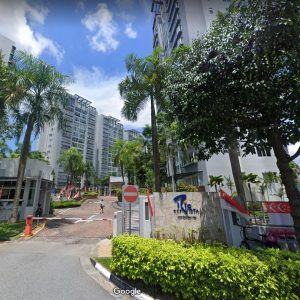
Kingsford Waterbay and Rio Vista are both 99-year leasehold projects located along Upper Serangoon View, fronting the scenic Sungei Serangoon. They have comparable land sizes, but differ in density and unit mix. Kingsford Waterbay, completed around 2018, is a newer, high-density project comprising 1,165 units, a diverse mix of 1- to 5-bedroom apartments, and a few strata landed (cluster) houses. Rio Vista, completed in 2004, is older and less dense with 716 units, offering only 2- to 4-bedroom apartments (no 1-bedroom or 5-bedroom units, and no landed houses).
As part of our examination of how new launches evolve over their first decade, this article analyses Kingsford Waterbay’s sale price and rental movements from 2015 to 2025, using Rio Vista as a benchmark. By comparing a 2015 new launch to an established neighbouring resale condo, we can see not only how a new project appreciates, but also how it stacks up over time against a similar older development next door – all while factoring in extraordinary events like the COVID-19 pandemic.
Key areas we explore include:
- Sale price appreciation by unit type (1BR, 2BR, 3BR, etc.)
- Rental rate trends across comparable unit categories (2019–2025)
- Rental yields (annual rent as a percentage of property value) and how they changed
- Interplay between capital appreciation and rental yields, including the impact of the COVID-19 pandemic on demand, prices, and rents

Price Trends by Unit Type (2015–2025)
Kingsford Waterbay was launched in 2015 at price levels typical for new private condominiums of that era. By 2025, its units had generally achieved moderate appreciation. To put this in context, we compare Kingsford Waterbay’s 10-year price movement with that of Rio Vista – the nearest and most similar resale development along Upper Serangoon View. Below, we break down the average sale price per square foot (psf) trends for each unit type in both developments, highlighting how the new launch (Kingsford Waterbay) evolved over a decade and how it compares against an established resale benchmark next door.
One-Bedroom Units

Kingsford Waterbay’s one-bedroom apartments transacted around $1,100 psf in 2015. By 2025, average 1BR prices hovered around $1,480 psf, roughly a 33% increase in psf over the decade. In absolute terms, a typical 1-bedroom unit (~490 sq ft) that sold for around $540k in 2015 would now sell for an average of around $720k on average. This growth was steady but not linear – prices experienced some flatness in the late 2010s, then picked up momentum after 2020 as the market rebounded post-pandemic. (Rio Vista has no 1-bedroom units for comparison.)
Two-Bedroom Units

Kingsford Waterbay’s 2BR units rose from the low-$1,100s psf range in 2015 to about $1,450–$1,500 psf by 2025, translating to a 32% increase. In terms of sale price, 2-bedroom units initially ranged from the mid-$700k to $800k range at launch, and by 2025, they had increased to approximately $1.0–$1.1 million. The trajectory included a mild softening around 2020–2021 (a market lull during COVID-19) but recovered strongly in the early 2020s, reaching new highs by 2025. Over at Rio Vista, 2-bedroom units saw almost exact appreciation: from around the low-$800s psf in 2015 to about $1,000–$1,100 psf in 2025 – roughly 32% growth as well. Although Rio Vista’s psf remains lower than Kingsford’s, Rio Vista’s larger floor areas for 2BRs (typically ~900–1,000 sq ft vs. 600–700sq ft in KWB) mean the absolute prices have converged. By 2025, a Rio Vista 2-bedroom (~$1.0–$1.2M) can match or even exceed the price of a smaller Kingsford Waterbay 2-bedroom (~$1.05M on average). This dynamic highlights a clear trend: buyers are willing to pay more for space. Even though Rio Vista is older, its generously sized 2BR units offer strong value, allowing their resale prices to close much of the gap with the newer KWB by 2025 (a pattern amplified by pandemic-era preferences for larger homes).
Three-Bedroom Units

Kingsford Waterbay’s 3-bedroom prices climbed from around $1,110 psf at launch (2015) to roughly $1,430 psf in 2025 – about a +29% change. In dollar terms, a KWB 3BR that sold for approximately $1.05 million in 2015 would be valued at $1.3–$1.4 million by 2025. Most of the growth materialised in 2021–2023 as the market strengthened (following a relatively quiet 2019–2020). Rio Vista’s 3-bedroom units appreciated far more aggressively, from approximately $760 psf in 2015 to about $1,170 psf in 2025 – a 50%+ increase. Although Rio Vista started at a much lower base (being a 2004-completed project with lower initial pricing), by 2025 it had significantly narrowed the gap – its 3BR $psf sat only ~18–20% below Kingsford Waterbay’s, despite being over a decade older. The pandemic-fueled shift toward larger homes contributed to a significant increase in Rio Vista’s 3BRs after 2021; demand for its spacious units surged, allowing an older condo to nearly catch up to a newer one in terms of pricing.
Four-Bedroom And Larger Units

At Kingsford Waterbay, the largest units—comprising 4- and 5-bedroom apartments—saw prices rise from approximately $1,120 psf at launch (2015) to around $1,420+ psf by 2025, representing a 25–30% increase over the decade. In absolute terms, transaction values moved from $1.2–$1.3 million at launch to roughly $1.7–$1.8 million in 2025.
Price growth for these larger units was more muted in the early years, given their higher quantum and narrower buyer pool. However, resale demand has remained consistent in the post-COVID era (2021 onward), as work-from-home needs and lifestyle shifts have driven families to seek more internal space. The rebound in this segment was a clear reflection of pandemic-induced preferences reshaping the resale market.
By contrast, Rio Vista’s 4-bedroom units surged in price from around $808 psf in 2020 to approximately $1,180 psf in 2025—a striking ~46% appreciation in just five years. While Rio Vista started at a lower price point, this rapid increase significantly narrowed the price gap with Kingsford Waterbay. By 2025, Rio Vista’s 4BR units traded at only 20–30% below the psf of Kingsford Waterbay’s equivalents, despite being over a decade older.
The key driver? Size and value. With generous layouts averaging ~1,378 sq ft, Rio Vista’s 4BRs offered space at a still-reasonable quantum (~$1.7M–$1.8M by 2025), making them highly attractive to families prioritising internal area over newness. This dynamic reinforced the broader trend observed during and after the pandemic: well-located, spacious older units can rapidly close the value gap with newer launches when market preferences shift toward liveability and affordability.
Cluster Houses (Kingsford Waterbay only):

Kingsford Waterbay has eight strata landed “cluster houses” (2-story homes within the condo). These were priced around $1,080 psf in 2015 and by 2025 have appreciated to roughly $1,430 psf, about +32% – similar to the performance of KWB’s across all unit types. In absolute terms, these cluster homes increased from roughly $2.0 million at launch to about $2.3–$ 2.9 million. Transaction volume for this unique category is extremely low (some years saw no sales at all), since most owners are long-term owner-occupiers rather than investors flipping them. This illiquidity means prices move only when a rare transaction occurs; however, the capital gain was in line with the condo’s general appreciation over the decade.
Table 1: Sale Price Comparison (Launch in 2015 vs. 2025) – Kingsford Waterbay (new launch) vs. Rio Vista (resale)
| Unit Type | KWB 2015 (Avg ~$ psf) | KWB 2025 (Avg ~$ psf) | KWB % Change | Rio Vista 2015 (~$ psf) | Rio Vista 2025 (~$ psf) | Rio % Change |
| 1-bedroom | ~$1,100 psf | ~$1,480 psf | +33% | N/A (no 1BR) | N/A | N/A |
| 2-bedroom | ~$1,100 psf | ~$1,460 psf | +33% | ~$810 psf | ~$1,080 psf | +33% |
| 3-bedroom | ~$1,110 psf | ~$1,430 psf | +29% | ~$760 psf | ~$1,170 psf | +53% |
| 4-bedroom | ~$1,120 psf | ~$1,420 psf | +27% | ~$780 psf | ~$1,180 psf | +52% |
| 5-bedroom | ~$1,100 psf | ~$1,460 psf | +32% | N/A (no 5BR) | N/A | N/A |
| Cluster house | ~$1,080 psf | ~$1,430 psf | +32% | N/A (no Cluster) | N/A | N/A |
Source: Average transacted prices. (Cluster house psf is based on land area; Rio Vista has no cluster houses.*)
Insights:
Over the past decade, Kingsford Waterbay delivered steady and respectable capital appreciation across all unit types, very much in line with expectations for a mid-2010s new launch. Its 1- to 5-bedroom apartments generally saw 27–33% price appreciation, with the compact units benefitting from consistently strong demand (both from investors and renters) and the larger units gaining momentum in the early 2020s when homeowners placed a premium on extra space (partly as a result of the COVID-19 experience). Even the niche cluster houses kept pace with the overall project’s growth. Kingsford Waterbay’s performance illustrates the typical trajectory of a new launch maturing over its first ten years – stable, gradual growth that reflects its modern appeal and the fact that it was sold at market prices to begin with (i.e. no dramatic underpricing at launch, hence no dramatic spikes later).
When viewed alongside Rio Vista – its closest resale peer – a clearer picture emerges of how starting point and unit attributes influence growth. Kingsford Waterbay provided predictable, gradual gains in value, whereas Rio Vista outperformed in percentage terms, especially in its 2-, 3- and 4-bedroom segments. Because Rio Vista’s prices in 2015 were considerably lower (due to age), its larger units saw roughly 40–55% appreciation, narrowing the psf gap with Kingsford Waterbay despite the age difference. In some cases, Rio Vista’s spacious units even caught up in absolute price – for instance, by 2025, a Rio Vista 4-bedroom can sell for around $1.8M, similar to a newer KWB 4-bedroom. This underscores an enduring market lesson: buyers value space and will drive up prices for older homes that offer larger floor areas at an affordable price. The post-2020 market dynamics also accelerated Rio Vista’s catch-up – the pandemic-era preference for larger homes and a general upswing in property values lifted undervalued resale properties like Rio Vista more dramatically.
Ultimately, the comparison yields two key takeaways for investors. First, new launches offer stability and long-term relevance. Kingsford Waterbay’s decade-long climb, although not explosive, demonstrated that a well-located new condo can steadily appreciate and maintain liquidity in the resale market. Second, older resale condos can deliver exceptional upside when bought at the right time/price: Rio Vista’s owners saw outsized percentage gains as the development’s value “re-rated” upward, especially once the overall market (and circumstances like COVID-19) brought its strengths – large units and reasonable entry price – into focus. Both paths (buying new vs. buying resale) rewarded their owners over 10 years, just in different ways and at different speeds. Kingsford Waterbay owners enjoyed a newer asset with fewer maintenance issues and a predictable appreciation curve. In contrast, Rio Vista owners capitalised on a value play, watching a once-discounted asset appreciate rapidly. For today’s buyers, the lesson is that both new and old properties can be profitable investments – the choice depends on your strategy and the specific market context.
Rental Market Trends (2019–2025)
Kingsford Waterbay obtained its Temporary Occupation Permit (TOP) around 2018, so units were rentable from 2019 onward (once the project was completed and owners could collect keys). Rio Vista, being much older, has rental data dating back to the 2000s; however, to enable an apples-to-apples comparison, we focus on the period from 2019 to 2025 for both projects. This period coincides with an unprecedented surge in Singapore’s rental market. In particular, 2021–2022 saw a historic spike in rents – private residential rents jumped nearly 30% in 2022 alone, the fastest annual increase on record since 2007. This surge was driven by a perfect storm of factors: pandemic-related construction delays (which limited new housing supply), an influx of tenants as borders reopened and the foreign workforce returned to pre-COVID levels, and a heightened demand for housing space during the work-from-home era. This heated rental backdrop heavily influenced the rental rates at both Kingsford Waterbay and Rio Vista.
Rental Rate Trends by Unit Type (2019 vs 2025)
The graphs below summarise the average gross monthly rents for each comparable unit type in 2019 (when KWB first entered the rental market) versus 2025, at both developments. Rents are stated in both \$ per square foot per month ($psf pm) and approximate absolute monthly dollars. Kingsford Waterbay, being newer and with generally smaller unit sizes, commanded higher $psf rents than Rio Vista in all categories. However, Rio Vista’s larger floor areas mean its units often collect higher total rent despite a lower $psf. Across the board, both projects experienced tremendous rent growth from 2019 to 2025, with the most significant percentage increases occurring at Rio Vista, as its rents caught up to a lower base.
One-Bedroom (KWB only):

In 2019, a new 1-bedroom unit at Kingsford Waterbay rented for around $3.83 psf per month (approximately $1,700–$1,800 per month). By 2025, this spiked to about $5.65 psf per month ($2,500-$2,800 per month). That’s a 47% increase in rent per square foot. Notably, the absolute rent ($2.8k) for a KWB 1-bedroom in 2025 is approaching what older 2-bedroom units used to fetch a few years prior – a testament to how far the rental market moved in the post-COVID period. (Rio Vista has no 1BR units to compare.)
Two-Bedroom Units:

In 2019, Kingsford Waterbay’s 2BR units rented at ~$3.26 psf square foot per month (about $2,400 per month for a unit of ~750 sq ft). By 2025, the average was around $4.82 psf ($3,300-$3,500 per month), about a +48% jump in $psf. Meanwhile, Rio Vista’s older 2BRs went from about $2.14 psf in 2019 ($2,300–$2,400 per month for ~1,000 sq ft) to around $3.52 psf in 2025 ($3,500–$3,800/month), an impressive +65% rise. In absolute terms, both ended up around $ 3,500 per month in 2025 for a typical 2-bedroom unit. Rio Vista’s rents grew more sharply (older units playing catch-up, similar to the price trend), but by 2025, the rental income one can get from a 2BR is comparable between the two projects.
Three-Bedroom Units:

Kingsford Waterbay’s 3BR units rented for approximately $2.89 psf in 2019 (roughly $2,600–$2,800 per month for over 900 sq ft), rising to around $4.18 psf in 2025 ($3,500–$3,800 per month), a roughly 45% increase. Rio Vista’s larger 3BRs (~1,200-1300 sq ft) went from about $2.03 psf in 2019 ($2,700/month) to $3.15 psf in 2025 ($4,200-$4,500 per month), about +55%. By 2025, a Rio Vista 3BR, though older, could actually fetch slightly more rent in dollar terms ($4.5k vs. $3.8k per month on average) than a newer KWB 3BR – simply because Rio Vista’s units are ~40% bigger. This underscores that tenants pay for space: even if the property is older, as long as it is well-maintained and in a decent location, renters with families or those who need room are willing to pay a premium for a larger home.
Four-Bedroom Units:

Kingsford Waterbay’s 4-bedroom (and 5-bedroom) apartments saw rents increase from around $2.80 psf in 2019 to roughly $3.84 psf in 2025 (~+37%). In monthly terms, a KWB 4BR (~1,250 sq ft) rose from about $3.5k to $4.8k. Rio Vista’s 4BR units jumped from around $2.10 psf in 2019 to approximately $3.58 psf in 2025 – a massive ~70% climb. Despite the lower $psf, an average Rio Vista 4BR (~1378 sq ft) was renting for $5k+ per month by 2025, actually higher in absolute dollars than Kingsford Waterbay’s 4BR ($4.8k). This massive surge was fueled by the scarcity of large rental units and the pandemic-era rush for bigger living spaces: many families in 2021–2022 turned to older condos like Rio Vista to find more space at a (previously) affordable rent, bidding those rents up sharply during the rental crunch.
Note: Kingsford Waterbay’s strata landed cluster houses are generally owner-occupied; there were virtually no rental transactions for those landed units, so they are excluded from the rent analysis.
Table 2: Rental Rates Comparison (2019 vs. 2025) – Kingsford Waterbay vs. Rio Vista
| Unit Type | KWB 2019 Rent (psf, ~$ per month) | KWB 2025 Rent (psf, ~$ per month) | KWB % Change | Rio 2019 Rent (psf, ~$ per mo) | Rio 2025 Rent (psf, ~$ per mo) | Rio % Change |
| 1-bedroom | $3.83 psf ($1.8k) | $5.65 psf ($2.8k) | +47% | N/A (no 1BR) | N/A | N/A |
| 2-bedroom | $3.26 psf ($2.4k) | $4.82 psf ($3.5k) | +48% | $2.14 psf ($2.3k) | $3.52 psf (~$3.8k) | +65% |
| 3-bedroom | $2.89 psf ($2.7k) | $4.18 psf ($3.8k) | +44% | $2.03 psf ($2.7k) | $3.15 psf (~$4.2k) | +55% |
| 4-bedroom | $2.80 psf ($3.5k) | $3.84 psf ($4.8k) | +37% | $2.10 psf ($3.3k) | $3.58 psf (~$5.5k) | +70% |
All rents are gross monthly rents. psf = per square foot per month; figures in (~\$…k) are typical average monthly rent in SGD.
Rental Yields and Investment Insights
Rental yield is the annual rental income from a property divided by its value (purchase price), expressed as a percentage. Investors track yield as an indicator of cash flow relative to asset price – higher yields mean an investment “pays for itself” faster. During the 2015–2019 period, gross rental yields for new private condos in Singapore were typically around 2–3%, as newly launched units often have higher purchase prices and initial rents tend to be modest. Over the last 10 years, the relationship between capital appreciation and rental yields for Kingsford Waterbay and Rio Vista has evolved in a telling way, especially through the pandemic period:
Early Years (2015–2019):
Kingsford Waterbay’s rental yields started relatively low when it was newly launched. For example, an investor who bought a KWB 3-bedroom property for approximately $1.1 million in 2015 and could rent it for about $ 2,700 per month in 2019 would see a roughly 3.0% gross yield (before expenses). This isn’t unusual – new launch buyers often accept a lower initial yield, banking on future capital appreciation and rent growth. In contrast, Rio Vista in 2015 was significantly cheaper to buy (a resale 3BR might have been around $ 950k then), while its rent in 2019 for that same 3BR could be around the same rental of $2,700 per month, yielding roughly 3.4%. Generally, older resale properties often yield higher returns initially due to their lower entry prices. In our case, a Rio Vista investor circa 2015 enjoyed better cashflow returns early on than a KWB investor, albeit in an older asset.
Post-2020 Rental Surge – Yield Expansion:
Fast forward to 2025, and rental yields have improved across the board, thanks to rents skyrocketing from 2021 to 2022. The surge in rents far outpaced the rise in property values, thereby boosting yields for owners of both developments. For instance, the Kingsford Waterbay 3BR unit might now be worth ~$1.3M in 2025, but can be rented for ~$ 3,800 per month – which yields about 3.5% gross, up from ~3.0% a few years prior. A KWB 1-bedroom owner who initially paid ~$580k could be renting it for around $ 2,800 per month in 2025, yielding nearly 5%, which is a very solid return for a private condo (in Singapore, anything above ~3% is generally considered high). Rio Vista’s yields also rose in absolute terms – its owners benefited tremendously from the rent spike.
However, due to the significant capital appreciation at Rio Vista—often exceeding 50% in many unit types—the improvement in rental yields was comparatively modest in percentage terms. For instance, a 3-bedroom unit at Rio Vista, valued at approximately $1.5 million in 2025, commands a monthly rent of $4,200, translating to a gross yield of approximately 3.36%. That figure is only marginally higher than the yield of around 3.4% it would have generated if purchased at $950,000 in 2015.
In other words, the surge in asset value effectively “caught up” to the rental escalation, capping yield expansion from a percentage standpoint. Still, investors who entered the market in 2015 reaped outstanding returns: the same 3BR unit bought at $ 950,000 back then and rented at today’s rates would deliver a gross yield of ~5.3%, illustrating the powerful compounding effect of buying undervalued resale properties in a rising market.
The broader takeaway: between 2019 and 2022, rental growth across the market outpaced capital appreciation, helping lift yields at both newer developments like Kingsford Waterbay and older ones like Rio Vista. This yield expansion period marked an alignment where both capital gains and income returns improved simultaneously.
Capital Appreciation vs. Yield – Finding Balance:
Typically, when property values rise significantly without a corresponding increase in rents, yields compress (decrease). Conversely, when rents climb faster than prices, yields expand (improve). In our scenario, Kingsford Waterbay’s first few years saw high purchase prices and (initially) low rents, so yields were modest. However, the extraordinary post-COVID rent growth meant that even though KWB’s resale prices increased, the rental incomes rose even more rapidly, causing yields to expand. By 2025, KWB’s yields are healthier than at launch, making it a more attractive hold for income. In Rio Vista’s case, one might have expected yields to fall as its values shot up ~50%; however, the same rental boom rescued its yields – Rio Vista owners in 2025 are still getting roughly 3–4% gross yields, and they enjoyed huge capital gains – essentially the best of both worlds. The pandemic-related market shock, which sent rents soaring, allowed both projects to reach a kind of equilibrium where, by 2025, the yields at Kingsford Waterbay and Rio Vista have converged to similar levels (~3–4% gross), reflecting the balancing of their location/age factors in the rental market.
Investor Takeaway:
The interplay of capital gains and rental yields over a decade reveals several key insights for property investors. First, patience can be rewarded – those who bought Kingsford Waterbay new had to endure low rental returns initially. Still, a few years later, they saw both their property value and rental income climb, validating the investment. Second, market cycles (and unexpected events, such as a global pandemic) can dramatically alter the math. The rental spike of 2021–2022 significantly improved the cash flow position of property owners, turning what might have been sub-3% yields into 4% or more in some cases. Investors should also note how the market tends to self-correct: if one project’s yields become too attractive relative to others, buyers will likely bid up its price (reducing the yield advantage). In our comparison, by 2025, both condos’ yields normalised to a healthy mid-3% range. Overall, investors in 2015 did well with either strategy – buying new (KWB) for steadier long-term growth, or buying undervalued resale (Rio Vista) for a mix of strong appreciation and solid initial yield. Both approaches proved profitable, especially given the unexpected tailwind of a booming rental market that boosted holding returns.
Conclusion
Over the past ten years, Kingsford Waterbay has transitioned from a new launch to an established condominium, with its values rising moderately (by ~30% across unit types). Owners benefited not only from this capital appreciation, but also – after the initial few years – from a surge in rental incomes that significantly improved the holding yields of their units. In parallel, Rio Vista – the older neighbour – demonstrated how a well-located older condo can appreciate strongly when starting from a low base (in this case, closing much of the gap with a newer project) while riding the same rental wave to deliver robust income. By 2025, the market will have effectively rewarded both projects: Kingsford Waterbay for its modern appeal and consistency, and Rio Vista for its value-for-money spacious units.
Notably, the analysis shows that while new launches often begin at higher prices and consequently lower initial yields, given time (and favourable market conditions), rents tend to “catch up” with values – thereby improving the investment metrics of new condos as they age. In Kingsford Waterbay’s case, a sluggish rental yield in 2019 turned into a respectable one by 2025 thanks to market-wide rent growth. Conversely, older properties like Rio Vista can deliver outsized capital gains when bought under value, especially in a rising market cycle. Rio Vista’s ~50% price jump far outpaced expectations, mainly because the broader market (post-2017 and through the pandemic) recognised that its previous pricing was too low relative to its size and location.
Ultimately, examining both price growth and rental yield trends provides a more comprehensive picture of a property’s performance. In Upper Serangoon View, whether one had invested in the “shiny new” Kingsford Waterbay or the “seasoned” Rio Vista, the 2015–2025 period was a profitable journey – home values climbed and rental returns strengthened to multi-year highs. Even a global pandemic did not derail the long-term trajectory; in fact, it reshaped it, creating new opportunities (like the demand for larger homes and unprecedented rent increases) that benefited property owners. For investors and homeowners, the key takeaway is that both new launches and older resale condos can be rewarding assets. The decision comes down to individual priorities – whether it’s the allure of a brand-new development with clear growth potential or the hidden upside of an older project with good “bones” and room to rise. In this case study, both strategies paid off, underscoring the importance of being data-driven and analytical in property decisions, while also remaining attuned to market shifts (even extraordinary ones like COVID-19) that can impact real estate performance.
Article contributed by Jerry Wong.

Jerry Wong is a realtor at Propnex Realty, bringing a rich background in interior and lighting design to his work. He loves exploring diverse spaces and observing the transformative power of real estate. Beyond his professional role, Jerry finds his greatest fulfillment in connecting people with the right properties, gaining immense satisfaction from helping clients achieve their dreams.