Discovering Price Trends Of Sims Urban Oasis
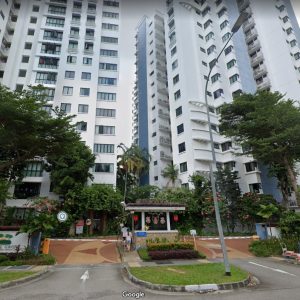
Sims Urban Oasis is a large 1,024-unit condominium project along Sims Drive in Singapore’s Rest of Central Region (D14), developed by GuocoLand and completed in 2017. Launched about 10 years ago, it was the largest new development in its area at the time. Notably, it is not situated directly at an MRT station – residents typically walk or take a short bus ride (~1 bus stop) to reach the nearest MRT. Despite this, Sims Urban Oasis has demonstrated strong price performance over the past decade. For comparison, we will examine a nearby older project, Central Grove, a 262-unit leasehold condominium completed in 2001. Central Grove is situated practically next to Aljunied MRT station (approximately a 4-minute walk, or about 210m away), giving it a clear location advantage. This article will explore how Sims Urban Oasis’ sale prices and rental rates have trended in the ten years since launch, how much they’ve grown (in % terms), and how the project stacks up against Central Grove, where comparative data is available. We’ll also discuss market acceptance (volume of transactions) and identify key turning points in its 10-year journey.

Sale Price Trends (2015–2025) by Unit Type
Sims Urban Oasis was launched in 2015 during a market lull, and its resale market has since ridden the property cycle’s ups and downs. We’ll examine how the average sale prices per square foot (PSF) have changed from around 2015 to 2025 for each unit type (1-bedroom, 2-bedroom, 3-bedroom, and 4-bedroom and larger units). Where available, we’ll compare these trends to Central Grove’s performance for the same unit type. This will give us a sense of how a brand-new 2015 launch appreciated versus an older 2001 condo in the same area over the last decade.
1-Bedroom Units: Sale Prices Over 10 Years

For one-bedroom apartments in Sims Urban Oasis, the historical data shows a healthy appreciation. If you bought a one-bedroom unit at launch around 2015, you would have paid roughly S$1,400 per square foot on average. Fast-forward to 2025, similar units have been transacting around the high S$1,800s PSF. That’s an increase of one-third of the value. In absolute price terms, a typical one-bedroom (~441 sqft) that cost about S$640k at launch might be going for around S$840–880k a decade later. This growth is notable considering the period included some slow market years (2015–2017 saw cooling measures dampen prices). In fact, prices for one-bedders dipped slightly or remained flat in the mid-2010s after launch, before rising. A key turning point occurred around 2017–2018, when the property market gained momentum – from then on, resale prices trended upward.
Another surge came post-2020: like much of the Singapore market, Sims Urban Oasis saw prices strengthen in 2021-2022 amid renewed buyer confidence. By 2025, one-bedroom prices had reached their highest historical averages (~S$1,900+ PSF). The transaction volume pattern also tells a story: nearly all 1-bedroom units were sold by the developer in the launch year (hence the 178 transactions in 2015). In subsequent years, few owners have been selling at any given time (only ~10–20 resale transactions most years, with 2025 having 16 as per the chart). This suggests that many initial buyers are holding on, indicating good market acceptance – people are generally satisfied with the project’s performance and see value in retaining their unit unless a favourable price is offered.
2-Bedroom Units: Sale Prices (Sims Urban Oasis vs. Central Grove)

Two-bedroom apartments comprise a significant portion of Sims Urban Oasis, and their price movement has been robust. At launch, 2-bedroom units at Sims averaged around S$1,330 PSF, notably higher than Central Grove’s resale prices at the time (which were below S$900 PSF – older resale condos in 2015 were relatively cheap as the market was soft). Over ten years, the Sims Urban Oasis 2-bedroom appreciated about 41% to roughly S$1,880 PSF. Meanwhile, Central Grove’s 2-bedroom jumped about 73% in PSF terms – a huge leap – reaching roughly S$1,500+ PSF by 2025. Does that mean Central Grove outperformed? In percentage terms, yes, but context matters: Central Grove started from a very low base (mid-$800s PSF), possibly due to its age (already ~15 years old in 2015), condition and the weak market at the time. As the property cycle turned upwards, Central Grove’s values caught up significantly, especially from 2018 onward. By 2025, however, Sims Urban Oasis still commands a higher absolute price for 2-bedroom units (about S$1,880 PSF vs S$1,517 PSF at Central Grove). This isn’t surprising – Sims is newer (with ~88 years lease remaining in 2025 versus ~72 years for Central Grove) and offers more modern facilities, so buyers are willing to pay a premium.
It’s interesting to note that despite Central Grove’s prime location next to the MRT, it didn’t surpass Sims Urban Oasis’s pricing. The MRT proximity certainly helped Central Grove’s resale values rise. However, being newer and having longer remaining lease years clearly played a significant role in Sims Urban Oasis maintaining its edge. On the transaction count, Sims saw dozens of 2-bedroom sales each year in the early resale years. By 2025, Sims Urban Oasis’ 2-bedroom resale volume was 15 units, whereas Central Grove had only one sale this year. Central Grove’s smaller size (with only 262 units in total) naturally results in fewer transactions. The higher liquidity of Sims Urban Oasis (due to its sheer size and investor participation) is another sign of strong market acceptance. A steady stream of willing buyers and sellers has traded those units over the years.
In terms of key turning points for Sims Urban Oasis’s 2-bedroom prices, similar to the 1-bedroom units, prices remained flat during the 2015–2017 period. Then, around 2018–2019, values began to climb as the overall market recovered. A significant spike occurred after 2020 – if you recall, following the initial pandemic dip, Singapore’s property market surged, and even older properties, such as Central Grove, saw rapid appreciation from 2021 to 2022. This was when Central Grove’s 2-bedroom PSF shot from the ~$1k+ range into the ~$1.5k range. Sims Urban Oasis 2-bedroom units also rose during that period, from approximately $1,500+ to $1,800 PSF. By the end of 2025, the growth has levelled off, with prices at or near peak levels. Owners of Sims Urban Oasis 2-bedroom units are sitting on a comfortable appreciation, and even Central Grove owners have seen a remarkable uplift, validating the strong demand for city-fringe condos over the last decade.
3-Bedroom Units: Sale Prices (Sims Urban Oasis vs. Central Grove)

For family-sized 3-bedroom apartments, the trends are also positive. Sims Urban Oasis 3-bedroom units appreciated roughly 40+% over the decade, very similar in percentage to Central Grove’s 3-bedrooms. If you bought a Sims 3-bedroom at launch (perhaps around S$1350 PSF), you’ve likely seen its value increase to about S$1900+ PSF by 2025. In absolute terms, a ~1,000 sqft 3-bedroom unit might have increased in value from about S$1.35M to approximately S$1.9–2.0M over ten years. Central Grove’s 3-bedrooms, on the other hand, were roughly S$900–950 PSF in 2015 (that’s about S$1.1–1.2M for a typical 1,200 sqft unit back then). By 2025, they’re around S$1,330 PSF on average (so that same unit could be ~$1.6M now). So, owners in both projects saw substantial gains, although Sims Urban Oasis’s 3-bedrooms are valued higher in the market due to the project’s newer attributes.
One thing that stands out is the volatility in the 3-bedroom segment, which appears somewhat less pronounced than in the 1-bedroom/2-bedroom segment. That’s often the case – 3-bedroom units tend to be bought by families/owner-occupiers more than investors, so there’s a bit more price stability (less speculative pressure).
A key turning point for 3-bedroom prices was similarly around 2018, when both projects’ larger unit values began climbing after the mid-decade slump. Another surge point for Sims Urban Oasis might have been 2021–2022 (similar to smaller units, although the increases in 3-bedroom units were more moderate). By 2025, Sims 3-bedroom units achieved new highs around S$1.9k PSF. Meanwhile, Central Grove’s 3-bedroom values, while up significantly from 2015, are somewhat capped by the project’s age-location trade-off – a great location, but one that is older (which some buyers may shy away from given lease decay concerns around the 20+ year mark). Still, a ~40% gain in an older resale 3-bed is nothing to sniff at – it underscores how rising tides lifted all boats in the last decade, even older leasehold properties.
Volume-wise, Sims Urban Oasis began with relatively fewer 3-bedroom transactions — only 31 units were sold at launch, likely because larger homes tend to be pricier and move more slowly in the early phase. Most of the remaining 3-bedroom units were subsequently sold in 2017. In the resale market, activity has remained healthy over the years, with transactions typically in the dozens annually. In fact, 2025 saw 29 resale deals, reflecting robust ongoing demand.
By contrast, Central Grove’s 3-bedroom resale volume has consistently been low — often in the single digits each year. This could suggest that many original owners are holding onto their units, either for their own stay or rental income, and that the smaller project size naturally limits the number of listings.
Overall, market acceptance for Sims Urban Oasis’s 3-bedrooms appears strong. It continues to attract family buyers, and resale activity has been steady as owners upgrade or rightsize. The solid price appreciation also indicates that early buyers were well rewarded for investing in a new launch — even without the convenience of an MRT station right at their doorstep.
4-Bedroom and Larger Units: Sale Prices (Sims Urban Oasis vs. Central Grove)

The 4-bedroom and larger category at Sims Urban Oasis includes the biggest apartments (and possibly penthouses or dual-key units). These are luxury-sized units that often see different market dynamics. Over 10 years, Sims’ 4BR+ units appreciated about 30% in PSF – from the low S$1400’s to mid S$1800’s PSF. This is a slightly lower percentage growth than the smaller units saw. One reason could be that the launch prices for these big units were already relatively high per square foot (developers often price large units at a premium, and there were only a few such units, so that they may have held value but not skyrocketed).
Additionally, demand for larger units can be more niche, limiting the extent to which prices can rise. In absolute terms, consider a 4-bedroom, ~1,500 sqft unit at Sims Urban Oasis: it might have sold for around S$2.1M in 2015 and could fetch around S$2.7–2.8M in 2025. That’s a hefty increase in dollar terms (~+S$600k), even if the % gain is a bit lower than smaller units (because the starting price was high).
For Central Grove, data indicates that average prices rose from around S$1,000 PSF in 2018 to approximately S$1,440 PSF by 2025 — an increase of about 41%. However, this stronger percentage gain likely reflects a lower starting base, possibly influenced by one or two unusually low resale transactions in 2018, especially for larger units. Subsequent sales appear to have normalised at higher levels.
Given the limited number of transactions, it isn’t easy to draw definitive conclusions. Still, the data underscores a broader trend — that larger, older units in 2015 were significantly undervalued. At S$1,000 PSF for a sizable RCR condo, prices then represented clear value, and the past decade has corrected mainly that underpricing.
For Sims Urban Oasis, the sales volume for larger units — those with four bedrooms or more — was slow from the outset. Only six such units were sold during the 2015 launch, with the remainder moving by 2017. Since then, resale activity for these large-format homes has been sporadic, averaging only two to three transactions per year. By 2025, there were approximately two recorded resales of these larger layouts. With such thin trading volume, average prices can swing significantly depending on which unit changes hands — a high-floor unit, for instance, may sell at a premium compared to a standard four-bedroom on a lower level. Thus, the roughly 31% price growth observed for Sims’ 4-bedroom category should be viewed as an approximation; individual owner outcomes are likely to vary.
Still, the broader trend remains clear: prices have risen over the decade. Even the largest, most expensive homes at Sims Urban Oasis have found steady market demand and appreciated over time. This resilience highlights that despite being a bus stop away from the MRT, buyers valued the project’s offerings — from its modern facilities to its relative newness and possibly expansive city views. For upgraders and larger families, the development has proven its enduring appeal.
Rental Price Trends (2017–2025) by Unit Type
Next, let’s discuss rentals – a crucial aspect for investors and also an indicator of a project’s desirability to tenants. We’ll examine how the average monthly rents (using a $/square foot per month basis for consistency) have changed since Sims Urban Oasis was completed in 2017, up to 2025. The rental data begins around 2017, as that’s when the project obtained TOP and units started being tenanted. We have rental trend charts for each unit type as well, and we’ll compare Sims Urban Oasis to Central Grove for the 2-bedroom and 3-bedroom categories (Central Grove doesn’t have 1-bedroom or any 4-bedroom rental transactions, so no comparison there). The past few years have been a roller-coaster for rentals in Singapore – a dip during the 2020 pandemic followed by an unprecedented surge in 2021-2022. Let’s see how that played out for these two projects.
1-Bedroom Units: Rental Rates

Figure: Sims Urban Oasis 1-Bedroom Rental Trend (2017–2025). Average effective rent for a 1-bedroom unit rose from around S$4.56 psf/month in 2017 (roughly $~$S$2,000/month for a typical 440 sqft unit) to about S$6.94 psf/month in 2025 (about $~$S$3,100/month), a jump of roughly +52% in rent per square foot. Rental demand was strong – over this period, the data captured ~1,147 lease transactions for Sims Urban Oasis 1BR units (many units rented multiple times). Notably, rents dipped slightly around 2020 (pandemic), then skyrocketed from 2021 to 2023, before stabilising at a high level in 2025. Source: ProNex Investment Suite
If you’re an investor-landlord of a one-bedroom in Sims Urban Oasis, the past decade has likely treated you well in terms of rental income. When the condo first got its TOP in 2017, one-bedroom units were renting for around S$2,000 to S$2,200 a month (that’s around S$4.5–5.0 psf/month). At the time, the supply of new condos in the area, combined with the cautious economic climate, kept rents in check. Moving forward, rents remained relatively flat or increased slightly in 2018-2019 as the project gained more recognition among tenants. Then came 2020 – with COVID-19, there was a stagnation in rents (the chart shows rents hovering at S$4.65 psf in 2020). However, the resilience of Sims Urban Oasis was evident: as the economy recovered, rents skyrocketed dramatically. From late 2021 through 2022, we saw a rental market boom island-wide. For Sims Urban Oasis’s 1-bedroom units, monthly rents shot up to the high S$2,000s and even crossed S$3,000 by 2022/23. In PSF terms, that’s about S$6 to S$7 psf/month. By 2025, the average rent per square foot was around S$6.9, translating to roughly S$3,100/month for a typical one-bedroom unit – over 50% higher than the rent eight years prior. That’s a massive increase in yield for landlords.
What’s driving this? A mix of factors: tight supply of rental units, overall market rental growth, and the appeal of city-fringe condos to tenants. Sims Urban Oasis offers modern amenities and a relatively convenient location (especially once tenants get used to the short bus ride or 10-minute walk to the MRT). It likely attracts young professionals or couples who find it good value for the space and facilities. The volume of rentals (as indicated by over a thousand leasing transactions recorded for one-bedroom units) shows that these units turn over frequently – many tenants have cycled through over the years. This high turnover is typical for small units (tenants might rent for 1-2 years and then move). It also underscores that investors had no trouble finding tenants, indicating strong rental demand. In summary, 1-bedroom rents at Sims Urban Oasis initially experienced moderate growth, took a minor hit in 2020, and then surged to new heights by 2025, leaving landlords smiling.
2-Bedroom Units: Rental Rates (Sims Urban Oasis vs. Central Grove)

Two-bedroom units are often the sweet spot for both small families and tenants, so it’s no surprise they’re a mainstay of the rental market. For Sims Urban Oasis, 2-bedroom units started renting around S$3.5–4.0 psf/month in the late 2017/2018 period. That equates to approximately S$2.5k to S$3k per month for an average 2-bedroom unit (depending on size). Central Grove’s 2-bedroom units, although larger in floor area, were older and fetched lower rents per square foot – around S$2.5–3.0 psf at the same time (around S$2,800/month for a ~1,000 sqft unit in 2018, similar to the absolute dollar rent of Sims due to their bigger size).
During the COVID-19 downturn in 2020, rental demand for Sims Urban Oasis’s 2-bedroom units held relatively steady, showing greater resilience compared to Central Grove. While Central Grove’s rents dipped by around 10% during the pandemic, Sims Urban Oasis experienced only mild stagnation. Once the market recovered, both developments experienced a sharp surge in rents.
By 2022, a typical 2-bedroom unit at Sims Urban Oasis could fetch around S$4,000 per month — climbing further to S$4,500–S$5,000 by 2023 for well-furnished, higher-floor apartments. The data shows rental rates peaking at approximately S$6.10 psf in 2023, equivalent to about S$5,000 for an 820 sq ft unit. Central Grove’s 2-bedrooms also rebounded strongly, reaching roughly S$4.70 psf — around S$4,700 for a 1,000 sq ft home.
Overall, both projects registered impressive rental growth of over 60% from the late 2010s to 2025. This parallel trajectory underscores that the rental boom was a broad market phenomenon — benefiting both newer and older condominiums across the area.
Still, Sims Urban Oasis commands higher rent on a per sqft basis (and likely in absolute terms for comparable unit sizes) because tenants are generally willing to pay more for a newer condo with better facilities. Additionally, Sims offers some smaller-format 2-bedroom units (approximately 600-700 sqft) that push the psf higher. Central Grove’s 2-bedrooms are spacious, which ironically can mean a lower psf even if the total rent is similar, because tenants don’t pay linearly more for extra space in an older unit.
In terms of rental turnover, Sims had a substantial number of leasing transactions – over 1,000 recorded for 2-bedroom units. Many investor owners leased out their units repeatedly. This indicates a robust rental market for the project. Central Grove, with fewer units and perhaps more owner-occupiers, naturally had far fewer leases (a few each year). But overall, both condos saw their 2-bedroom units become much more expensive to rent over the decade. A significant turning point occurred in 2021, when rents surged after years of remaining relatively flat. By 2025, rents are at or near record highs for both.
3-Bedroom Units: Rental Rates (Sims Urban Oasis vs. Central Grove)

Three-bedroom rentals cater to families and larger households, and these tenants tend to be more stable (often staying for 2+ year leases). Sims Urban Oasis 3-bedroom units entered the rental market around 2018 with average rents of roughly S$3.5–3.6 psf, which is approximately S$3,500 per month for around 1,000 sqft – fairly reasonable for a new city-fringe condo at the time. Central Grove’s 3-bedroom units, being larger (approximately 1,200 sqft on average), had lower psf rates (~S$2.7–2.8) but similar overall rents (~ S$3,200/month).
By 2020, the pandemic had a broadly similar effect on rental markets — though Sims Urban Oasis’s 3-bedroom units proved noticeably more resilient. While average rents there held steady at around S$3.49 psf, Central Grove saw a sharper dip to a record low of S$2.53 psf that year. Fortunately, this softness was short-lived.
Between 2021 and 2022, the rental landscape underwent a significant shift. A supply crunch, coupled with tenants seeking larger homes to accommodate work-from-home needs, fueled a surge in demand for 3-bedroom units. At Sims Urban Oasis, average rents climbed to over S$5,000 per month by 2022–2023, with the chart showing peaks near S$6 psf — equivalent to roughly S$6,000 for a 1,000 sq ft unit, though most transactions hovered around S$5,000–S$5,500. Even by 2025, after a modest correction from the peak, rents remained robust at about S$5,300 per month.
Central Grove’s 3-bedroom units also experienced rental growth, albeit at a steadier pace, reaching around S$4,500–S$4,800 per month by 2025 — roughly a 39% increase in PSF terms. The smaller percentage gain may be attributed to several factors: some rental uplift may have occurred before 2018, and older units typically experience lower rental escalation. Additionally, tenants with higher budgets may have gravitated toward newer projects, such as Sims Urban Oasis, giving it a competitive edge.
By 2025, renters are willing to pay a premium for Sims Urban Oasis’s 3-bedroom units – it can be $500-$800 higher monthly rent than a 3-bedroom unit at Central Grove, despite the latter’s MRT adjacency. This illustrates the significant impact of condition and facilities on the rental decision for family units. A new condo with pools, gyms, and a modern interior can trump pure location convenience, within limits.
In terms of transaction volume, Sims Urban Oasis had 324 rental transactions for the 3-bedroom units, and Central Grove had 329 over the period – remarkably close. This suggests a lot of churn in both areas: Sims has more units, but many of them are owner-occupiers, whereas Central Grove’s 3-bedroom units might have a higher proportion of rented units. Families also tend to stay longer per lease, so over 8 years, ~300 leases could represent, say, 40-50 units being continuously rented with 1-2 year leases (estimated). It underscores that both projects found steady tenant demand for 3BRs, but Sims extracted higher rents and grew at a higher percentage.
A key turning point for 3-bedroom rents was definitely the pandemic recovery – before 2020, rents were creeping up slowly; after 2021, they leapt. The slight dip from the absolute peak in 2023 to 2025 (Sims Urban Oasis’s rent went from approximately S$6 psf down to approximately S$5.3 psf) could indicate that the rent frenzy cooled somewhat by 2024, due to more supply coming on stream or tenants pushing back on affordability. Even so, rents in 2025 remain significantly higher than in 2018. Landlords in Sims Urban Oasis who purchased 3-bedroom units early not only benefited from price appreciation but also a significant increase in rental yields over time.
4-Bedroom and Larger Units: Rental Rates

The 4-bedroom rentals at Sims Urban Oasis cater to a small segment – typically larger families, senior expatriate executives, or perhaps multi-generational local families renting while renovating their homes. There are not many such units, so each vacant listing is a bit of an event. In 2018, you could find a large 4BR in Sims for under S$5k/month (which was a steal for a new condo that size). According to the chart, the average was around S$3.5 psf, which, for a 1,300 sqft space, is roughly S$4,500/month. Through 2019, rents likely inched up as a few more units were tenanted, possibly approaching S$5k+.
During the 2020 dip, some landlords may have lowered their asking rents or had to hold units empty for a while – big rental households were harder to come by when travel restrictions were in place. However, from 2021 onward, with many professionals returning and some local families selling their homes at high prices to choose renting large condos, the demand for spacious units increased. Sims Urban Oasis likely benefited from that. By 2022, a 4-bedroom unit could cost S$7k or more, depending on the specific unit. The chart’s peak near S$5.90 psf suggests that if a 1,300 sqft unit were rented at that rate, it would be nearly S$7,700/month. That’s quite premium, placing it in the territory of luxury rentals – again demonstrating how tight the rental market has become. It’s worth noting that at such high rent levels, the pool of tenants is limited, so not every 4-bedroom will achieve that (some might be renting to slightly lower offers, say $6k-$7k). By 2025, the average price is around S$5.9 psf, so it is still roughly in the mid-$7k range.
The 68% jump in rent PSF for a 4-bedroom is the highest among all unit types in Sims Urban Oasis. One reason could be small sample size – with only ~57 leases over 8 years, if the early few leases were at low rates and the later ones at very high rates, the percentage could swing wildly. In 2018, a low-floor unit was likely rented out at a low price to attract a tenant, whereas in 2025, a higher-floor, fully furnished unit could be rented out at a record price, skewing the average. Nonetheless, it aligns with a narrative: larger homes have become much more valued in the post-pandemic era, and rents have adjusted upwards accordingly.
Since Central Grove has no equivalent units, we can’t compare there. However, interestingly, even older, large units elsewhere in the market experienced significant rent hikes during this period (for example, some older 4-bedroom condos in other areas increased from approximately $4k to $6k, a similar scale of increase). Sims Urban Oasis, being newer, probably attracted tenants who might otherwise have rented landed houses or pricier condos, because it offered a modern, ample space at “relatively” lower cost – and then its rents moved up too with the market tide.
In summary, rental yields for owners of 4-bedroom units at Sims Urban Oasis improved dramatically. Suppose you consider an owner who bought a 4-bedroom home at ~$2.0M and initially rented it at $ 4,500 (which yields ~2.7% on the original price), now renting it at ~$ 7,500 (which yields ~4.5% on the original price). In that case, that’s a significant uptick in return on investment, not to mention the capital appreciation. It showcases that even without being next to an MRT, a well-conceived new project can drive strong rental demand across all unit sizes.
Market Acceptance, Volume, and Key Takeaways
Looking back at ten years of data, Sims Urban Oasis has proven to be a successful investment for many. Despite initial scepticism some may have had (“it’s not next to an MRT, will people buy/rent?”), The development’s performance speaks for itself:
• Strong Capital Growth: Across all unit types, Sims Urban Oasis achieved notable price appreciation (approximately +30% to +40+% in resale PSF over 10 years for most units). This outpaced general inflation and, in some cases, matched or exceeded growth in comparable older properties. Importantly, it maintained a price premium over the older Central Grove, indicating buyers’ continued willingness to pay for newer facilities and a more modern living environment. Central Grove itself saw hefty appreciation, particularly for its 2-bedroom units (+73%), but that was essentially a catch-up from a low base. In absolute terms, Sims Urban Oasis owners gained more value (e.g. a Sims 3-bedroom went up around +S$570 PSF vs a CG 3BR +S$379 PSF). The only segment where the older condo had a higher percentage gain was 2-bedroom sales, which, as we discussed, was due to undervaluation and a small sample of sales.
• Rental Demand and Yield: Sims Urban Oasis has been very popular in the rental market. The rental rates for all unit types soared by ~40–70% from 2017 to 2025. Particularly for 1-bedroom and 2-bedroom investors, the rent surge post-2021 significantly boosted yields. Even larger units, which usually have a narrower tenant pool, found their footing and commanded high rents. The high number of rental transactions (hundreds recorded, especially for one- and two-bedroom units) underscores that tenants continually choose Sims Urban Oasis as a place to live. Being just slightly farther from the MRT didn’t deter tenants; many likely found the 8-to 10-minute walk or short bus ride acceptable, given the quality of the condo. Meanwhile, Central Grove also enjoyed the rising rent tide (its 2-bedroom and 3-bedroom rents jumped ~60% and ~39% respectively), but because its starting rents were lower, they remain cheaper in absolute terms than Sims Urban Oasis. For instance, a 2-bedroom at Central Grove might rent for approximately $4.5k, compared to $ 4.8-$5k at Sims. The location gave Central Grove an edge in convenience, but the modern appeal of Sims allows it to charge a bit more.
• Volume & Liquidity: A hallmark of a well-accepted project is active transaction volume. Sims Urban Oasis saw high sales turnover in its initial years (over 300 units sold in 2015 itself across all types, implying a very successful launch). Resale activity continued in the following years, meaning early buyers could exit with profit, and new buyers were keen to enter. By 2025, although annual resale volumes are expected to taper (naturally, as many units are now in strong hands and the project is more mature), a regular flow of deals is still expected, indicating that the project remains on buyers’ radar. Central Grove had much lower volume (partly due to fewer units; also possibly a more homeowner profile). Liquidity matters because it reflects market confidence – people are willing to invest, and there are willing buyers when someone wants to sell. Sims Urban Oasis has that liquidity, making it a relatively safe and attractive investment from a marketability standpoint.
• Key Turning Points: The data highlights a couple of important periods in this 10-year journey. Around 2015-2017, right after launch, the market was soft. Prices for Sims Urban Oasis didn’t rise and, in some cases, even slightly dipped in the resale market (a typical phenomenon for some new launches after the initial hype, combined with cooling measures at the time). Some might have even doubted their purchase during that lull. However, by 2018-2019, confidence returned, and values started climbing – this was a validation point that Sims Urban Oasis would appreciate, just as earlier new launches did once the market cycle turned up. The next significant chapter was 2021-2023, an extraordinary boom period where both the sale and rental markets accelerated. Sims Urban Oasis benefited from this tailwind: resale prices hit new highs, and rentals absolutely skyrocketed. For owners, this period likely cemented their gains (many would be sitting on healthy paper profits by 2022). Now in 2025, we see a bit of stabilisation. Prices have largely achieved a new plateau. The frenzy has cooled somewhat (especially on rentals, which have stopped climbing for now). This is normal as markets find equilibrium. Importantly, even at this plateau, Sims Urban Oasis is doing great: sale prices are about one-third higher than they were 10 years ago, and rents are about half again higher than they were when the project was new.
• Location vs. Age – Perhaps one of the most interesting insights is that a slightly less convenient new condo (Sims Urban Oasis) can outperform an older, super-convenient one (Central Grove). Central Grove’s proximity to Aljunied MRT is a huge plus – and indeed, it has seen good growth – but after 10 years, Sims Urban Oasis units generally command higher prices and rents. This illustrates a broader point for investors: age and design matter. A new project can create its own demand through modern amenities, fresh leases, and sheer scale (Sims also has nice facilities like multiple pools, sky gardens, etc., being a large project). Buyers and tenants weigh these factors alongside location. In this case, being “a bus stop away” didn’t stop Sims Urban Oasis from being a sought-after address. Central Grove, while still desirable, faces the typical challenges of older condos – older facilities, ageing interiors, and a ticking lease term (it’s now about 24 years into its 99-year lease). Thus, its price growth, while strong, may start to slow in the coming years relative to newer peers. Sims Urban Oasis, at only ~8 years old now, still has plenty of runway before such ageing effects become pronounced.
To wrap up, Sims Urban Oasis’s 10-year report card is a positive one. Early investors saw both capital appreciation and increasing rental returns. Homebuyers who purchased properties for their own use not only enjoyed a modern living environment but also gained equity as prices rose. The development weathered the mid-2010s market cooldown and emerged riding the property upcycle to new heights. Its performance, especially when benchmarked against a well-located older condo, underscores the value that the market assigns to new launches in Singapore’s context – the initial launch pricing (sometimes seen as high) can be vindicated by subsequent growth. For general investors and home seekers, the case of Sims Urban Oasis offers valuable lessons on balancing key factors such as location, project age, and market timing. And for those simply curious, it’s a neat story of how one big project in the city-fringe evolved over a decade.
In conclusion, Sims Urban Oasis has demonstrated robust historical performance over the past decade, with significant gains in both the sale and rental markets across all unit types. It shows that a well-executed new launch can deliver value and even outperform older neighbours, even if it’s not the absolute best location (being close – but not right next – to an MRT). The key takeaways for our readers are: look at the long-term fundamentals, consider the importance of a project’s age and amenities, and note how external market cycles (like cooling measures or a pandemic) can temporarily slow or boost performance, but a good property tends to trend up over a span of years. Sims Urban Oasis’s first decade has been a rewarding ride for its owners, and it sets the stage for our subsequent articles, where we’ll examine other projects launched a decade ago to see how they fared in comparison. Stay tuned for more insights in this series, and we hope this deep dive helped provide a relatable understanding of the numbers.
Article contributed by Jerry Wong.

Jerry Wong is a realtor at Propnex Realty, bringing a rich background in interior and lighting design to his work. He loves exploring diverse spaces and observing the transformative power of real estate. Beyond his professional role, Jerry finds his greatest fulfillment in connecting people with the right properties, gaining immense satisfaction from helping clients achieve their dreams.