Why Singapore’s H2 2026 GLS Programme Is About Much More Than Housing Supply
The second-half 2026 Government Land Sales (GLS) programme is not just another land-release exercise. It is a fairly clear planning signal about where the government wants the next wave of private housing demand to be absorbed, which precincts are now mature enough to be accelerated, and how much certainty it is prepared to inject into the market despite global uncertainty.
The two Business Times articles published on 4 June 2026 reveal these intentions from different angles.
The first article, “Land for 4,745 private homes supplied in H2 2026 GLS confirmed list, including Jurong Lake District white site“, focuses on the government’s supply strategy. The Ministry of National Development (MND) announced that land on the Confirmed List will yield approximately 4,745 private homes in H2 2026, slightly higher than the 4,575 units offered in H1. More significantly, the programme includes the long-awaited Town Hall Link white site in Jurong Lake District (JLD), capable of delivering up to 1,200 homes alongside office, retail, hotel and community uses. Together with the H1 programme, the full-year 2026 Confirmed List will supply about 9,320 private homes, making it one of the most aggressive annual land-supply programmes in recent years. The article also highlights the government’s decision to maintain a high level of housing supply despite a more uncertain economic environment, while slightly reducing Reserve List supply as a sign of confidence that market demand remains healthy.
The second article, “Orchard plot, Jurong East EC, Raffles Town Club site among 10 new housing parcels in H2 GLS plan“, shifts attention from quantity to location. It examines the individual sites being introduced into the programme, including a highly anticipated residential parcel at Orchard Boulevard, the first Jurong East Executive Condominium (EC) site in three decades, and the former Raffles Town Club site at Plymouth Avenue/Dunearn Road on the Reserve List. It also highlights new plots in Holland Plain, Tanjong Rhu Close, Berlayar Close, East Coast Road and De Souza Avenue, showing how the government is selectively injecting supply into some of Singapore’s most strategically important growth corridors.
Taken together, the two articles tell a much larger story. The first answers the question, “How much land is the government releasing?” The second answers the more important question for investors and homeowners: “Why is the government releasing land in these specific locations, and why now?”
When viewed through that lens, the H2 2026 GLS programme is not merely a housing supply exercise. It is a roadmap of Singapore’s next phase of urban development—one that reinforces the growth of Jurong Lake District, accelerates the transformation of the Greater Southern Waterfront and Holland Plain, rejuvenates prime central neighbourhoods such as Orchard Boulevard, and continues the long-term redevelopment of Turf City. In short, the government is not simply releasing land; it is directing where future housing demand, investment capital and population growth should flow over the next decade.
A quick reminder: Confirmed List sites are launched for tender regardless of near-term demand, while Reserve List sites are triggered only if a developer applies successfully or if the government determines that market interest is sufficient. So when the state raises Confirmed List supply, it is increasing certainty, not just theoretical supply. For H2 2026, that certainty has gone up, even as a large Reserve List remains available as a pressure valve.
Why These Locations Are Not Random
The broadest answer is that Singapore is continuing to build a more distributed, polycentric housing map. MND has repeatedly framed land-use planning around bringing jobs and amenities closer to homes, strengthening key economic gateways, and supplying a good spread of sites for both owner-occupation and rental demand. Jurong Lake District fits that western-gateway logic; Marina South and Berlayar fit the broader southern and city-centre transformation logic; Orchard fits the city-rejuvenation logic; and central-area housing sites such as Holland Plain and Turf City fit the longer-running push to add homes in more central locations rather than forcing all growth outward.
There is also a very deliberate clustering strategy at work. Analysts cited by EdgeProp noted that several H2 2026 plots are close to or adjacent to GLS sites sold in the past two years, including Orchard Boulevard, De Souza Avenue, Tanjong Rhu Close, Berlayar Close and Holland Plain. PropNex’s Kelvin Fong argued that this clustering serves two purposes: it creates critical mass in emerging precincts, and it reduces the scarcity premium developers might otherwise attach to individual sites. That is an unusually revealing observation, because it tells us the state is not merely feeding land to the market; it is curating comparable supply to shape bidding behaviour and neighbourhood formation simultaneously.
That same logic explains why the programme contains very different kinds of sites. Some are obvious “confidence” parcels near proven demand pools and transport nodes, such as Orchard Boulevard, Tanjong Rhu Close and Marina Gardens Lane. Others are neighbourhood-building parcels that add mass to future districts, such as Berlayar Close and Holland Plain. Still others are more targeted products: East Coast Road is a small boutique plot with a 100 sq m minimum unit-size requirement, while Jurong East Avenue 1 is a very specific owner-occupier EC supply response in the west. The variety is the point. The government is not trying to create a single pricing outcome; it is trying to broaden the menu.
Why The Government Is Moving Now
The timing makes sense because the government’s supply strategy since 2023 has started to do what it was supposed to do: moderate price pressures without killing market activity. MND said increased supply helped cool private housing price growth, with 2025 recording the smallest increase since 2020. Yet the market has not rolled over. In 1Q 2026, private home prices still rose 0.9% quarter on quarter; OCR non-landed prices rose 2.2%; developers sold 2,013 new private homes in the quarter; and unsold stock, while up, remained at 16,219 units, below the 10-year average of 21,498. That is exactly the type of market in which the government can justify keeping supply high: prices are not collapsing, but neither are they being allowed to run away again.
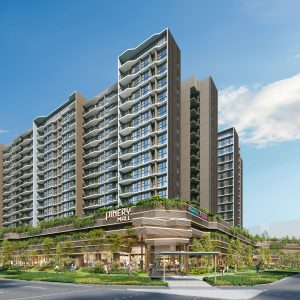
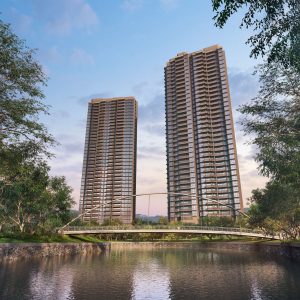
The land market is giving the same signal. EdgeProp reported that GLS tenders closed so far in 2026 averaged 4.6 bidders per site, up sharply from 2.4 in 2024 and close to 5.6 in 2025. At the same time, recent launches such as Pinery Residences, River Modern and Tengah Garden Residences sold more than 90% of their units on launch weekend. In other words, developers are still willing to bid, and buyers are still willing to buy. That gives the government room to move more supply from “optional” to “guaranteed” without looking reckless.
The other timing factor is that several of these precincts have moved from concept to execution. Nowhere is that clearer than in the Jurong Lake District. The original 6.5 ha JLD master-developer plot drew only one bid in 2024 and was not awarded because the bid was deemed too low. The government then split the mega-site into smaller parcels, starting with Town Hall Link, and the URA explicitly said that the smaller parcels meant lower development risk and greater confidence for developers. That is not a retreat from the JLD vision. It is a recalibration after market feedback. In other words, the state is launching these sites now because the planning case remains strong, but the delivery model has been adjusted to fit market reality.
There is a subtler point here too. 2026 has not been free of macro stress. Market commentary in 1Q 2026 repeatedly cited caution amid geopolitical tensions in the Middle East and slower decision-making among some buyers and occupiers. But that may be precisely why the state is leaning into steady supply rather than pulling back. When uncertainty rises, Singapore’s housing strategy is typically to preserve confidence by maintaining visibility and pipeline certainty, rather than amplifying volatility by starving the market. That is our inference from the consistency of releases across 2H 2025, 1H 2026 and now H2 2026, together with MND’s stated intent to keep the market stable and sustainable.
The Biggest Location Signals By District
The clearest signal is in the west. Town Hall Link is not just another mixed-use plot; it is the state saying that Jurong Lake District’s next phase is ready to move. The site is planned for up to 1,200 homes plus substantial office and complementary uses, and it sits within a district the government continues to describe as Singapore’s largest mixed-use business district outside the city centre. The area is being reinforced by the Jurong Region Line, the Cross Island Line, the new Science Centre, Jurong Gateway Hub and Jurong Lake Gardens.

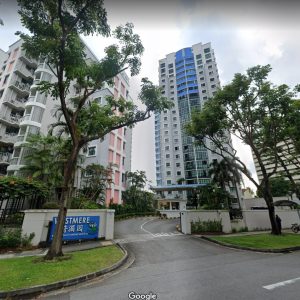
Pair that with the 735-unit Jurong East Avenue 1 EC plot — the first EC in Jurong East since Westmere in 1996 — and the message is unmistakable: the west is not just an employment story anymore; it is being reloaded as a self-sustaining housing-and-upgrading story as well.

The second strong signal is along the southern and eastern city fringe. Berlayar Close is the third private site in the Greater Southern Waterfront build-out, while official speeches have described Berlayar itself as a future waterfront community of about 10,000 homes, including around 7,000 public homes.

Tanjong Rhu Close sits beside a site that set a record land rate for a pure residential RCR parcel in February 2026, and it benefits from proximity to Marina Bay, the CBD, Katong Park MRT, Tanjong Rhu MRT and the Kallang sports precinct.

Marina Gardens Lane, meanwhile, is the third plot in Marina South and comes after One Marina Gardens had sold about 68% of its units since launch. Taken together, these are not isolated land sales. They are the state building out a contiguous urban belt in which waterfront living, city access, and transport connectivity are meant to reinforce one another.

The third signal is in the prime and central districts, but here the government is being more selective than aggressive. Orchard Boulevard is a tiny 110-unit site on a quiet, exclusive stretch off the shopping belt, and analysts think one reason it could be keenly contested is that there are very few plots left on Orchard Boulevard. That fits broader public-sector efforts to keep Orchard Road evolving through pedestrian and connectivity upgrades and continued rejuvenation.

Holland Plain is a different kind of centrality play: it sits in a 34 ha future precinct with potential for up to 2,500 homes, and adjacent sites have already given the market price discovery. These are not major volume releases. They are targeted injections into premium areas where the state still wants fresh product, but not a supply shock.

The fourth signal is that land recycling and estate-building are being synchronised. The Raffles Town Club site is a good example. SLA and URA said back in 2023 that the lease would not be renewed after its October 2026 expiry and that the land was slated for future residential use. Now, as H2 2026 arrives, that plot surfaces on the Reserve List while nearby Dunearn Road land has already demonstrated robust developer appetite, including a six-bid tender in April 2026 at S$1,625 psf ppr. Zooming out, that is part of the much larger Turf City transformation, in which the government has said that 15,000 to 20,000 public and private homes will be launched progressively over the next 20 to 30 years, supported by future MRT connectivity and a car-lite planning approach. In short: the timing is not arbitrary. The lease cycle, transport cycle, and precinct-building cycle are being aligned.

What This Means For Investors
Our analysis is that investors should think about H2 2026 GLS through three buckets, not one. The first bucket is the long-duration transformation play: Town Hall Link, Berlayar and Marina South. These are the sites most tightly linked to national redevelopment programmes and infrastructure sequencing, which gives them a strong long-term planning tailwind. But because these are multi-parcel precincts, investors should not confuse transformation value with near-term scarcity value; more supply will usually mean greater neighbourhood depth and exit liquidity over time, but a lower immediate resale premium from artificial shortage.
The second bucket is the selective prime play: Orchard Boulevard and, to a lesser extent, Holland Plain. Orchard is the cleaner scarcity story because of its tiny unit yield, very limited remaining supply, and the successful take-up at nearby Upperhouse at Orchard Boulevard. Holland Plain is appealing too, but it is more of a precinct-building story than a pure scarcity trade. In both cases, investors should remember that the government is still releasing central-area land, just in calibrated doses. That supports premium positioning, but it also means the state is actively managing the risk of extreme undersupply in the prime market.
The third bucket is the no-longer-so-investable EC play. The Jurong East EC site will likely be popular, but the rules have changed decisively. From 8 May 2026 onward, EC GLS sites face a 10-year minimum occupation period, no Deferred Payment Scheme, and a 90% first-timer quota for the initial allocation. That makes the product more owner-occupier-focused and less attractive as a financial-engineering or short-interval asset play. If you are an investor, the West still matters — but the more direct investment case is likely to be conventional private housing around the Jurong growth story, not the new-generation EC format itself.
What This Means For Homeowners
For homeowners, the release is mostly good news because it widens choice without concentrating everything in one part of the island. H2 2026 offers prime city living at Orchard Boulevard, family-sized boutique stock in Siglap on East Coast Road, city-fringe waterfront exposure at Tanjong Rhu and Berlayar, central new-neighbourhood potential at Holland Plain, and a western upgrader option at Jurong East Avenue 1. It also creates more certainty that future launches from 2027 onward will not be limited to a single dominant corridor. For buyers who care about liveability first and upside second, that is healthy market design.

The main caution is that not all sites are meant for the same buyer. East Coast Road’s 100 sq m minimum unit-size rule points toward larger-format, higher-quantum family homes rather than compact investor stock. De Souza Avenue may be priced more attractively than headline sites, but analysts already expect interest there to be more measured because it is farther from MRT access and lacks a deep HDB-upgrader catchment. Jurong East EC will likely draw strong demand from genuine owner-occupiers in a mature western catchment, but buyers there should go in with the mindset of a long-term home, not a short-cycle trade, because the policy framework now clearly rewards occupation over flipping.

Our takeaway is this: the government is not launching these sites now because it thinks every parcel will be an instant blockbuster. It is launching them because 2026 is the point at which several strategic precincts have enough transport, policy, pricing and planning groundwork in place to move from vision to execution. The H2 2026 GLS line-up is therefore best read not as a “supply dump,” but as a carefully staged roll-out of Singapore’s next residential map — one that tries to keep prices stable, developers engaged, and future neighbourhoods investable without letting scarcity become the market’s main pricing engine.
Disclaimer: The information and opinions expressed in this article are provided for general informational and educational purposes only and should not be construed as financial, investment, legal, tax, or property advice.
While every effort has been made to ensure the accuracy of the information at the time of publication, market conditions, government policies, planning parameters, land use intentions, and property regulations may change without notice. Readers should independently verify all facts and consult relevant professionals before making any property purchase, investment, financing, or development decisions.
The analysis presented in this article reflects the author’s interpretation of publicly available information, including government announcements, planning documents, and media reports. Any projections, forecasts, opinions, or views regarding future property prices, land values, rental performance, developer behaviour, or market trends are inherently uncertain and should not be relied upon as guarantees of future outcomes.
Article contributed by Jerry Wong.

Jerry Wong is a realtor at Propnex Realty, bringing a rich background in interior and lighting design to his work. He loves exploring diverse spaces and observing the transformative power of real estate. Beyond his professional role, Jerry finds his greatest fulfillment in connecting people with the right properties, gaining immense satisfaction from helping clients achieve their dreams.