
Singapore’s largest money-laundering case is entering its final and most visible stage: turning seized luxury assets back into cash.
In September 2026, 24 luxury residential properties and two office spaces connected to the case are scheduled to be auctioned. They include units at South Beach Residences, 8 Saint Thomas, Paterson Suites, Gramercy Park, Sloane Residences, Wallich Residence and Martin Modern, together with commercial premises at Suntec Tower One and Shun Li Industrial Park.
These are only part of a much larger liquidation exercise. More than 80 properties and over 1,000 luxury items—including watches, jewellery and branded handbags—are expected to be sold progressively. The case involved approximately S$3 billion in seized, frozen or otherwise controlled assets, making it the largest money-laundering investigation in Singapore’s history.
Beyond the spectacle of penthouses, supercars and designer goods, however, the case raises several more important questions.
Why was Singapore chosen as a destination for the money? Why did the offenders place so much of their wealth into real estate? How does the case compare with previous financial scandals such as 1MDB? After the properties are sold, who ultimately receives the money?

From Luxury Homes to Public Auctions
The properties scheduled for auction illustrate the scale and concentration of the real-estate holdings.
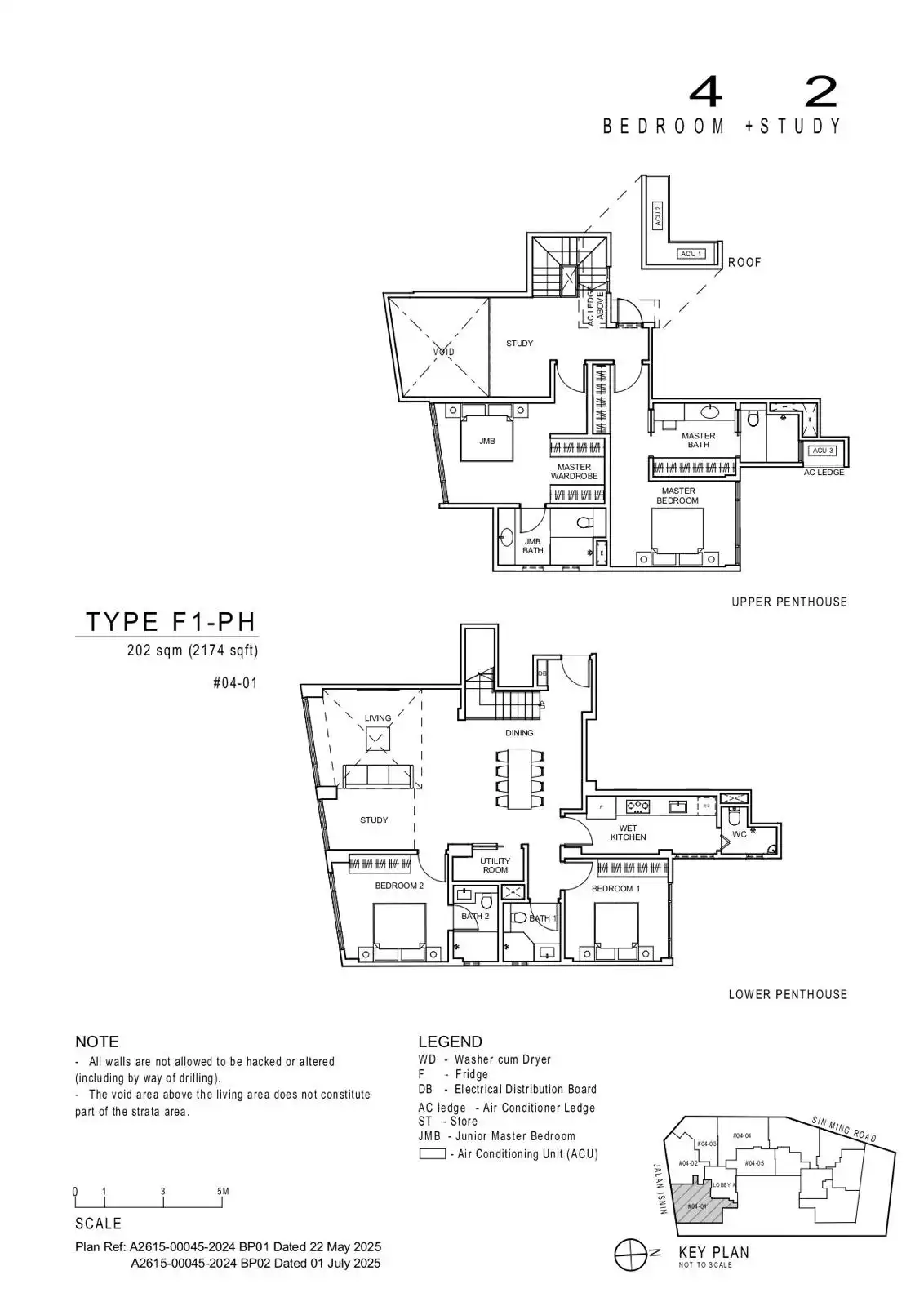
At South Beach Residences, five units are being offered, including a penthouse of more than 6,700 sq ft with a guide price of S$25.3 million. Other homes are located in prime central districts, including Orchard Road, River Valley, Marina Bay and the Central Business District.
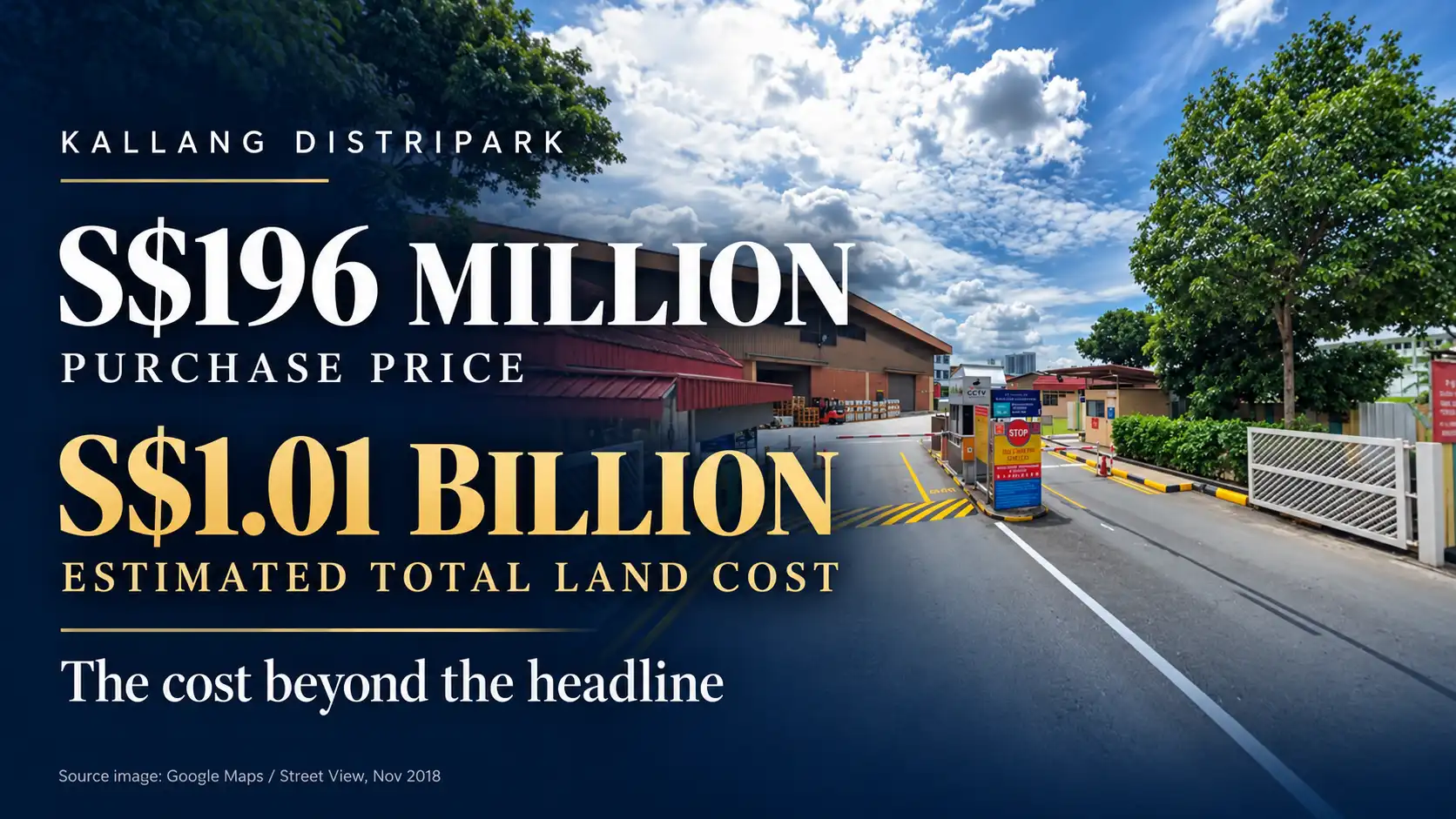
The commercial assets include an approximately 3,498 sq ft office at Suntec Tower One with a guide price of S$11.5 million and an approximately 8,800 sq ft space at Shun Li Industrial Park with a guide price of S$3.6 million.
The properties will not necessarily all be sold through conventional public auctions. Deloitte, which is overseeing the realisation of the assets, has indicated that some may be marketed through limited tenders, expressions of interest or direct sales. This allows each asset to be matched with the method most likely to achieve a reasonable recovery.
The authorities took control of around S$1.25 billion in non-cash assets during the investigation. These included properties, vehicles, artwork, watches, jewellery, gold bars, handbags and alcohol. Meanwhile, about S$1.4 billion from seized bank accounts and assets already converted into cash had been paid into the Government’s Consolidated Fund by the end of the 2025 financial year.
Why Did the Money Launderers Choose Singapore?
The offenders’ private reasoning has not been fully established in public court records. We should therefore distinguish proven facts from reasonable conclusions drawn from how the network operated.
The most likely explanation is that Singapore offered a powerful combination of financial access, political stability, personal security and international legitimacy.
Singapore Is a Major International Financial Centre
Singapore provides access to global banks, wealth managers, investment products, company-registration services and professional advisers within a single jurisdiction.
For legitimate business owners and wealthy families, this is one of the country’s greatest strengths. But the same infrastructure can attract criminals attempting to disguise illicit funds as ordinary international wealth.
Money deposited in an obscure or weakly regulated jurisdiction may immediately attract attention. Wealth held through Singapore bank accounts, companies, investment structures and properties could appear more credible because Singapore is widely regarded as a well-regulated financial centre.
In other words, the value was not simply in moving money into Singapore. It was in giving that money the appearance of having entered a legitimate financial and business ecosystem.
A Stable Currency and Strong Legal System
Criminal proceeds are vulnerable if they remain in jurisdictions affected by political upheaval, currency depreciation, capital controls or arbitrary confiscation.
Singapore offers the opposite: a relatively stable currency, enforceable property rights, dependable institutions and a legal system recognised internationally.
These qualities make Singapore attractive to legitimate investors. They can also appeal to criminals looking for a secure store of value once they have moved proceeds from illegal activities away from their original source.
The irony is that the same strong legal system that may have made Singapore attractive also enabled the authorities to trace, freeze, seize and eventually liquidate the assets.
Safety and a High-Quality Lifestyle
Singapore is not merely a place to hold money. It is also a place where affluent individuals can live comfortably.
Luxury housing, international schools, private healthcare, prestigious clubs, high-end retail, regional air connectivity and low street crime allow wealth to be both stored and enjoyed. The offenders were therefore able to combine asset protection with a visible luxury lifestyle.
This matters because money laundering is not only about hiding funds. Its ultimate purpose is usually to make criminal proceeds available for apparently legitimate use.
Cultural and Regional Accessibility
Singapore is geographically close to many Asian markets and has a large Mandarin-speaking professional and commercial community. Foreign entrepreneurs can access accountants, lawyers, property agents, bankers and corporate-service providers without facing the same linguistic or cultural barriers that they might encounter elsewhere.
This does not imply wrongdoing by these professional communities. It simply means Singapore provides an accessible environment in which a wealthy foreigner can establish businesses, purchase assets and manage a family’s finances.
The Appearance of Legitimate Wealth
Ownership of companies, family offices, luxury homes and investment assets can create an outwardly convincing story of commercial success.
Once a person is accepted as a high-net-worth client, each additional transaction may appear less unusual. A luxury property purchase seems more plausible when the buyer already has private-bank accounts, companies, expensive vehicles and an established social presence.
The laundering network may therefore have been attempting to build not only a financial structure, but an entire appearance of legitimacy.
Singapore Was Attractive—But Not a Safe Haven
It would be misleading to conclude that the case proves Singapore is an easy place to launder money.
The investigation began after authorities detected suspicious activities, including the alleged use of forged documents to substantiate sources of wealth. More than 400 police officers participated in coordinated raids on 15 August 2023. Ten offenders were subsequently convicted, jailed, deported and barred from re-entering Singapore.
Singapore’s vulnerability arises partly from its success as an international financial, trading and wealth-management centre. The Government’s 2024 Money Laundering National Risk Assessment acknowledges that Singapore faces external threats involving foreign fraud, organised crime, corruption, tax offences and illegal online gambling.
The broader lesson is that a sophisticated financial centre will remain attractive to both legitimate capital and illicit capital. The challenge is identifying the difference early enough.
Why Did They Purchase So Much Real Estate?
Real estate is particularly useful to a money launderer because it can perform several functions simultaneously.
It Converts Money Into a Legitimate-Looking Asset
Large sums moving repeatedly through bank accounts may trigger questions. A property purchase provides an apparently straightforward explanation for where the money went.
The funds are converted into a registered asset with a title, valuation and recognisable market price. When the property is subsequently sold, the money received appears to be property-sale proceeds rather than funds linked directly to an overseas offence.
This is part of what is commonly described as the integration stage of money laundering: illicit wealth re-enters the financial system in a form that appears legitimate.
Property Can Preserve Large Amounts of Wealth
A single prime condominium can absorb several million dollars. A penthouse or commercial building can absorb considerably more.
Unlike watches, jewellery or cash, property is difficult to lose or physically steal. It may also produce rent and appreciate over time, although neither outcome is guaranteed.
For someone trying to relocate a large pool of money, purchasing several properties can therefore serve as a form of long-term wealth storage.
Rental Income Creates a New, Apparently Legitimate Cash Flow
If a property is rented out, the owner receives documented rental income supported by tenancy agreements and bank transfers.
The property does not merely hold the original capital. It creates a recurring stream of funds that appears commercially ordinary.
This may help integrate questionable wealth into day-to-day financial activity, especially when the owner also controls companies, investment structures or other income-producing assets.
Real Estate Can Support Borrowing
A property may be used as security for a loan. This creates another possible layer between the original funds and the money eventually spent.
Instead of using the original capital directly, an owner may borrow against the property and use the loan proceeds for other investments or expenses. The borrowed money appears to originate from a regulated financial institution, although the underlying collateral may have been acquired with illicit funds.
Luxury Homes Also Provided a Lifestyle Benefit
Not every property purchase needs to have been made solely for laundering purposes.
Some homes may have been purchased for occupation by the offenders or their families. Luxury property therefore offered both financial utility and immediate personal enjoyment.
This distinguishes property from money left untouched in a bank account. It can be lived in, displayed as evidence of success, rented out, pledged as collateral and eventually sold.
Commercial Property May Be Especially Attractive to Foreign Buyers
Foreign purchasers of residential property in Singapore are subject to Additional Buyer’s Stamp Duty, with the rate increasing substantially over the period relevant to this case. Paying such a high transaction cost suggests that tax efficiency was not always the main priority.
Most commercial properties, however, are not subject to residential ABSD. Commercial real estate can therefore accommodate large amounts of capital with lower acquisition taxes, while also supporting business operations or producing rent.
This may help explain why the portfolio included office and industrial spaces as well as luxury homes.
Does the Auction Mean Buyers Will Secure Fire-Sale Prices?
Not necessarily.
An auction connected with forfeited assets may attract buyers hoping for a substantial discount. However, the objective of the appointed professionals is to maximise recovery, not to dispose of every property at any price.
Guide prices may be competitive, but the auction process can also generate bidding competition. If offers are inadequate, a property may not be sold immediately, depending on the sale conditions and instructions given to the auctioneer.
The assets are also being released progressively, rather than all at once. This reduces the risk of flooding the luxury market and allows different agencies and sale methods to target suitable buyers.
Even more than 80 properties would represent only a small part of Singapore’s overall housing stock. The auctions could affect buyer expectations or comparable prices within a few individual developments, particularly where several units are offered in the same project. However, they are unlikely by themselves to cause a broad decline in the private residential market.
How Does This Compare With the 1MDB Case?
Singapore has seen numerous money-laundering prosecutions. The closest major predecessor in scale, international significance and impact on Singapore’s financial sector is the 1Malaysia Development Berhad, or 1MDB, scandal.
The two cases nevertheless operated differently.
The 1MDB Case
The 1MDB affair concerned money allegedly misappropriated from Malaysia’s state investment fund and channelled across multiple jurisdictions.
Singapore’s response focused heavily on financial institutions and the professionals who facilitated or failed to detect the transactions. MAS withdrew the merchant-bank licences of BSI Bank and Falcon Private Bank, imposed financial penalties on several banks and issued prohibition orders against individuals. Bankers were also prosecuted for offences including money laundering, forgery and obstruction of justice.
By May 2025, Singapore had repatriated approximately S$124 million in seized 1MDB-related money to Malaysia.
The S$3 Billion Case
The 2023 case involved a network of individuals laundering proceeds linked to overseas criminal activities, including illegal online gambling and scams.
Instead of being concentrated mainly in banking transactions, the wealth was distributed across a very broad range of assets:
- Bank deposits and cash
- Luxury condominiums
- Commercial properties
- Cars
- Cryptocurrency
- Gold bars
- Watches and jewellery
- Branded handbags
- Artwork, liquor and club memberships
The case therefore exposed vulnerabilities beyond private banking. Property agents, developers, lawyers, corporate-service providers, precious-metal dealers, luxury retailers and family-office structures all became relevant to the movement and enjoyment of the wealth.
The comparison can be summarised simply: 1MDB was largely a case of misappropriated institutional money passing through the international banking system, while the S$3 billion case showed how foreign criminal proceeds could be embedded across Singapore’s wider wealth and luxury economy.
What Will Happen to the Money After the Properties Are Sold?
The money will not be returned to the convicted offenders.
The net proceeds from the properties and other forfeited assets—after the necessary costs of preserving, managing and selling them—will be paid into Singapore’s Consolidated Fund.
The Consolidated Fund is effectively the central account into which government revenue is paid. Money within it may be used for public expenditure only through the appropriate constitutional and budgetary processes.
It would therefore be inaccurate to say that a particular penthouse will directly fund a specific hospital, housing programme or transport project. The proceeds become part of the Government’s overall financial resources rather than being separately earmarked.
As of December 2024, approximately S$2.79 billion linked to the case had been surrendered to the State. This comprised around S$1.54 billion in cash or financial assets, with the remainder held in non-cash assets. At that point, 54 properties, 33 vehicles and 11 country-club memberships had already been liquidated.
By the end of the 2025 financial year, approximately S$1.4 billion in seized cash and liquidated proceeds had reportedly been paid into the Consolidated Fund.
Will Any Money Be Returned to Victims or Foreign Governments?
That depends on whether identifiable victims or another state can establish a valid legal claim.
Singapore’s National Asset Recovery Strategy provides for both forfeiture to the State and restitution to victims. Between January 2019 and June 2024, Singapore seized approximately S$6 billion linked to criminal and money-laundering activities. Of this, S$416 million was returned to victims, and S$1 billion was forfeited to the State, while much of the remainder was still connected with ongoing investigations or court proceedings.
The 1MDB case demonstrates how repatriation can occur when the money is traceable to a clearly identified victim—in that instance, Malaysia and its state investment fund.
The present case is more complicated. The underlying funds were reportedly connected to various overseas criminal operations rather than a single identifiable institution. Unless particular proceeds can be traced to specific victims or become subject to an approved restitution or repatriation process, the forfeited money will remain in Singapore’s Consolidated Fund.
The Sale Price Will Be Lower Than the Original S$3 Billion Headline
The S$3 billion figure should not be interpreted as the amount that the Government will ultimately receive in cash.
Several deductions and valuation differences are likely:
- Some assets may sell below their earlier estimated values.
- Property prices and luxury-goods values can change.
- Vehicles, alcohol and fashion items may depreciate.
- Auctions and professional sales involve administrative and transaction costs.
- Mortgages or other valid third-party claims may need to be resolved.
- Maintenance, security, storage, insurance and property charges accumulate while assets await sale.
The Police reportedly incurred more than S$600,000 in the 2023 financial year maintaining the assets. With dozens of homes, vehicles and luxury items involved, asset preservation is itself a substantial exercise.
The final recovery should therefore be based on net realised proceeds—not the headline valuation recorded when the assets were first seized or subjected to disposal restrictions.
What Has Singapore Learnt From the Case?
The most important lesson is that money laundering does not occur only inside banks.
A laundering network may move through an entire chain of professionals and businesses: bankers, property agents, conveyancing lawyers, accountants, corporate secretaries, developers, luxury retailers and wealth managers.
Each institution may see only one apparently plausible transaction. The criminal network benefits when no one has a complete view of the client’s overall activity.
The case has consequently led to stronger scrutiny of high-value transactions, source-of-wealth documentation, family offices and information-sharing among financial institutions. It has also reinforced the need for professionals to look beyond whether a client can afford a purchase and consider whether the client’s explanation of how the wealth was accumulated is credible.
Large property portfolios, multiple nationalities or passports, complex company structures, rapid transfers between related parties and source-of-funds documents that cannot be independently verified should not automatically prove wrongdoing. However, they may justify deeper checks when several risk factors appear together.
Conclusion: Singapore’s Strength Was Both the Attraction and the Trap
The offenders appear to have chosen Singapore because it offered qualities valued by wealthy people everywhere: security, stability, strong property rights, global financial access and a respected international reputation.
Real estate allowed them to convert large sums into assets that could preserve wealth, produce rent, support borrowing, provide luxury accommodation and eventually generate apparently legitimate sale proceeds.
But the strategy contained a fundamental contradiction.
Property is valuable partly because ownership is formally registered and legally protected. Those same records make it traceable. Bank accounts provide financial convenience, but they also produce transaction histories. Luxury goods display wealth, but they can be seized, catalogued and sold.
The auctions therefore represent more than the disposal of a collection of expensive homes. They demonstrate the final objective of asset recovery: removing the financial benefit of crime.
Singapore’s reputation may have helped attract the money, but its institutions ultimately ensured that much of that wealth could not remain with the people who brought it here.
Disclaimer: This article is intended for general information and commentary only. It does not constitute legal, financial or investment advice. Some explanations of the offenders’ possible motivations are analytical inferences based on publicly available information and should not be treated as findings made by the courts.
Article contributed by Jerry Wong.

Jerry Wong is a realtor at Propnex Realty, bringing a rich background in interior and lighting design to his work. He loves exploring diverse spaces and observing the transformative power of real estate. Beyond his professional role, Jerry finds his greatest fulfillment in connecting people with the right properties, gaining immense satisfaction from helping clients achieve their dreams.
Let’s Discuss Your Property Plans
Interested in This Property?
Buying, selling or renting? Get a free consultation with realtors with a background in interior and lighting design. We’ll discuss your goals and help you assess your options—from pricing and timelines to layout practicality and space potential.
Share your contact details below, and we will get in touch to understand your needs and suggest the next steps. No pressure. No obligation to proceed.