Rents have surged over the past three years as the rental market boomed. Insight examines the current state of the market, and what’s next.
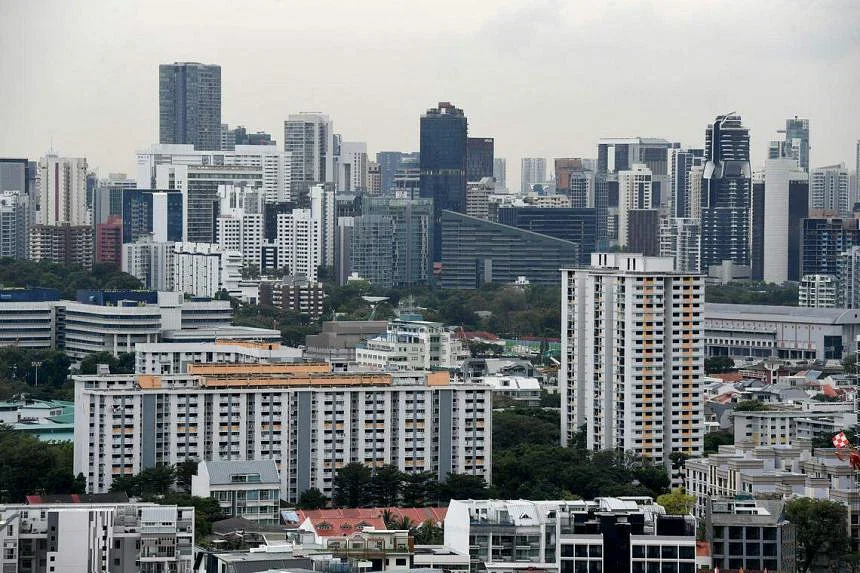
SINGAPORE – Last September, a studio apartment at 26 Newton was rented out at $4,000 a month – $200 more than what the landlord had asked for.
Ten potential tenants viewed the 474 sq ft unit, two of whom made an offer on the same day. The landlord accepted the highest bid from a Japanese professional, recalled Ms Samantha Foo, associate marketing director at Huttons Asia, who marketed the property.
Three months later, the tenant informed the landlord that she would be terminating the lease prematurely, as she had been retrenched by her company and had to return to Japan.
Ms Foo then found a new tenant – a Chinese national – who leased the property at $3,800 this month.
She said the landlord did not mind the lower monthly rent as it was what she had asked for last year, and way higher than the $2,500 she used to get for that apartment before rentals surged in the last three years.
Since the beginning of 2023, the market has slowed and responses to property listings have not been as overwhelming as last year, she noted.
“Last year, I could get 20 potential tenants for one listing, and I would shortlist 10 for viewing and close the deal within a day,” said Ms Foo, who saw a 40 per cent increase in her rental commission earned last year.
She is not alone in feeling the slowdown in the rental market. Property agents told The Sunday Times that while units in both the private and public property sectors are still in demand today, competition for units is not as cut-throat as it was back in 2022.
Tenants no longer have to place deposits on units they have viewed only virtually or engage in price wars just to secure a unit, as many were forced to do when rents surged and caught them off guard.
The sharp rise in rental prices left some tenants with no choice but to downsize or move farther away from the city centre for lower rent. Some expatriates considered moving out of Singapore, while other tenants, who had no choice but to continue leasing, took to social media to lament over the price increases.
Today, more tenants are pushing back against an unreasonable or sharp increase in rents demanded by landlords, say agents.
Demand for rental units had spiked in the last three years due to pandemic-related delays in the construction sector, coupled with the influx of foreign talent, international students and more Singaporeans looking for their own space.
As a result, rents for condominium units rose for 28 straight months, while rents for Housing Board flats climbed for 16 months.
But January 2023 data offers a glimpse of hope for weary tenants, as the pace of rental growth seems to have slowed. Condo rents posted the lowest increase in the past 11 months, climbing by just 1.4 per cent, while HDB rent rose marginally by 0.6 per cent, based on figures from real estate portals 99.co and SRX.
February’s figures have yet to be published.
Sourcing director Romain Fabart, who moved from France to Singapore in 2012, said he was asked to renew his lease for $5,500 a month – a 44 per cent increase from the $3,800 he has been paying for a three-bedroom condo at Optima @ Tanah Merah. A year ago, he was paying $3,200 for the same unit.
“If it was a 10 per cent increase this round, I would’ve been okay with paying. I know the rental market is up, but I had expected something more reasonable, especially if they prefer to keep us on as we’ve been long-time tenants,” said Mr Fabart, whose family of four has been living in the unit since 2017.
Assessing that the price disparity was too large for both his landlord and him to come to an agreement, Mr Fabart decide to “not waste both our time” on negotiations and went searching for an alternative unit.
He landed on a three-bedroom unit at Sunhaven in Upper Changi Road East and negotiated the rent down from $4,500 to $4,200 a month.
As for the current unit with the asking rent of $5,500, Mr Fabart said only two groups of people had viewed the unit since it was listed in February. “We’re moving out by end-March; I’ll be surprised if they get someone new in by April.”

Reaching price resistance
Property analysts said tenants, who have been on the losing end after two to three years of rapid rent growth, are resisting rental price increases.
A combination of inflation and the rising cost of living could have affected tenants’ abilities to afford high rents, with more opting to share units or moving out to farther and more affordable areas, said OrangeTee & Tie senior vice-president of research and analytics Christine Sun.
As a result, rental growth may be close to peaking and should slow down towards the second half of 2023 and into 2024, some analysts say.
Mr Pow Ying Khuan, head of research for 99.co, said the rental market will reach a “tipping point” where the monthly rents cannot rise any further and yet still be affordable to renters.
“It is highly likely that the extended price rally might come to an end at some point in 2023. We expect more mixed months where ups and downs in rents will be recorded, but the yearly rental increase in 2023 should be lower than in 2022 and 2021,” he said.
In 2022, condo rents rose by 34.4 per cent, while HDB rents went up by 28.5 per cent.
On the ground, agents say it is now taking longer for rental units to be snapped up, as more units are up for rent.
PropNex property agent Mukul Jain, 42, said tenants are willing to “look and see” elsewhere if they deem the asking rent to be too high.
“A condo that used to take one week to close can now take one month or so, if the landlord does not want to give in to tenants’ demands or meet them halfway,” he said.
Data from property listing portals 99.co and PropertyGuru showed that the number of condo and HDB flats up for rent has increased from a year ago.
On 99.co, for instance, there were 4,882 unique listings for HDB flats and rooms for rent in February 2023, compared with 1,592 listings in February 2022.
On PropertyGuru, there were 23,987 rental listings for condos in February 2023, compared with 12,024 listings in February 2022.
These figures are not unique listings and could include reposts of the same property.

With more units up for rent, landlords who insist on pricing rents higher than what the unit can typically command could be on the losing end.
ERA property agent Michelle Lee, 36, cited a three-bedroom unit at The Vision in the West Coast area that had its asking monthly rent reduced from $8,500 to $7,900, but is still on the market after one month.
“The average three-bedder rent there is around $6,500, so $7,900 is considered very, very high even if the unit comes with a sea view. Tenants are savvier now, so if the asking price is too off, they’re not going to blindly pay for it,” said Ms Lee, who is not the agent marketing the unit.
Dr Tan Tee Khoon, PropertyGuru country manager of Singapore, said landlords are likely to be “more realistic” with their asking rents by the second half of this year.
“Landlords typically rely on rental income to service their mortgage repayments, so securing tenants at a lower rent is still better than leaving their units empty,” said Dr Tan.

Increased supply this year
An injection of home supply is on the way, with close to 100,000 private and HDB homes set to be completed between 2023 and 2025 – a factor that could turn the tide in the current rental market boom.
Of the 100,000 homes, about 40,000 of them will be completed in 2023. This marks the highest number of home completions in the last five years, including the pre-pandemic years of 2018 and 2019.
OrangeTee’s Ms Sun said once home completions catch up this year, those who have been renting in the last two years will stop doing so and thus free up more housing stock.
At least 25 condo developments with over 18,000 units in total are expected to be available for occupation in 2023. Owners who bought units for investment purposes will then likely put them up for rent.
Developments expected to be ready this year include Amber Park, Sky Everton, One Meyer, Les Maison Nassim, Treasure at Tampines, Parc Clematis and The Florence Residences.
Some 15,000 HDB flats will also complete the mandatory five-year minimum occupation period (MOP) in 2023, said Ms Sun. This means that these units can be put up for rent on the open market.
However, the figure is still lower than the 31,000 HDB units in 2022. Data shows that the number of flats reaching their MOP will decline steadily to around 8,000 units in 2025.
ERA Realty head of research and consultancy Nicholas Mak said that while the supply of HDB flats eligible for rent will decrease over the next three years, the steady supply of newly completed condo units will turn some renters from the HDB market to the private market.
Provost’s Chair Professor Sing Tien Foo of the Department of Real Estate at the National University of Singapore said the boost in home completions will help address the current demand-supply imbalance.
“The high asking rents may not be sustainable except in some popular housing estates where supply is limited,” he said.
“Landlords will need to adjust their expectations, when tenants have more options for rental apartments in different locations at more competitive rents.”
Looking back at the 2013 peak
Last year’s record high rent for private residential property surpassed the previous peak in 2013 by 25.9 per cent, according to data from the Urban Redevelopment Authority (URA).
An index tracking rents in the sector showed rent rising for four years from 2009 to 2013.
But the rental index did not stay high for very long, as it started to tumble in the last quarter of 2013. The HDB rental rate also fell in tandem and bottomed in 2018, noted Mr Mak.
Several factors, such as a rise in housing supply and tighter foreign labour curbs, had contributed to the fall in rental demand, said property analysts.
By the end of 2013, the Government had introduced several rounds of cooling measures, including the total debt servicing ratio and higher additional buyer’s stamp duty, which affected sentiments in the residential property market and led to a decline in prices and the retreat of property investors.
Mr Mak noted that from 2013 to 2017, there was an annual average supply of newly completed private housing of 17,330 units, which was higher than 8,560 units a year in the previous five-year period from 2008 to 2012.
As a result, the overall private residential vacancy rate increased steadily from 5.4 per cent in 2012 to 8.4 per cent in 2016, putting downward pressure on rentals, Mr Mak said.
Ms Tricia Song, head of research in South-east Asia at CBRE, said: “Vacancies were high due to the historical high supply that were completed through 2014 to 2017, which were not met by corresponding rental demand.”
Between July 2013 and the end of 2017, rents declined 13.3 per cent.
Ms Song said: “Rents stayed relatively muted till the fourth quarter of 2020, when vacancies started to fall sustainably below 7 per cent, as rental demand returned on the back of work-from-home, returning Singaporeans and increased immigration, exacerbated by delays in supply completions.”
Currently, private residential vacancy rates stand at 5.5 per cent.
“Before rents start to decline, the inflection point historically tends to set in as vacancies hit above 6 per cent and continues to climb,” said Ms Song.
As the current vacancy rate is considered low, there is still some room for rents to rise, added Ms Song, who expects the trend to reverse in the second half of this year when more new supply comes in, and demand to slow down.
What’s next
While landlords may find it more difficult to command sky-high asking rents as the rental market shows signs of slowing down, prices remain largely elevated.
Mr Ankur Sethi was shocked to learn that the rent for a four-room HDB flat in Tampines had more than doubled, from some $2,200 a month to $4,500 a month.
“I had no intention to move, but my landlord wanted the flat back,” said the 40-year-old IT professional who is married with two children, aged six and 12.
Mr Sethi, who came to Singapore from India in 2012, was previously paying $2,200 for a four-bedroom flat in Tampines Street 42.
After viewing some 30 properties in two months, he settled for a much smaller private apartment in Melville Park at a monthly rent of $4,200.
“We prefer to live in a HDB flat, but if we have to pay $4,500 for an HDB flat, we might as well move to a condominium with facilities,” he said.
“The apartment is much smaller, but it’s manageable as my children are still young and can share a bedroom.”
Looking ahead, analysts said it would take time for rents to fall.
“Rents tend to be sticky and the slowdown will likely play out for a prolonged period with marginal monthly decreases,” said Mr Pow of 99.co.
“When and if it eventually shifts to a tenant’s market, landlords with units that are on the market for too long will have to adjust their expectations to a more realistic level, to avoid being priced out of the market. Because that could mean missing monthly payments from tenants that can be used to service their mortgages amidst rising interest payments.”
“Source:[End of sky-high rents? Property agents, analysts point to signs of a softening rental market] © Singapore Press Holdings Limited. Permission required for reproduction”