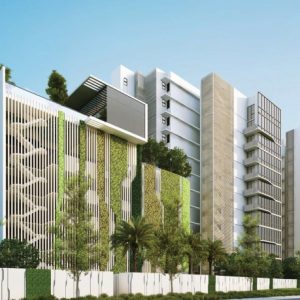
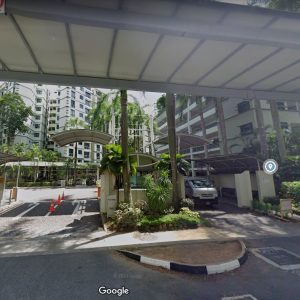
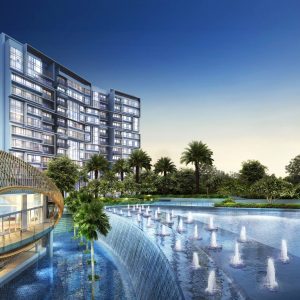
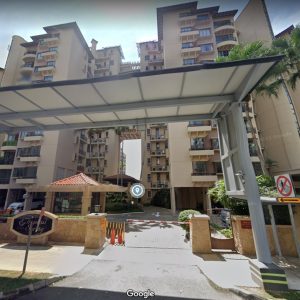
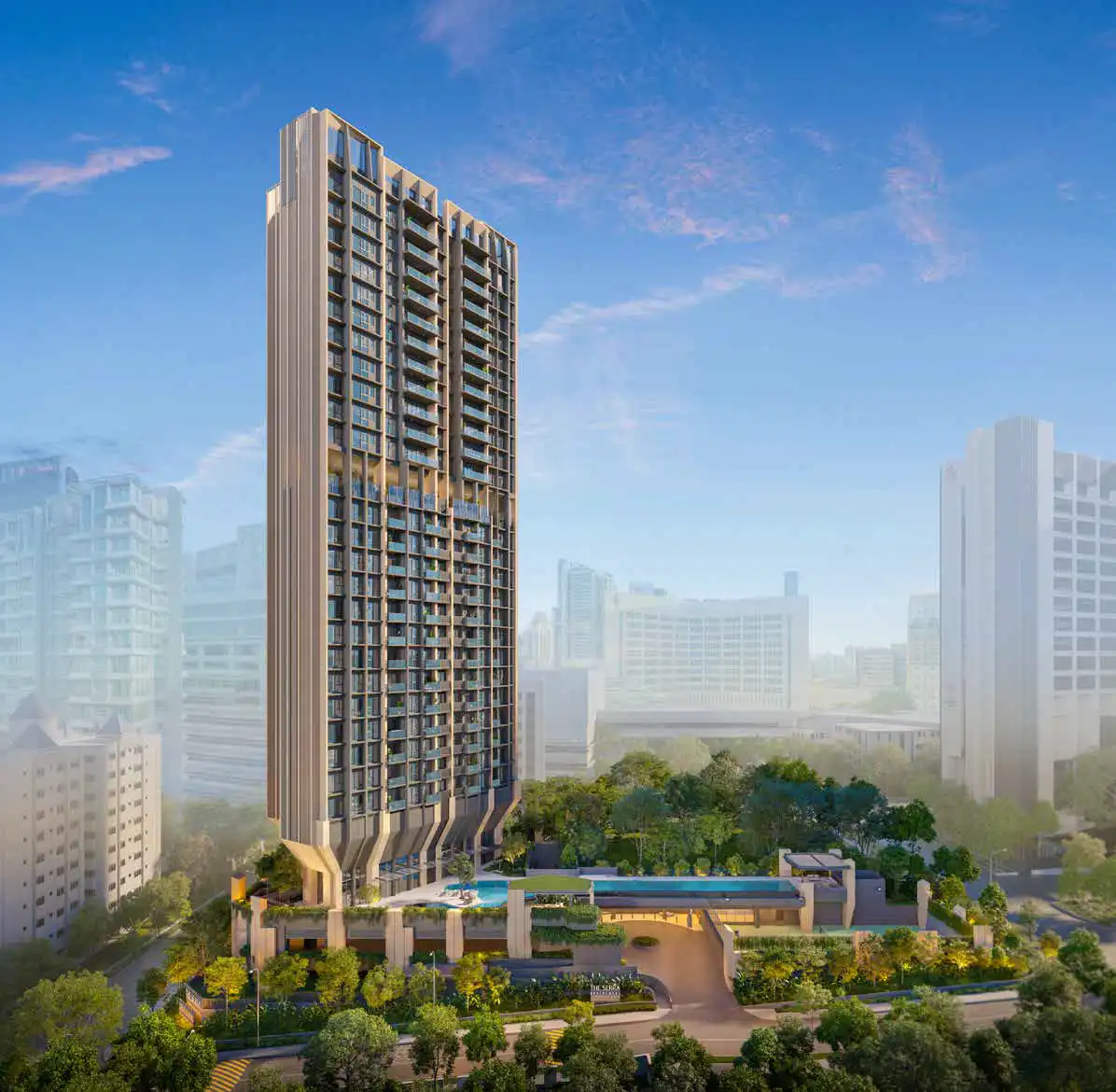
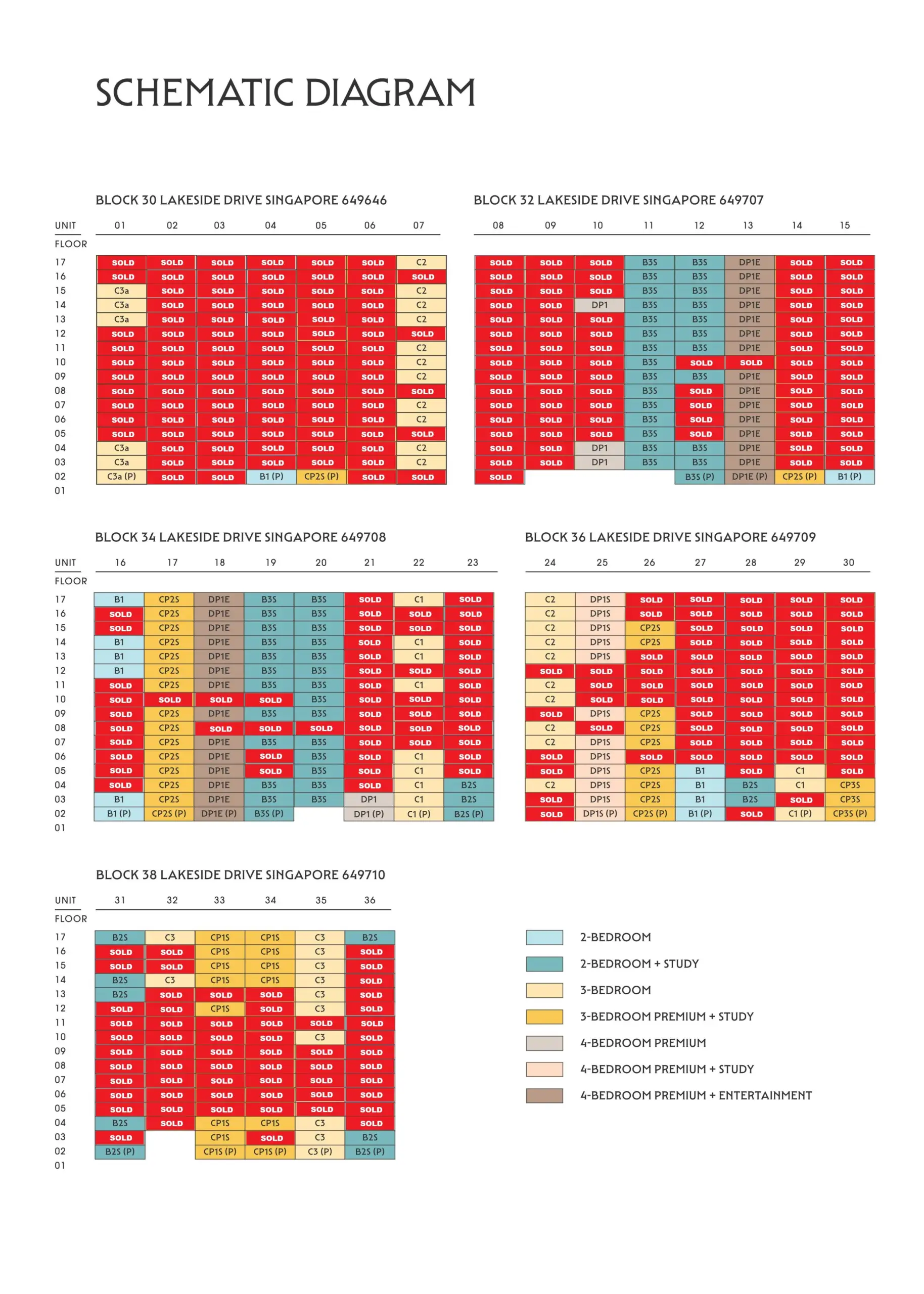
Loyang Valley En Bloc Analysis: Deal snapshot
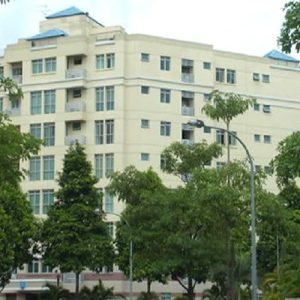
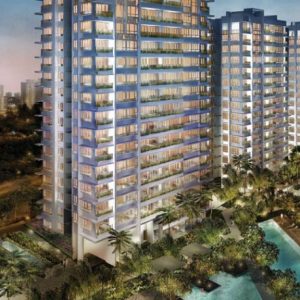
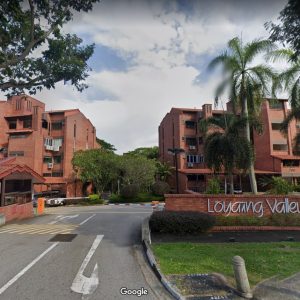
Loyang Valley was sold on 17 April 2026 for S$880 million to a SingHaiyi-led consortium after a third sale attempt. The existing project is a 362-unit, 99-year leasehold condominium built in 1985 on a very large 840,648 sq ft site, with roughly 55 years of lease remaining at the time of sale. Sale reports also state that the site could be redeveloped into about 1,249 homes, assuming an average dwelling size of about 1,076 sq ft, subject to planning approval.
The strategic reason this site matters is not just the land size. LTA indicates that Cross Island Line Phase 1, which includes Loyang station, is under construction and targeted for completion by 2030. LTA also highlights that the Changi Northern Corridor, Loyang Viaduct, new cycling paths, and the Loyang and Pasir Ris East stations are intended to improve convenience and shorten travel times by 2030. Separately, the Ministry of Transport has said first-and-last-mile improvements around the Flora, Toh and Mariam estates could include better-covered linkways, cycling-path links, and adjustments to bus services to improve access to the new stations. In short, this is a major land parcel arriving at the same time as a meaningful transport and infrastructure upgrade for the submarket.
The psf ppr extracted from the sale reports
The headline land-rate figure attached to the completed transaction is S$959 psf ppr in the Business Times and Straits Times coverage. However, EdgeProp’s contemporaneous report for the same sale states S$940 psf ppr after including the estimated land betterment charge and lease-upgrading premium.
That discrepancy matters because it affects any redevelopment model built from the land rate. Using the publicly stated numbers — S$880 million sale price, plus S$226 million of land betterment charge and S$246 million of lease-upgrading premium — and dividing by the site’s plot-ratio-adjusted floor area with a 7% bonus balcony assumption gives about S$939.4 psf ppr, which lines up closely with EdgeProp’s S$940 figure. The earlier 2025 relaunch had also been marketed at about S$936 psf ppr, indicating that all the published figures fall within a fairly tight band once assumptions are aligned. For valuation, the cleanest working range is about S$940 to S$959 psf ppr; as such, we will use S$950 psf ppr as the midpoint.
What the comparison clusters say today
A direct like-for-like rental comparison for the future Loyang Valley development is inherently challenging, as there are currently no projects in the immediate vicinity that share the same combination of attributes—namely, a large-scale, new-generation development with direct proximity to the upcoming Loyang MRT station on the Cross Island Line. To address this limitation, a proxy benchmarking approach is adopted, using four relevant clusters: the immediate 1km Loyang Valley cluster, the Upper Changi MRT cluster, the Simei MRT cluster, and the Pasir Ris MRT cluster. These clusters were selected based on their proximity to MRT stations, which is a key driver of rental demand and pricing, and therefore serve as reasonable comparables for estimating the future rental performance of the new Loyang Valley project.

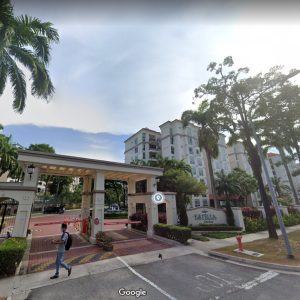
For the immediate 1 km cluster, the current 12-month average sale and rental benchmarks, derived from PropNex Protrend charts, are roughly S$1,366 psf and S$3.90 psf pm across Parc Komo, Avila Gardens and Estella Gardens. The local premium comp is clearly Parc Komo, at S$1,713 psf for sale and S$4.9 psf pm for rent, while Avila Gardens and Estella Gardens sit much lower at S$1,176–S$1,205 psf for sale and S$3.4 psf pm for rent. That tells us the local market already supports a meaningful premium for newer stock, but still has a deep affordability layer in the older Flora Road projects.


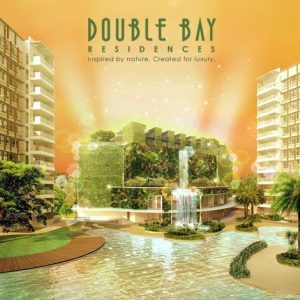
For the Simei MRT cluster, the current average is about S$1,352 psf for sale and S$4.00 psf pm for rent across My Manhattan, Modena, Tropical Spring and Double Bay Residences. My Manhattan is the strongest of that group at S$1,586 psf and S$5.26 psf pm, while Modena and Tropical Spring are in the low S$1.18k–S$1.20k psf range, and Double Bay is around S$1,426 psf with S$3.97 psf pm rent. We will treat this cluster as an important analogue, as Loyang Valley will also be transit-led once CRL opens, even though Simei remains the more established MRT node today.


For the Upper Changi / Downtown Line cluster, the average is lower at about S$1,250 psf sale and S$3.30 psf pm rent across Changi Court, Changi Green, Cascadale and Simei Green Condominium. Changi Court and Changi Green are the stronger freehold benchmarks at S$1,321 psf and S$1,356 psf, respectively, while Cascadale and Simei Green come in at S$1,222 psf and S$1,106 psf. This basket is useful mainly as a “mature older stock near rail” reference point, not as an upper bound for the subject site.


For the Pasir Ris MRT / future CRL interchange cluster, the current average is the highest of the four at about S$1,611 psf sale and S$4.54 psf pm rent across Pasir Ris 8, Coco Palms, Livia, The Palette and D’Nest. Pasir Ris 8 is the clear upper-end outlier at S$2,088 psf and $5.45 psf pm, which makes sense given its integrated-town-centre positioning, while Coco Palms, The Palette and D’Nest cluster in the S$1.49k–S$1.69k psf range with rents mostly in the S$4.4–S$5.15 psf pm range. This basket matters because it shows what east-region pricing looks like at a stronger and more mature CRL-linked node.


Using those project-level figures and weighting relevance at 40% for the immediate 1 km basket, 20% for Simei, 15% for Upper Changi, and 25% for Pasir Ris, the current blended benchmark comes to roughly S$1,407 psf for sale and S$3.99 psf pm for rent. The weighting is intended to give more weight to the immediate local substitutes and the Pasir Ris transport-node benchmark, and less weight to older Upper Changi stock.
Future selling price for the new Loyang Valley project
Our pricing assumption model uses two anchors. The first is the land-cost anchor: a working land rate of about S$950 psf ppr is already high enough that a future launch much below the high S$1,900s would be difficult to justify once construction, professional fees, financing, marketing, and profit are layered on. The second is the market anchor: the blended current-comparator basket is about S$1,407 psf, and a brand-new direct-CRL project on a large site should command a meaningful premium over that basket. As such, we assume a 27% subject adjustment to get a “completed-today” equivalent value of about S$1,787 psf, then project roughly 2.5% to 3.5% annual price growth to a plausible 2027–2028 launch window. That growth assumption is directionally supported by URA’s 1Q2026 data, which showed OCR non-landed prices up 2.2% quarter on quarter, but it remains far more conservative than simply annualising a single strong quarter.
| Scenario | Future selling price | Stabilised rent | Gross yield | Average unit price at 1,076 sq ft |
| Bear | S$1,950 psf | S$4.8 psf pm | 2.95% | S$2.10m |
| Base | S$2,050 psf | S$5.0 psf pm | 2.93% | S$2.21m |
| Bull | S$2,200 psf | S$5.2 psf pm | 2.84% | S$2.37m |
The S$2,050 psf base case is the most defensible single-number estimate. It places the future Loyang Valley launch above Parc Komo’s current S$1,712 psf and broadly around Pasir Ris 8’s current S$2,063 psf, which feels right: the subject should be stronger than a local freehold suburban comp like Parc Komo because it will be brand-new and directly tied to CRL, but it should not be assumed to command a sustained premium over an integrated town-centre project like Pasir Ris 8. If the eventual scheme really keeps the cited 1,249-unit / 1,076 sq ft planning assumption, that implies a base-case average unit quantum of about S$2.21 million and a rough residential gross development value of about S$2.76 billion before allowing for any changes in unit mix and saleable efficiency.
Future rental and gross yield
For rent, we stay more conservative than on the selling price. URA’s 1Q2026 statistics show the overall private residential rental index up only 0.3% quarter on quarter, while the national pipeline remains large at about 55,800 private residential units, including ECs. That is why we do not assume aggressive rent inflation into the next decade. Starting from the blended current comparator rent of around S$3.99 psf pm, applying a 15% subject premium for newness and direct rail adjacency, and then growing rents cautiously into a likely 2033–2034 stabilisation window, produces a reasonable future rent band of about S$4.8–S$5.2 psf pm, with S$5.0 psf pm as the base case.
That base case also fits the observed local hierarchy. It is only a touch above Parc Komo’s current S$4.9 psf pm, and a touch below Pasir Ris 8’s S$5.2 psf pm, which again feels sensible: Loyang Valley should out-rent older Flora Road stock by a clear margin, but it does not need to assume a premium above the strongest integrated Pasir Ris benchmark to make the model work. On a practical unit basis, the base case implies roughly S$3,500 a month for a 700 sq ft two-bed, S$4,750 for a 950 sq ft three-bed, and S$6,000 for a 1,200 sq ft four-bed.
The yield conclusion is important. At a future selling-price range of S$1,950–S$2,200 psf and a rent range of S$4.8–S$5.2 psf pm, gross yield lands around 2.8% to 3.0%. That is slightly below the current gross yields implied by the nearby 1 km projects, where Parc Komo, Avila Gardens and Estella Gardens all sit around the mid-3% range on current sale and rental benchmarks. So the future Loyang Valley project should be viewed more as a newness / benchmark-reset / capital-growth play than as the highest-yield asset in its immediate neighbourhood.
Likely impact on Parc Komo
The most important structural point is scale. With reports indicating that the Loyang Valley site can yield about 1,249 units. By comparison, Parc Komo has 276 units, Avila Gardens 347, and Estella Gardens 350, for a combined 973 units. In other words, the new Loyang Valley project alone could be roughly 28% larger than those three named nearby developments combined. This will be a real local supply event, not a minor infill launch. At the same time, the same CRL and Changi Northern Corridor improvements that strengthen the new development should also improve the appeal of the surrounding area as a whole.
Parc Komo should be the most resilient nearby project. It is the newest of the three, freehold, and already commands the highest current sale and rent in the local basket at S$1,713 psf and S$4.9 psf pm. Against a modelled Loyang Valley at S$2,050 psf and S$5.0 psf pm, Parc Komo would trade at roughly a 17% sale-price discount but only about a 2% rental discount. That combination is favourable for resilience: the future Loyang Valley launch may cap Parc Komo’s upside in the short term, as buyers will compare it directly with brand-new stock, but Parc Komo should remain the strongest resale and rental alternative for households that want a near-new east-region project without paying full new-launch pricing.
Likely impact on Avila Gardens and Estella Gardens
Avila Gardens and Estella Gardens are more likely to benefit from a value-spillover effect than from direct head-on competition. Their current sale benchmarks of S$1,179 psf and S$1,206 psf are roughly 41% to 43% below the modelled Loyang Valley base case, while their rents at S$3.4 psf pm are about one-third below the modelled subject rent. That means the new launch should pull attention to the micro-market and reset buyer expectations upward, but it will also make Avila and Estella look like the value options for families who want the location without paying S$2,000-plus psf.
Our take is that these two older projects are more likely to benefit from resale liquidity and price anchoring than from rental outperformance; tenants willing to pay top-end rents will probably prefer the newer project, while Avila and Estella will continue to compete best on absolute monthly rent and larger layouts. Renovated units should outperform unrenovated ones most clearly.
Netting those forces together, the likely local outcome is this: all three nearby projects should benefit from better accessibility and a higher-profile neighbourhood, but Parc Komo should have the best competitive defence, while Avila Gardens and Estella Gardens should get the strongest affordability spillover. The bigger risk is not a collapse in nearby values; it is a broader quality bifurcation within the 1 km market, where the newest and best-renovated units capture tenant and buyer attention, and the weakest, unrenovated stock becomes more price-sensitive once a 1,249-unit benchmark project arrives.
Disclosure: This post is for educational and analytical purposes. It is not financial advice. Projections are based on the provided ProTrend graph values, our inferred prices and comparability assumption, and indicative prices (accurate as of 25th April 2026). Actual construction costs, timelines, and market conditions may vary.
Article contributed by Jerry Wong.

Jerry Wong is a realtor at Propnex Realty, bringing a rich background in interior and lighting design to his work. He loves exploring diverse spaces and observing the transformative power of real estate. Beyond his professional role, Jerry finds his greatest fulfillment in connecting people with the right properties, gaining immense satisfaction from helping clients achieve their dreams.